
TL;DR: Nano Machine reading guide: where to start, how the hybrid cultivation and system mechanic works, and what to expect across 329 total Korean episodes. Free on WEBTOON and Naver.
The Nano Machine reading guide exists because this series sits at a crossroads most manhwa don't occupy. It's a cultivation manhwa: internal energy, qi stages, the murim world with its factions and martial arts lineages. It's also a system fantasy, with a visible HUD that tracks stats and delivers skill notifications. The two genres operate simultaneously in Nano Machine rather than one being a veneer over the other.
Start at Chapter 1. Read in order. What follows is what to expect from the structure and setting.
A note for genre newcomers: if you've read Solo Leveling, SSS-Class Revival Hunter, or other system fantasy manhwa, you'll recognize the interface mechanics immediately. The murim setting (the Demonic Cult, qi circulation, master-student training, the clan and faction politics) is the new layer. Nano Machine introduces it gradually enough that prior murim knowledge isn't required.
Nano Machine reading guide: key takeaways
- Nano Machine is a hybrid cultivation/system fantasy manhwa: both genres are fully present, not just aesthetically combined
- 329 total Korean episodes listed on Naver Webtoon, ongoing weekly, with an English release on WEBTOON
- The series is the best entry point into cultivation manhwa for readers coming from Solo Leveling or other system fantasy
- Cheon Yeo-woon starts at the bottom of the Demonic Cult hierarchy; the power progression is earned and specific to the murim setting
- No anime adaptation announced as of May 2026
Overview
Cheon Yeo-woon is an illegitimate member of the Demonic Cult: lowest-status, politically exposed, targeted by higher-ranking members who see him as an obstacle or an opportunity. The Demonic Cult's internal politics are brutal and his position within them is fragile.
He receives nanomachines from a descendant in the future. The machines integrate into his body and provide a system interface: a HUD with stat tracking, skill recognition, and cultivation progress metrics. In a world where none of this framework exists, Yeo-woon is operating with both the murim cultivation system and a technological overlay that lets him observe his own progress in ways his peers can't.
The hybrid structure matters because it does something specific: it makes the cultivation mechanics legible to readers who've never encountered murim before. When Yeo-woon circulates qi through his meridians and the system interface labels the process, a reader who came from Solo Leveling understands it immediately. The murim architecture is fully present, not simplified, and the system layer provides the on-ramp.
The Demonic Cult hierarchy
Advertisement
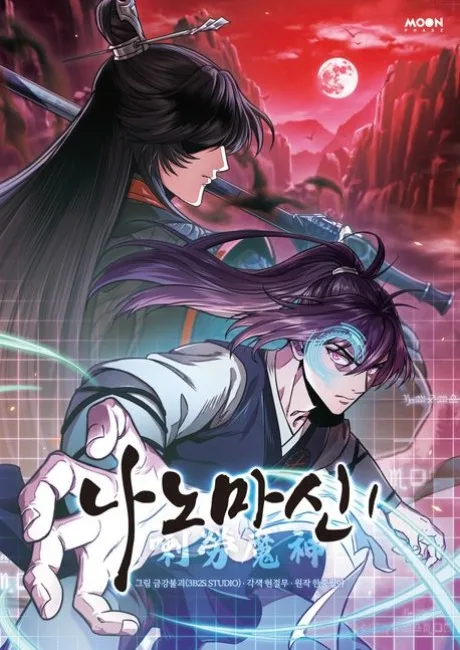 Official cover art for Nano Machine, the hybrid cultivation and system fantasy manhwa on Naver Webtoon. Source: AniList.
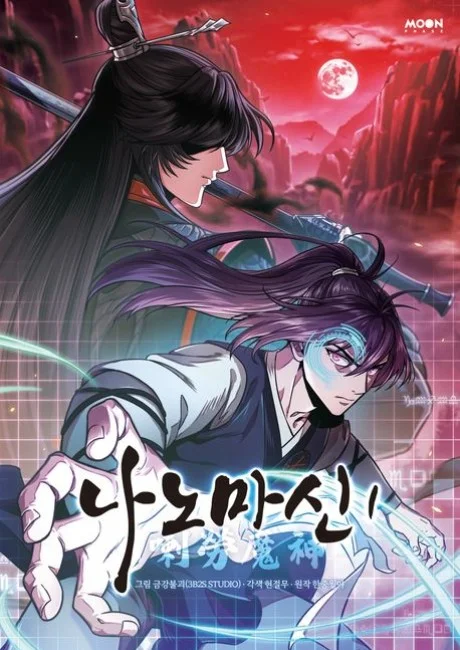 Nano Machine.
The first major arc of Nano Machine is internal Demonic Cult politics. Yeo-woon's low status within the organization isn't just social. It's a survival problem. Higher-ranking disciples have both the motive and the practical ability to have him killed or driven out. The nanomachines he receives change his cultivation trajectory, but the political exposure remains.
Understanding the Cult hierarchy is important for tracking why the power levels matter. The series uses a rank structure within the Cult that ties cultivation achievement to social position. When Yeo-woon advances a stage, the implication is not just that he's stronger. His political standing within the organization has shifted as well. Power and politics run together in murim fiction, and Nano Machine establishes this early.
The early chapters spend time on the internal dynamics before the external conflicts (rival factions, other major organizations) become prominent. Readers who find this setup slow should know it's structural. The Cult's internal hierarchy is the baseline that gives the later confrontations their context.
The Demonic Cult is also not a simple evil organization. It has a code, internal rules, and a specific culture built around the cultivation tradition it practices. The series treats the Cult as a functioning world rather than just a backdrop for Yeo-woon's rise. Other members are competent, have their own agendas, and don't simply exist to be overcome. The early chapters establish this before the later arcs pit Yeo-woon against external threats, so the reader understands what the organization actually is and what belonging to it means.
For how Nano Machine compares to other cultivation manhwa:
Best Cultivation Manhwa →
The system interface and cultivation mechanics
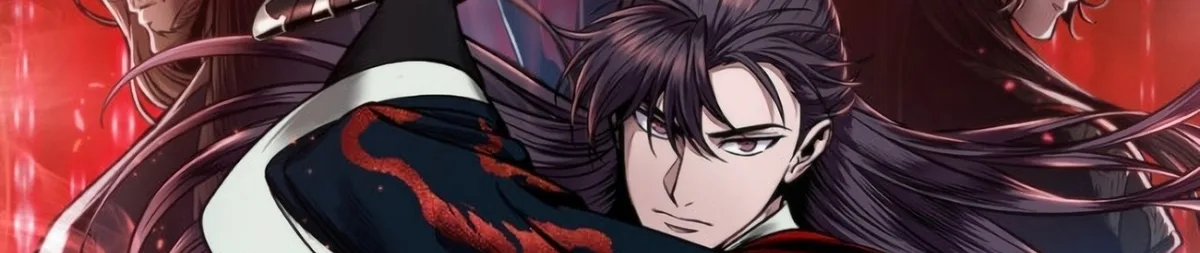 Nano Machine promotional banner depicting the system-interface overlay central to the hybrid genre concept. Source: AniList.
Nano Machine's system interface is one of the better-designed ones in the genre. It tracks cultivation stage, techniques mastered, and attributes in ways that make sense within the murim framework rather than imposing a dungeon-game vocabulary onto a historical martial arts setting. When the system labels a technique, it uses the murim naming conventions. The stat windows are flavored for the setting.
The cultivation progression is the actual backbone. Qi stages, internal meridian circuits, specific technique requirements: Yeo-woon progresses through the Demonic Cult's technique hierarchy at a pace that feels earned because the series shows the work. The nanomachines accelerate some of this but don't bypass it. He still has to learn the actual techniques from the actual murim sources; the system just provides optimization data.
This is what distinguishes Nano Machine from cultivation manhwa that use system elements as shortcuts. The system interface is an analytical tool, not a replacement for the training. That distinction preserves the cultivation genre's core appeal (the satisfaction of the training arc) while giving system-fantasy readers the progression feedback they expect.
One concrete example of how this works: when Yeo-woon learns a core Demonic Cult technique, the system doesn't simply unlock it. He has to acquire the technique, learn the theory behind the meridian circulation it requires, and practice until the system can recognize proficiency. The system's contribution is the data: efficiency metrics, optimal training sequences, comparison against theoretical performance. The actual cultivation work is his. This design keeps the training arcs meaningful rather than bypassing them through notifications.
For comparison with other system fantasy series with equally distinct mechanics (SSS-Class Revival Hunter in particular handles the system layer differently), see the SSS-Class Revival Hunter review →.


Arc structure and progression
Nano Machine's arc structure follows Cheon Yeo-woon from the inside of the Demonic Cult outward. Each major arc expands the world's scope while keeping the cultivation progression central.
The Cult arc (roughly chapters 1-80): Internal politics. Yeo-woon navigates the hierarchy, advances his cultivation, and establishes a position within an organization that initially treats him as disposable. The nanomachines' role here is primarily analytical: they help him understand what he's learning and optimize how he trains. The combat is present but the primary challenge is social and political. Readers who want faster action should know this arc is the foundation and the later payoffs require it.
The Competition arc (roughly chapters 80-140): The Demonic Cult's internal succession competition. Yeo-woon is now a registered participant in a process that determines hierarchy within the organization. His cultivation advancement collides with the political reality that others have spent years in this system and don't intend to be displaced. This arc is where the series begins delivering on the combat setup from the first arc. The fight choreography in this section is the first stretch that makes it clear the series is building to something more than politics.
The Factions arc (chapters 140+): The external world enters. Other major martial arts organizations become relevant. The murim world has three primary power structures (the Orthodox Sect, the Demonic Cult, and various independent factions), and Nano Machine starts mapping the relationships between them as Yeo-woon's cultivation pushes him beyond the Cult's internal scope. This is the longest running section of the series and where the world-building becomes most complete.
The Factions arc continues as the series' longest running section, ongoing as of September 16, 2026. The official Naver Webtoon listing shows 329 total Korean episodes, with no announced conclusion window.
One pattern worth noting: Nano Machine doesn't have filler arcs. The succession competition was essential setup for the faction conflicts. The faction conflicts require the reader to understand the Cult's internal dynamics from the first arc. The structure is cumulative, which means the early chapters that feel slow are doing load-bearing work. A reader who starts in the middle at chapter 150 will have the facts but not the weight behind them.
For other murim manhwa with similar political depth:
Best Murim Manhwa 2026 →
Key characters
Cheon Yeo-woon: the protagonist. Low-status, politically vulnerable, operating with a technological advantage nobody can see or explain. His cultivation advancement is measured and specific; the series resists the temptation to simply make him invincible immediately.
The Demonic Cult's senior disciples: several higher-ranking members who respond to Yeo-woon's advancement in different ways. Some are antagonists by circumstance; some by choice. The political landscape isn't simple, and the series treats the senior disciples as people with their own interests rather than obstacles to be removed.
The Lord of the Demonic Cult: the faction's leadership, whose relationship to Yeo-woon's status is complicated by the political calculations that run the organization. The Lord's arc across the early chapters is one of the series' more interesting elements, because the obvious antagonist reading isn't the only one.
Senior disciples of the Demonic Cult: several higher-ranking members whose relationships to Yeo-woon shift as the series progresses. Characters in Nano Machine are more than their roles in the hierarchy; the series is willing to let antagonists develop rather than remain fixed as obstacles.
For the full system fantasy manhwa ranked list including Nano Machine:
Best System Fantasy Manhwa →
Step-by-Step
-
Pick a platform. Naver Webtoon and Kakao are the primary sources in Korean. Official English translations run through Naver Webtoon's international service and Kakao's English platform, though availability varies by region and both have had gaps in certain markets.
-
Start at Chapter 1, not partway in. Nano Machine doesn't have natural mid-run entry points. The political situation and character relationships that make later chapters land are established across the early arc, so skipping ahead produces confusion rather than just gaps.
-
Pace for density, not just page count. At 329 total Korean episodes, the full run is a substantial read, and individual chapters carry more content per update than the typical vertical-scroll manhwa. Budget more time per chapter than you would for a lighter-paced series.
-
Pay attention to the Demonic Cult's internal politics from the start. The hierarchy and rivalries introduced in the opening arc keep resurfacing; missing them early makes later chapters harder to follow.
-
Read through at least chapter 80 before judging the pacing. The system-cultivation hybrid and faction politics are fully established by that point, which is also where the series is running at its best per this guide's own assessment.
For readers who finish Nano Machine and want more in the action-cultivation crossover space (series that blend murim fighting with modern dungeon or system elements), Best Action Manhwa 2026 → covers that specific overlap.
If you're new to manhwa entirely and want context for where Nano Machine fits in the broader landscape: Best Manhwa to Read in 2026 → has the full overview.
Nano Machine reading guide: tips
Advertisement
Pay attention to the Demonic Cult's internal politics in the early chapters. The rank structure and the reasons Yeo-woon's position is fragile aren't background flavor; they're the engine of the early arc. Readers who skip ahead to the fighting miss why the power levels carry weight.
Coming from system fantasy (Solo Leveling, SSS-Class Revival Hunter): the murim framework is new but Nano Machine introduces it gradually through the system interface. The HUD labels things in cultivation terms, which makes the vocabulary stick faster than a pure murim series would. You don't need prior murim knowledge to start here.
Coming from cultivation manhwa: the system interface is more integrated than most hybrid series. It doesn't feel bolted on. The cultivation mechanics are fully functional; the system provides optimization data, not shortcuts. The training arcs have the same structure you'd expect from a pure murim series.
Watch for the Lord of the Demonic Cult's arc across the early chapters. The obvious antagonist reading of that character isn't the complete one. The series plants complexity there early and the payoff runs through multiple arcs.
Frequently Asked Questions
Where do I start reading Nano Machine? Chapter 1 on Naver Webtoon or Kakao. Read in order.
Is Nano Machine cultivation or system fantasy? Both. Hybrid series: cultivation mechanics fully present, system interface fully present. Neither genre simplified.
How long is Nano Machine? 329 total Korean episodes listed on Naver Webtoon, ongoing weekly in 2026. Multi-week read. No completion date announced.
Is Nano Machine the best cultivation manhwa? Best entry point for system-fantasy readers. Pure murim fans may prefer Return of the Blossoming Blade or Return of the Mount Hua Sect.
What is the Demonic Cult in Nano Machine? The martial arts organization Yeo-woon belongs to. Brutal internal hierarchy. His low status within it is the series' opening conflict.
What platforms is Nano Machine on? Naver Webtoon and Kakao. Regional availability varies.
Does Nano Machine have an anime? No announcement as of this writing.
Related Reading
- Best Cultivation Manhwa →
- SSS-Class Revival Hunter review →
- Best System Fantasy Manhwa →
- Best Action Manhwa 2026 →
- Return of the Demonic Instructor Reading Guide →
- Best Manhwa to Read in 2026 →
- Nano Machine Cultivation Explained: All 8 Realms in Order
- Nano Machine Character Guide: full AniList-verified cast, from the Six Clans throne rivals to the Demonic Cult's elders and allies.