Loading…


ChapterBrief · Manhwa
Manhwa Like The Beginning After the End: 7 Top Series
Manhwa like The Beginning After the End: 7 picks by what hooked you: slow-build isekai, rule-based magic, or real protagonist bonds. Platform included.

The search for manhwa like The Beginning After the End splits into three separate searches, and most recommendation lists miss that entirely.
TL;DR: Manhwa like The Beginning After the End: 7 picks sorted by what the series actually delivers. Slow-build isekai, rule-based magic, or protagonist with real relationships. Trash of the Count's Family for structural patience, A Returner's Magic for the magic system, Second Life Ranker for family bonds at the center.
Some readers want another isekai where the slow opening chapters are structural, not accidental; where the fifty chapters of family life and world-building before the stakes arrive are the point, because they're what makes later confrontations land. Others want the magic system: mana potential fixed at birth, specific rules, power that can't just be willed into existence by plot necessity. And some want a protagonist who has actual relationships: a family that functions, bonds that create obligations, not an overpowered loner whose personal connections exist mainly to be put in danger.
TBATE does all three, and most isekai manhwa does one. This list identifies which one each series delivers on, so you end up reading the right series for the right reason.
Overview
The Beginning After the End (commonly abbreviated TBATE) is a Korean manhwa adapted from the web novel by TurtleMe, with art by Fuyuki23. The source novel launched in 2018 on various web fiction platforms; the manhwa adaptation began in 2020 and serializes on Tapas and Tappytoon. The series follows Arthur Leywin, a former king at the apex of his world's combat hierarchy who dies and is reincarnated as the infant son of a modest family in a world where power comes from mana cultivation rather than martial strength. The opening thirty chapters are spent in Arthur's childhood, establishing the family bonds, friendships, and emotional baseline that define his choices for the rest of the series.
What distinguishes TBATE from most isekai manhwa is the structural patience of that opening. The mana system has a fixed ceiling: potential is determined at birth, and no amount of effort raises the cap. Arthur's advantage is not a higher ceiling but the accumulated combat instincts and tactical experience of his previous life, applied within a system that cannot fully account for it. The series is ongoing at roughly chapter 245-250 on Tapas as of August 2026; the source novel reached 529 chapters before completing. The anime adaptation premiered Season 1 in 2025, covering the early childhood and academy arcs, and Season 2 followed in April 2026 on the same streaming deal. Physical editions are published by Yen Press.
manhwa like The Beginning After the End: key takeaways
- Patient isekai build: Trash of the Count's Family and Overgeared both require comparable investment before the stakes arrive, and both pay off in the same way TBATE does, with early setup suddenly mattering in late fights
- Magic system specificity: A Returner's Magic Should Be Special is the tightest match on defined rules and consequence-based power scaling
- Protagonist with relationships: Second Life Ranker puts family at the center structurally; SSS-Class Revival Hunter builds found-family bonds across its run
- Fastest pacing: Solo Leveling if you liked TBATE's progression structure but not the childhood arc; completed at 179 chapters
- None of these fully replicate TBATE. Each delivers one or two of its core elements. The pick depends on which element you were actually reading for
manhwa like The Beginning After the End: for the patient isekai build
Advertisement
TBATE's first thirty chapters are a studied choice. TurtleMe is establishing Arthur's emotional baseline: the shock of having a loving family after a past-life as a king who died alone is what makes his subsequent choices legible. The reader who bounces off TBATE at chapter 15 and the reader who considers it their favorite manhwa have encountered exactly the same chapters; one understood what the slowness was for.
The series below share that structural patience. Both require investment before the payoff.
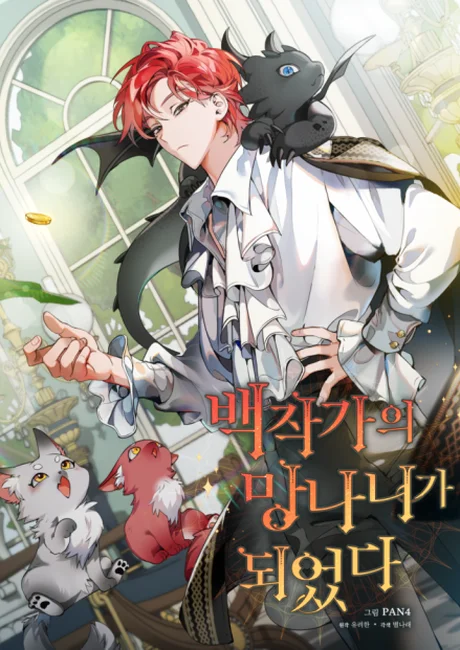 Trash of the Count's Family cover art.
Trash of the Count's Family
Platform: WEBTOON (free, Fast Pass for newest) | Status: Ongoing, 200+ chapters
Cale Henituse wakes up inside a novel he read in his past life. He was a minor villain in the original text, the wastrel aristocrat who gets beaten up by the actual protagonist around chapter 50. His plan: stay out of the story, avoid getting beaten up, live comfortably.
The more interesting question isn't how he avoids the plot. It's how the story handles a protagonist whose foreknowledge is about what happens to other characters, not about combat outcomes. Cale can predict story beats, but he can't predict the people who start clustering around him once he begins intervening in small ways. By chapter 100, he has built an unlikely group of companions through a series of decisions that were individually pragmatic and collectively created obligations he didn't plan for.
The first forty chapters read as light comedy; Cale is sarcastic about everything, including his own situation, and the early arcs are light on stakes. Around chapter 60, the world starts establishing what the actual threats are, and the tone adjusts without losing the voice. It's comparable to TBATE's rhythm: quiet establishment, then gradual escalation of what "establishment" was preparing you for.
Free on WEBTOON with Fast Pass for newest chapters. Ethan's review at our Trash of the Count's Family coverage touches on how the information-advantage structure compares to other isekai.
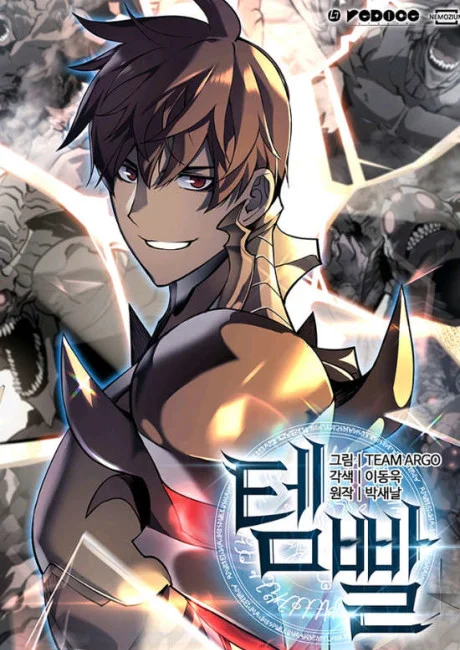 Overgeared cover art.
Overgeared
Platform: Tapas | Status: Ongoing, 317+ chapters
Overgeared is set inside an MMORPG rather than a fantasy world, but the patience structure is almost identical to TBATE. Grid starts with a production class (Pagma's Successor, a blacksmithing inheritance) in a game designed around combat. His early chapters establish the disadvantage clearly. The payoff arrives much later, when items Grid crafted dozens of chapters ago turn out to be exactly what a specific encounter requires.
That preparation-to-payoff structure is what connects it to TBATE. Arthur's past-life experience functions the same way: invisible advantage that surfaces at specific story moments, built credibility that pays off when the stakes arrive. Grid's advantage is equipment; Arthur's is tactical experience and emotional groundedness in a world that can't account for either.
The platform overlap matters here: both TBATE and Overgeared are on Tapas with a coin model. If you're already reading one, accessing the other has no additional friction. See the Overgeared recommendations guide for how it compares to other VR isekai specifically.
Our master manhwa reading list covers the top 30 titles across every genre for 2026.
Best Manhwa to Read in 2026 →
For the Rule-Based Magic System
TBATE's mana system has a premise that most system-fantasy manhwa avoids: power potential is fixed at birth. Arthur's advantage isn't a higher ceiling; it's accumulated skill from a past life, applied within a system that has hard constraints. The rules exist and the story respects them.
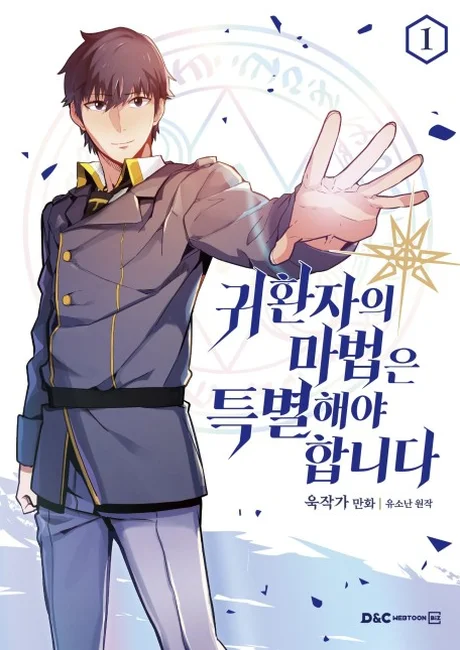 A Returner's Magic Should Be Special cover art.
A Returner's Magic Should Be Special
Platform: Tappytoon | Status: Completed, 268 chapters
Desir Arman survived humanity's final stand inside the Shadow Labyrinth, watched everyone die anyway, then woke up thirteen years in the past. The series is a regression isekai, not a reincarnation one; Desir remembers a specific future and is working to prevent it, which means the magic system needs to be defined enough that readers can track whether his foreknowledge actually applies to a given situation.
It is that defined. Magic schools have specific rules, power scaling ties to study and combat conditions rather than to protagonist momentum, and Desir's party combinations are legible; you can understand why a specific spell combination works against a specific enemy type. The series doesn't hand him victories; it shows him constructing them from components.
The comparison to TBATE isn't the protagonist (Desir is more purely tactical than Arthur, with less emotional weight on relationships early) but the magic logic. Both series built systems that have consequences, where knowing the rules matters more than just having high numbers.
Tappytoon hosts it with a coin model. The manhwa is complete at 268 chapters (June 2024), adapting the finished source novel.
 Dungeon Reset cover art.
Dungeon Reset
Platform: WEBTOON (free) | Status: Ongoing, 260+ chapters
Jung Dawoon enters a dungeon system alongside combat-class players and gets assigned Tunnel Digger, an infrastructure ability in a game built entirely around fighting. Then he discovers a glitch: dungeon resets clear the enemies and the player stats, but the physical tunnels and crafted items he built don't disappear.
The mechanic has exactly one rule and the story applies it consistently. Dawoon's power comes from accumulated infrastructure across resets; nothing else, no secondary combat ability that emerges later. Every floor solution comes from figuring out what that single constrained mechanic can do that the dungeon designers didn't account for.
It's more mechanically pure than TBATE and narrower in scope: no world-building beyond the dungeon, no family bonds, no political stakes. What it shares is the satisfaction of watching a defined system being understood thoroughly and exploited without breaking the system's own rules. Free on WEBTOON.
For the Protagonist with Actual Relationships
Most isekai manhwa treats relationships instrumentally; they exist as power-up triggers (loss = motivation) or as audience for the protagonist's wins. TBATE's first arc is unusual because Arthur's family bonds are treated as ends in themselves, not as plot infrastructure.
The series below actually follow through on relationships as story substance.
 Second Life Ranker cover art.
Second Life Ranker
Platform: Tapas | Status: Ongoing (Season 4 returned April 23, 2026)
Yeon-woo finds his twin brother's diary buried in a time capsule. His brother Jeong-woo entered the Tower (a combat progression system) and died after being betrayed by the people he trusted. Yeon-woo enters the Tower to understand what happened and, eventually, to avenge it.
The relationship is structural, not decorative. Jeong-woo never appears in person after the first chapters; he exists through the diary, through the memories of people who knew him, through the legacy skills he left behind. Yeon-woo's journey through the Tower is shaped at every stage by what his brother documented, and then (once the diary runs out) by Yeon-woo's own interpretation of who Jeong-woo was.
TBATE puts family bonds front and center in the establishment chapters. Second Life Ranker makes a family bond the load-bearing structure of an entire progression series. The two series have different settings and tones, but they're solving the same problem: how do you make a reader care about a protagonist's relationships as much as their power level?
The full Second Life Ranker reading guide covers the Tower progression structure and where the series diverges from other portal-fantasy manhwa.
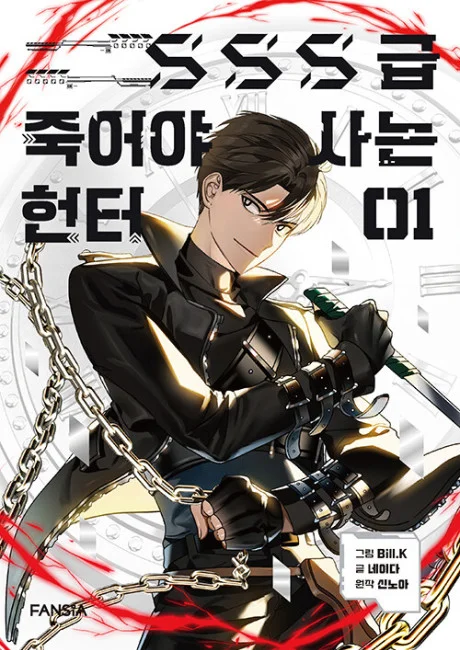 SSS-Class Revival Hunter cover art.
SSS-Class Revival Hunter
Platform: Tapas | Status: Completed
Kim Gong-ja receives an ability that nobody in the hunter system would choose: he can copy the most powerful ability of anyone who kills him, then rewind to before his death. The mechanic only activates when he dies. Every skill he has, he earned by dying to acquire it.
The early chapters are darkly comedic; Gong-ja deliberately engineers his own deaths to acquire specific skills, which reads as absurdist. The series transitions into something more structurally complex around the midpoint: the accumulated skills create a hunter with a very strange skillset and a reputation that builds across resets in ways Gong-ja doesn't always control.
What connects it to TBATE is how relationships accumulate. Arthur builds genuine bonds across his childhood years; Gong-ja builds them across resets, which means some characters remember him from versions of events they shouldn't have access to. It's a different mechanism, but the result is similar: a protagonist whose social capital is as plot-significant as his combat power.
For a broader look at how SSS-Class compares to other hunter-system series, the TBATE reading guide includes a section on where readers who finished TBATE typically go next.
Our best isekai manhwa list covers the top reincarnation stories with long-form power progression.
Best Isekai Manhwa →
Analysis: What TBATE Actually Is
Advertisement
The more interesting structural question about TBATE isn't why it's popular; reincarnation isekai with a loving family and a rule-based magic system is a functional premise, but why the patience requirement is unusual enough that readers specifically search for series that replicate it.
Most isekai manhwa resolves the protagonist's competence question quickly. The reader needs to believe the protagonist can handle the world, so the series establishes that belief fast: Solo Leveling does it by chapter 10, SSS-Class Revival Hunter by chapter 8. TBATE takes until approximately chapter 60, by which point the early family chapters are doing retrospective work; you understand what Arthur has to lose, and you understand why he responds to threats the way he does, because you watched thirty chapters of the life those responses are protecting.
That's a craft choice, not a pacing problem. It requires a reader who will invest before the returns are legible. The series below that match this structure (Trash of the Count's Family, Overgeared, Second Life Ranker) share that requirement. The ones that don't (Solo Leveling, A Returner's Magic) are better picks for readers who found the early TBATE chapters slow and were mainly waiting for the power progression to start.
The TBATE review covers this distinction in detail, including where the series' pacing divides reader opinion most sharply.
Frequently Asked Questions
What manhwa is closest to The Beginning After the End?
Trash of the Count's Family is the structural closest match: isekai into a fantasy world with foreknowledge instead of past-life combat power, slow early chapters that pay off later, and a protagonist who builds real relationships rather than power-scaling alone. If you want the magic system angle, A Returner's Magic Should Be Special is the tighter pick. It's completed at 268 chapters.
Is there a manhwa like TBATE but faster-paced?
Solo Leveling is the common recommendation if you want the system-progression structure without TBATE's 30-chapter family-life setup. It's also completed at 179 chapters on WEBTOON. If you want something slightly slower than Solo Leveling but faster than TBATE, SSS-Class Revival Hunter finds a middle ground; the early chapters establish the mechanics quickly without the extended childhood arc.
Are there manhwa like TBATE where the protagonist has a real family?
Second Life Ranker puts family at the center; the protagonist reads his dead brother's diary to understand what happened, and that relationship drives the story even after the diary runs out. Trash of the Count's Family builds found-family bonds across its run that eventually rival the weight of TBATE's early chapters. Both series treat relationships as plot infrastructure, not background detail.
What manhwa has a magic system as specific as TBATE?
A Returner's Magic Should Be Special is the most system-precise: each magic type has defined rules, power scaling ties to specific study and combat conditions, and Desir's foreknowledge lets the reader see exactly why certain spell combinations work. Dungeon Reset is the most mechanically constrained; the protagonist's entire toolkit is a single dungeon mechanic with narrow rules, which forces very specific problem-solving.
Are any manhwa like TBATE completed?
Solo Leveling is completed at 179 chapters. A Returner's Magic Should Be Special is completed at 268 manhwa chapters (June 2024). The others on this list (Trash of the Count's Family, Overgeared, Dungeon Reset) are ongoing as of mid-2026. SSS-Class Revival Hunter is completed. Second Life Ranker Season 4 returned April 23, 2026 and is ongoing. TBATE itself is ongoing at roughly chapter 245-250 on Tapas (source novel: 529 chapters).
Is Overgeared similar to The Beginning After the End?
They share the patience requirement: both series build slowly and reward readers who track details from early chapters during later payoffs. The core difference is setting: TBATE is fantasy reincarnation with a mana-at-birth system; Overgeared is VR MMORPG with a crafting class. Grid's arc is about economic and political power in a game world; Arthur's is about navigating a fantasy world where his past-life experience is an internal advantage nobody can see.
Does SSS-Class Revival Hunter work if you haven't read Solo Leveling?
Yes. SSS-Class Revival Hunter stands alone; the story references the solo leveling aesthetic through genre conventions rather than plot. You don't need prior Solo Leveling knowledge. What helps is familiarity with the Korean hunter-gate premise, which any isekai manhwa reader will already have. The copy-and-rewind mechanic is explained clearly in the opening chapters.
Where can I read manhwa like The Beginning After the End legally?
WEBTOON hosts Trash of the Count's Family, Solo Leveling, and Dungeon Reset for free with Fast Pass for newest chapters. Tapas hosts The Beginning After the End, Overgeared, and SSS-Class Revival Hunter with a coin model. Tappytoon hosts A Returner's Magic Should Be Special. Second Life Ranker is on Tapas. All platforms offer some free chapters to start.
Related Reading
- The Beginning After the End Review: An Isekai That Builds: Full in-depth review of TBATE: what works and what doesn't.
- The Beginning After the End Reading Guide: Novel vs Manhwa: Novel vs manhwa comparison and reading order guide.
- Best Isekai Manhwa Ranked for 2026: 15 Series You Need: 15 isekai picks for readers who loved TBATE's slow-build world.
- Best Manhwa with OP MC: 10 Must-Read Series in 2026: 10 OP-protagonist picks with similar power ceilings.
- Best Manhwa to Read in 2026: 20 Series Worth Your Time: Broader 2026 list for when you finish the TBATE-adjacent picks.
- The Beginning After the End Character Guide: Full Cast: AniList-verified names for Arthur Leywin, Tessia Eralith, the Twin Horns party, and the Xyrus Academy cast.
References
- The Beginning After the End on Tapas: official English release, coin model
- Trash of the Count's Family on WEBTOON: free with Fast Pass
- Solo Leveling on WEBTOON: completed, free
- A Returner's Magic Should Be Special on Tappytoon: coin model
- Dungeon Reset on WEBTOON: free
- r/tbatenovel community: reader discussion and chapter reactions
About the author

Critical Theorist & Features Writer
Manhwa and webcomic critic with a background in literary analysis. Writing about narrative and genre since 2016. Specialises in genre history and story structure.
- Manhwa and webcomic critic since 2016
- Graduate background in comparative literature
- Published criticism covering Korean and Japanese comics
- Specializes in genre lineage and narrative structure




Disclaimer
This article is published for informational and entertainment purposes. It does not constitute professional financial, legal, or technical advice. Series availability, platform access, translation status, and chapter counts change. Verify critical details (pricing, regional availability, official translation status) with publishers and platforms. Affiliate links, where present, help support our editorial work and are labelled in our affiliate disclosure.
Comments
Loading comments…