The World After the Fall reading guide starts with the tower system because the series doesn't. It drops you into a post-fall world and gives you the context in pieces, which is the right artistic choice and a real barrier for new readers who want to understand what they're reading before committing to 30 chapters.
TL;DR: The World After the Fall is an ongoing tower manhwa (WEBTOON, free) where Jae-Hwan is the only Tower Walker who refused regression. He lives in the ruined post-fall world everyone else abandoned. The tower system involves Tower Walkers, regression stones, and branching timelines. The Readers (higher beings who observe the Tower as a story) appear later and make things philosophically heavy. Patience required in chapters 1-25. Comparable to SSS-Class in philosophical ambition but set in a completely different world structure. Read on WEBTOON; print via Yen Press.
This guide covers the system upfront so you have the map before the territory. It also breaks down the arc structure, explains what the Readers concept is without spoiling its full role, and sets realistic expectations for how the series paces itself compared to SSS-Class and Solo Leveling.
The World After the Fall reading guide: key takeaways
- Ongoing since 2022, WEBTOON English, free; Yen Press print available
- Original web novel by singNsong; manhwa story by S-Cynan; art by Eondedeu Gamja
- Jae-Hwan is the only Tower Walker who refused the regression stone
- Tower system: towers appeared, monsters inside them, Tower Walkers fight them, regression stones allow time-branch escape
- The Readers: higher beings observing the Tower timeline as a story, introduced in later arcs
- Pacing: first 20-30 chapters are the densest; series rewards patience
- AniList mean score 77/100, reflecting a series that asks more from its readers than the average tower manhwa
The tower system explained
Understanding the tower system before you read is useful because the series doesn't pause to explain it all at once.
Towers appeared. The origin is one of the series' questions rather than a given answer. Inside the towers exist monsters that don't belong in the ordinary world. Some humans awakened as Tower Walkers: people with the ability to enter towers, gain special powers from fighting inside them, and develop enough capability to push back against the monsters.
Tower Walkers are the closest thing to a functioning defense humanity has against the towers. They climb. They grow stronger. They fight the monsters across increasingly difficult floors or stages.
The towers have a second feature that changes everything: the regression stone. At the moment of a Tower Walker's death, a regression stone can send them back in time. Not to the same timeline. To a branch of it, a fresh version that diverges from the original at the moment of regression. The original timeline continues without them, now absent its most capable fighters.
This is the mechanism that created The World After the Fall's setting. Tower Walkers, facing death, regressed into fresh timelines. They did this repeatedly. The original timeline, the post-fall world, accumulated the absences. Towers collapsed. Monsters spread. Humanity in the original timeline thinned.
Jae-Hwan is a Tower Walker who reached the brink of death and refused the regression stone. He fought to the top instead. He found what was actually there. What he found is the series' central revelation, and the review covers it without spoiling it. What's relevant for this guide: finding the top changes Jae-Hwan's understanding of what the tower system actually is, and that changed understanding drives everything after.
Who are the Tower Walkers?
Advertisement
The term Tower Walker describes any human who awakened with the ability to enter towers and gain power from fighting inside them. Awakening is not universal. Most humans in Jae-Hwan's timeline did not awaken. Tower Walkers were a relatively small subset of humanity who became, effectively, the world's only functional defense.
The series establishes different tiers of Tower Walker ability. By the time Jae-Hwan is introduced, he's at a level that very few Tower Walkers historically reached. The people he encounters in the post-fall world are either remnants who couldn't regress (didn't reach the death threshold, didn't have a stone available), or people whose circumstances were unusual.
This matters for reading the power dynamics in the early chapters. When Jae-Hwan encounters conflict in the post-fall world, the other participants are typically not at the level he reached in the towers. The series is careful about what this means: he's not unkillable, and the post-fall world has threats that Tower hierarchy didn't prepare anyone for. But the gap between his development and most people he meets is real and shapes every encounter.
What regression stones are
Regression stones are objects found in the towers (the exact origin is part of the series' larger mystery) that enable a Tower Walker to create a timeline branch. Using one at the moment of death sends the Tower Walker back to an earlier point, with all the skills and memories they accumulated, into a new timeline where the original still continues.
The word "regression" is used differently here than in standard regression manhwa. In a series like SSS-Class Revival Hunter or SSS-Class Revival Hunter, regression or time loops happen within the same timeline. In The World After the Fall, regression creates an entirely new branch. The Tower Walkers who regressed are not returning to the same world. They left.
This distinction is the reason Jae-Hwan's choice has the weight it does. He didn't just choose not to use a second chance. He chose to stay in a world that everyone capable of defending it chose to leave. The post-fall world is the discarded timeline. He's the only Tower Walker who stayed in it.
Arc structure and pacing
The series breaks into phases rather than formally labeled arcs, and the transitions are gradual rather than marked. Here is a rough structural map without specific spoilers.
Chapters 1-25: Setting and premise. This is the densest section for new readers. The tower system, the regression mechanic, the state of the post-fall world, and Jae-Hwan's specific situation are all established here. The series doesn't hand these out in exposition dumps; it reveals them through events. This is the right approach artistically and requires patience from readers who want the full map first. The opening chapters can feel opaque until the system clicks.
Give it 25 chapters before making a judgment call. That's not an arbitrary number: by chapter 25, the basic situation is clear enough that you'll know whether the premise engages you.
Chapters 26-60: The post-fall world. Jae-Hwan moves through the ruined post-fall world and encounters the people and structures that remain. The series develops the atmosphere of the setting: depleted, isolated, unlike any tower setting in the genre. Eondedeu Gamja's art is doing its most distinctive work in this phase. The post-fall world looks like what it's described as, which isn't something every dark-tone manhwa achieves.
Jae-Hwan's character becomes clearer in this section. His stubbornness isn't heroism. He can't generate the action of walking away from a fight while he's alive. The series distinguishes this from optimism or courage carefully.
For the full critical assessment of the series including the Readers concept and how it compares to SSS-Class:
The World After the Fall Review
Later arcs: The Readers. The Readers arrive gradually rather than as a single revelation. Higher beings from outside the Tower timeline observe Jae-Hwan's world as a narrative. Some have preferences about how it develops. Some want to intervene. Their existence reframes questions about whether Jae-Hwan's choices, including the refusal to regress, were ever really choices.
This is where the series becomes philosophically demanding. The tower-climbing action continues, but the questions underlying it become harder: if higher beings can observe and potentially shape events, is there a meaningful difference between choosing to fight and being authored to fight? The series doesn't answer this cleanly. It asks it across multiple arcs and lets the question accumulate weight.
Readers who want clean action progression will find this layer increasingly abstract as the series continues. Readers who find philosophical depth in their tower manhwa will find this is where The World After the Fall distinguishes itself most clearly from everything else in the genre.
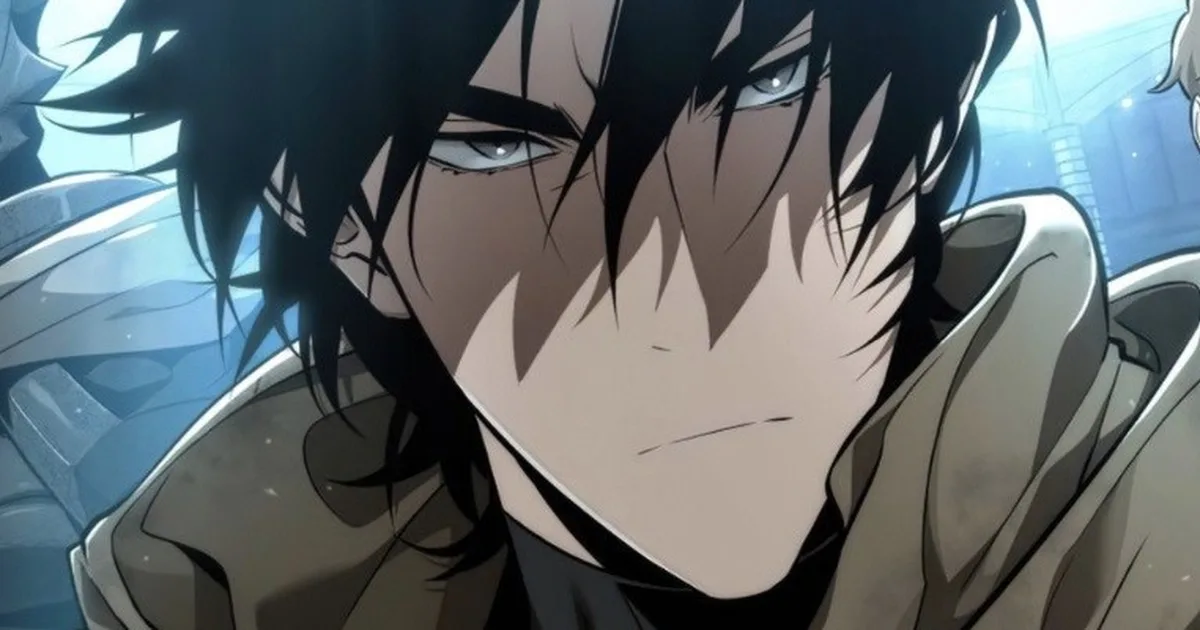
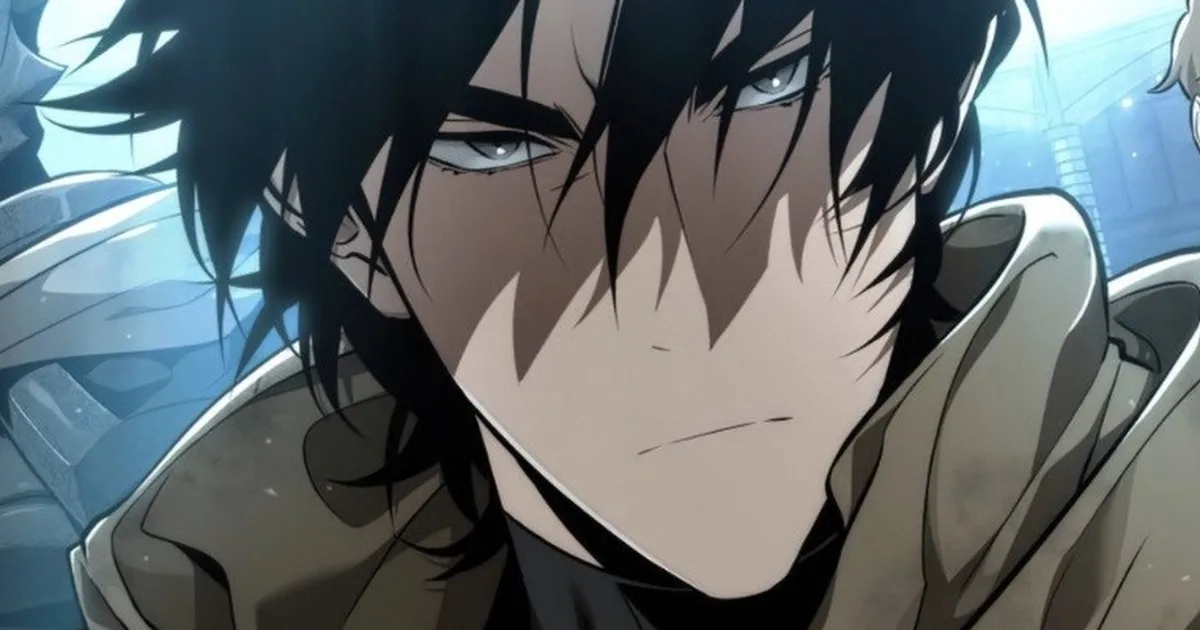 Eondedeu Gamja's art establishes the post-fall world atmosphere early: depleted, isolated, unlike any other tower manhwa setting.
Jae-Hwan compared to other tower protagonists
Jae-Hwan's character type is unusual in the genre. Tower manhwa protagonists typically have explicit goals: reach the top, take revenge, grow strong enough to save someone. Jae-Hwan's implicit goal is: keep going. He proceeds because his psychology cannot produce the action of stopping.
This is different from the driven-hero type (Sung Jin-Woo in Solo Leveling, Confucius Kim in SSS-Class Revival Hunter) and different from the strategic-operator type (Kim Gong-Ja in SSS-Class Revival Hunter). Jae-Hwan isn't optimizing or revenge-seeking. He's continuing because continuing is what he does.
The series uses this to create situations where his stubbornness produces outcomes nobody anticipated, including him. It's a character premise that generates drama without requiring a traditional motivation structure.
How it compares to other tower manhwa
The natural comparisons: Solo Leveling (179 chapters, completed), SSS-Class Revival Hunter (ongoing, 151+ chapters), SSS-Class Revival Hunter (ongoing), Second Life Ranker (ongoing, long backlog).
Solo Leveling gives the protagonist a unique growth system in a world full of awakened hunters. SSS-Class series use death mechanics in populated tower settings. Second Life Ranker uses legacy-based foreknowledge. All of them feature protagonists actively climbing through a tower system that's still functioning.
The World After the Fall's protagonist is in the aftermath. Everyone climbed, everyone left. He stayed. The setting has no equivalent in the genre, and the Readers concept adds a philosophical question those series don't ask.
The AniList mean score of 77/100 (versus Solo Leveling's higher scores) reflects the patience the series demands. It's not asking what every tower manhwa asks. Some readers find this more rewarding. Some find it less satisfying than a clean power-progression arc.
For more on what distinguishes TWATF from its tower-genre peers and recommendations for readers who want more after it:
Manhwa Like The World After the Fall
Step-by-Step
1. Start on WEBTOON English: The series is free and ongoing, and it was designed for the vertical scroll format, so Eondedeu Gamja's atmospheric art and pacing of revelation work best there rather than in print.
2. Push through chapters 1-25 before judging the premise: This is the densest section, establishing the tower system, the regression mechanic, and Jae-Hwan's specific situation through events rather than exposition dumps. Give it the full 25 chapters; by then the basic situation is clear enough to know if it engages you.
3. Continue through chapters 26-60 to see the post-fall world take shape: Jae-Hwan moves through the ruined setting and encounters what remains of it, and this is where Eondedeu Gamja's art does its most distinctive work establishing the atmosphere.
4. Treat the Readers concept as a structural premise, not a mystery to solve: It arrives gradually in the later arcs rather than as a single revelation. Don't try to decode it ahead of the narrative; let the series introduce it at its own pace.
5. Check WEBTOON or AniList for the current chapter count once you're caught up: The series has been ongoing since 2022 with no completion date announced, so the total keeps growing. If you want more after catching up, Manhwa Like The World After the Fall rounds up six picks in the same tower and philosophical-layer space.
Platform options
WEBTOON (English): Free, ongoing, current chapters available. This is where the series updates. Start here.
Naver Webtoon (Korean): Original publication. Relevant if you read Korean or want the Korean-language version.
Yen Press (print): English print volumes available. May lag behind the WEBTOON digital release by a chapter cycle. Good for readers who prefer physical and don't need to follow week-to-week updates. Confirm current volume availability before assuming the full run to date is in print.
The series was designed for vertical scroll format (WEBTOON). Eondedeu Gamja's atmospheric art and the pacing of revelation work with the scroll format in ways that the print layout handles differently. WEBTOON is the optimal reading experience.
Common mistakes reading TWATF
Advertisement
Stopping before chapter 25. The opening is dense and the full picture isn't assembled yet. Readers who stop before 25 are stopping before the premise has had time to work.
Expecting the same power-progression arc as Solo Leveling or SSS-Class. The World After the Fall is not primarily interested in Jae-Hwan getting stronger in ways the Tower hierarchy has to acknowledge. It's interested in what happens when one person is left in the aftermath of a system that everyone else escaped. The progression exists but it's not the series' central question.
Treating the Readers concept as a twist to guess at. The Readers aren't set up as a mystery to solve. They're a structural premise the series introduces gradually. Don't try to decode it ahead of the narrative.
Comparing it directly to SSS-Class and expecting similar satisfaction. SSS-Class Revival Hunter and Revival Hunter have cleaner power-progression beats. TWATF asks more patience for less conventional payoff. Both are worth reading, but expecting one to deliver what the other does leads to frustration.
Frequently Asked Questions
What are the Readers in The World After the Fall?
Entities from a higher world who observe Jae-Hwan's timeline as a story. They raise questions about determinism and free will that become central to the later arcs.
How is it different from other tower manhwa?
The protagonist refuses regression and lives in the ruined post-fall world everyone else abandoned. No other tower manhwa occupies this setting. The Readers concept adds philosophical depth that SSS-Class and Solo Leveling don't attempt.
How many chapters?
Ongoing since 2022. Current chapter count on WEBTOON or AniList. No completion date as of mid-2026.
Does it get easier to follow?
Yes. The first 25 chapters are the densest. After that the pace of new concept introduction slows. The Readers add complexity later but arrive when readers have a firm foundation.
Is Jae-Hwan the only one who didn't regress?
Among Tower Walkers, yes. Other people still exist in the post-fall world but not as Tower Walkers who chose to stay.
Where can I read it?
WEBTOON English, free. Korean: Naver Webtoon. Print: Yen Press.
Related Reading
- The World After the Fall Review: Full 8.0/10 critical review with Readers concept discussion, atmosphere analysis, and verdict.
- Manhwa Like The World After the Fall: Six picks for readers who want more after TWATF, focusing on tower and philosophical-layer series.
- SSS-Class Revival Hunter Review: For comparison reading; the death-copy tower series that sits nearest to TWATF in genre.
- Omniscient Reader's Viewpoint Review: The other major tower-genre series with philosophical layers, different mechanic, similar emotional weight to TWATF.
- Solo Leveling Reading Guide: How to approach the genre-defining tower manhwa before or after The World After the Fall.