
TL;DR: Manhwa like Liar Game sorted by how closely they match the psychological game mechanic: Dice (388 ch, done, WEBTOON) is the closest structural match. Kill the Hero (153 ch, done) is the fastest read. Omniscient Reader's Viewpoint delivers the same intelligence-over-power satisfaction at a larger scale.
Manhwa like Liar Game -- 6 series where the protagonist wins by reading the system, not by having more power. The Summer 2026 anime is pulling new viewers into the psychological game genre, and these manhwa deliver the same core satisfaction: someone without obvious advantages figures out the rules faster than everyone else. For the full Summer 2026 anime rundown and what to read alongside each title, see Summer 2026 Anime for Manhwa Fans.
This list is about one specific thing: the game-system mechanic. Each pick has a structured rule set, a protagonist who uses intelligence over strength, and stakes high enough that losing means something real. Dark or psychological series that don't have that game-system structure didn't make the cut -- for those, see the best manhwa psychological thrillers list.
Key Takeaways
Manhwa like Liar Game worth reading in 2026:
- Dice -- 388 chapters, completed, closest structural match. A hidden game system with escalating stakes and a mystery controller running it all.
- Omniscient Reader's Viewpoint -- Protagonist knows the story in advance and uses that knowledge as a weapon. Ongoing, very high popularity.
- Kill the Hero -- 153 chapters, completed. Protagonist knows the dungeon game is rigged and plays accordingly.
- Tower of God -- Long-form game floors with alliance manipulation and intelligence battles at every level.
- The Gamer -- RPG overlay on real life. 510 chapters, completed.
- Lookism -- Gang hierarchy as a power game; psychological strategy without a formal game system.
All six are available in English.
Manhwa like Liar Game: why fans connect with these picks
Liar Game works because it inverts the action formula: the protagonist's power is reading other players better than anyone. They don't fight -- they figure out which rules can be exploited and build coalitions before anyone else thinks to.
These manhwa share that inversion. The protagonist isn't the strongest. They're the one who figured out how the game actually works before round two begins.
The other thing Liar Game does -- and what makes it stick -- is that someone built the game deliberately. There's a controller, a designer, a mastermind who already thinks they've won. Part of the tension is figuring out who that is and what they actually want.
That structure -- hidden rules, a protagonist who exploits them, a mastermind who designed the trap -- shows up across everything on this list. Each pick shares at least two of the three elements.
For series with dark psychological elements beyond game mechanics, see
Best Manhwa Psychological Thrillers →
 Dice: The Cube that Changes Everything cover art.
1. Dice: The Cube that Changes Everything
Advertisement
 Dice: The Cube that Changes Everything by YongYong
The closest structural parallel to Liar Game in manhwa. A mysterious figure called Dicey appears and offers students a proposition: complete game-like missions to earn dice that permanently boost any stat you choose -- strength, intelligence, looks, luck. The catch is that someone else paid a cost you won't learn about until much later.
Dongtae, the protagonist, enters the game as one of the weakest participants. By reading the rules carefully and making choices other players don't expect, he moves up. The series ran for 388 chapters and is fully completed on WEBTOON.
The game has a mastermind operating behind it, the rules are real but not fully disclosed, and winning requires understanding what the game actually wants -- not just competing harder. The power creep is visible, the psychology holds up, and the endgame pays off.
Platform: WEBTOON (free with ad support) Status: Completed, 388 chapters Best for: Readers who want the clearest Liar Game structural parallel with a complete story.
2. Omniscient Reader's Viewpoint
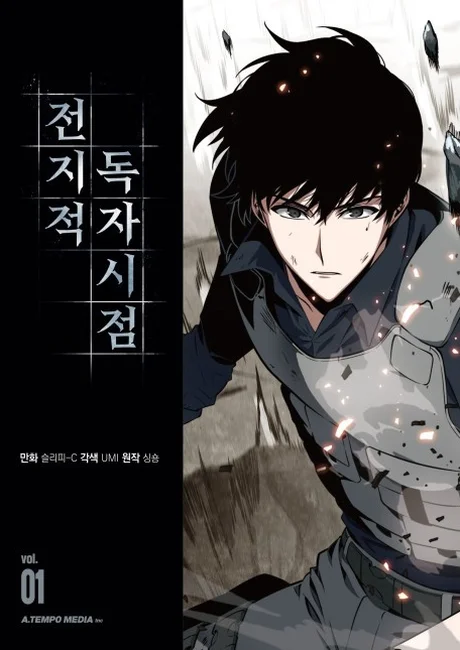 Omniscient Reader's Viewpoint by sing N song
The premise differs from Liar Game but the cognitive gap is the same: the protagonist knows the story in advance. Dokja Kim is the only person who read a web novel called Three Ways to Survive in a Ruined World to its conclusion -- and then the novel's scenario starts happening in reality.
The psychological game element comes from Dokja using story knowledge as a tactical advantage in situations where everyone else is improvising. He knows which characters will betray the group. He knows which story arcs are traps. The series consistently delivers that Liar Game satisfaction of watching someone appear to be playing the same game as everyone else while actually playing a completely different one.
ORV is ongoing with an official English translation on WEBTOON. It has one of the largest fanbases in manhwa.
Platform: WEBTOON (English), Naver (Korean) Status: Ongoing Best for: Readers who want the intelligence-advantage feeling at a much larger scale.
For arc breakdowns and where to start, see the
Omniscient Reader's Viewpoint Reading Guide →
3. Kill the Hero
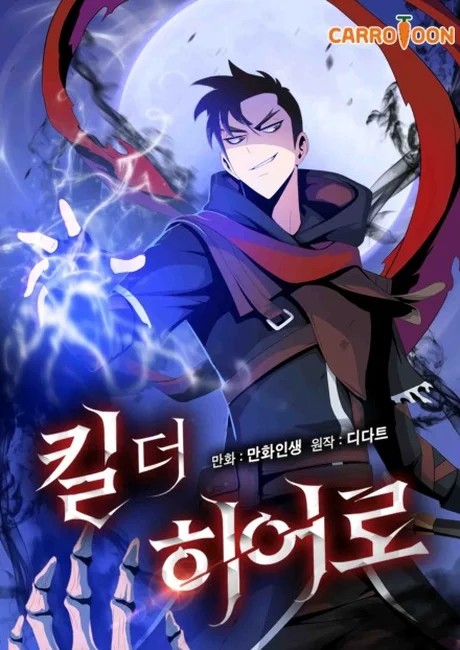 Kill the Hero by D-Dart
Woojin Kim died in a dungeon because the guild leader he trusted decided he was more useful dead. He respawns at the start, before any of it happened, with full memory of how the dungeon system works, who the traitors are, and exactly how to use that knowledge against the people who killed him.
Kill the Hero is shorter than most on this list (153 chapters, completed) and functions almost entirely as a strategic dismantling of a system the protagonist already understands. The game mechanics are well defined, the protagonist's edge is explicitly cognitive, and the pacing is tight.
The deception angle is strong: Woojin hides his capabilities, lets rivals underestimate him, and consistently manipulates the information available to other players. For readers who find Tower of God's early sections too slow, this delivers the same payoff in a fraction of the chapters.
For a full review: Kill the Hero Review →
Platform: Tapas (English) Status: Completed, 153 chapters Best for: Readers who want a compact completed pick closest to the "outsmarting a rigged game" feeling.


4. Tower of God
 Tower of God by SIU
Tower of God runs long enough that the first arc barely hints at what it becomes. Bam enters a tower where climbing floors means passing tests -- except the tests are designed to produce specific outcomes, the administrators have agendas, and alliance-building is as important as any individual ability.
By the mid-series, the psychological game elements overtake the action elements. Floor administrations, ruling families, and ancient factions run their own games inside the tower's structure. The protagonist's journey becomes about figuring out who actually controls what and what the tower itself actually is.
The game system is complex but internally consistent. Tower of God rewards readers who track the rules because the story exploits rule edge cases regularly. This isn't a short read, but it pays off for readers who want maximum depth.
Platform: WEBTOON (free with fast-pass option) Status: Ongoing Best for: Readers who want maximum psychological depth and don't mind a long read before the game layers fully develop.
5. The Gamer
 The Gamer by Sung Sang-Young
The Gamer takes the game-system concept literally: Jihan Han wakes up with an ability that makes the real world function like an RPG. He can see status windows, gain experience points from activities, level up skills by repeating them, and eventually perceive hidden stats on other people.
The psychological element comes from what happens when other factions discover he has this ability -- and start trying to manipulate him into serving their interests without fully disclosing what those interests are. The game-system is his edge, but other players are working out how to use that edge for themselves.
The Gamer ran 510 chapters and is completed, which makes it a strong choice for readers who want a full story to read straight through. The tone is lighter than Liar Game but the game-system mechanics are among the most carefully worked out on this list.
Platform: Naver (Korean original), English translations available online Status: Completed, 510 chapters Best for: Readers who want the RPG-system mechanic without the dark psychological tone of Liar Game.
6. Lookism
 Lookism by Park Tae-joon
Lookism doesn't have a formal game system, but it builds one of the most complex social hierarchies in manhwa. Daniel Park switches between two bodies -- one conventionally attractive, one not -- and navigates a world where that difference determines everything from social standing to career access.
The psychological game element is in how Daniel and the gang leaders around him manipulate information about who they are and what they can do. The later arcs introduce faction politics that function like Liar Game's coalition-building rounds: who do you reveal your hand to, who do you deceive, and what does the other side actually want?
Lookism is ongoing, with Episode 613 the latest official English listing checked here. For readers who have already worked through Dice and Kill the Hero, it provides a different context -- school and street gang hierarchies rather than explicit game rules -- for the same intelligence-versus-power dynamic.
Platform: WEBTOON (free) Status: Ongoing, latest official English listing: Episode 613 Best for: Readers who want psychological strategy in a school and street gang context.
More manhwa like Liar Game: honorable mentions
Advertisement
The God of High School -- Tournament format, high stakes, genuine spectacle. The psychological manipulation takes a back seat to the fight choreography in most arcs, which is why it did not make the main list. The tournament structure is closer to Liar Game's format than most.
SSS-Class Revival Hunter -- Time loop functions as a game mechanic; the protagonist uses repeated deaths to acquire any ability that kills him. Strong psychological game elements but a long ongoing commitment. Worth reading after the main list. Readers who finish every manhwa like Liar Game on this list often land here next.
Frequently Asked Questions
What manhwa is most similar to Liar Game?
Dice: The Cube that Changes Everything is the closest manhwa equivalent. Both center on hidden players competing within a rule-based game system, with a mastermind manipulating the game from behind the scenes. Dice ran for 388 chapters and is completed on WEBTOON.
Is there a manhwa version of Liar Game?
There's no official manhwa adaptation of Liar Game, which is a Japanese manga by Shinobu Kaitani. However, several manhwa capture the same feel: Dice most closely mirrors the hidden game mechanic, while Omniscient Reader's Viewpoint delivers a similar experience of a protagonist using advance knowledge to outmaneuver a system stacked against them.
What makes manhwa like Liar Game different from regular action manhwa?
The protagonist wins through intelligence, not power. In Liar Game, the main characters don't fight -- they read other players, identify exploitable rules, and build coalitions under pressure. The manhwa on this list share that structure: the game system is a puzzle, and the protagonist's edge is that they solved the puzzle before everyone else.
Are any of these manhwa completed?
Dice (388 chapters), The Gamer (510 chapters), and Kill the Hero (153 chapters) are all completed. Tower of God and Omniscient Reader's Viewpoint are ongoing. Lookism is ongoing as of mid-2026.
Which manhwa like Liar Game is best for new readers?
Dice or Kill the Hero. Dice has the most direct structural parallel to Liar Game, and Kill the Hero is short enough at 153 chapters to finish in a few sittings. Both are more approachable than Tower of God, which runs long before its psychological game elements fully develop.
Is Liar Game a manhwa?
Liar Game is a Japanese manga by Shinobu Kaitani, not a manhwa. The Summer 2026 anime adaptation by Madhouse is introducing the series to new audiences. For readers who want manhwa with similar psychological game mechanics, Dice and Omniscient Reader's Viewpoint are the two strongest starting points.
Related Reading
- Omniscient Reader's Viewpoint Reading Guide
- Tower of God Reading Guide
- Kill the Hero Review
- Best Manhwa Psychological Thrillers
- SSS-Class Revival Hunter Review