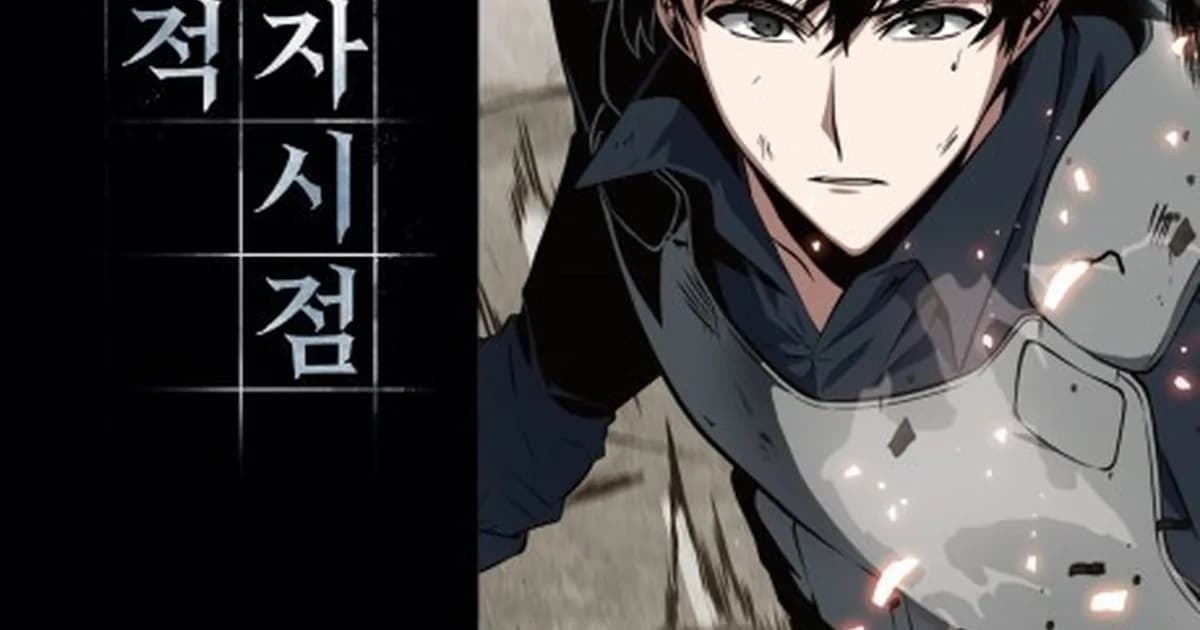


Lout of Count's Family review: Cale Henituse has one goal. He wants to eat good food, drink expensive wine, and not get beaten up. He picked up the wrong body for it.
TL;DR: Lout of Count's Family review: 7.5/10. Also known as Trash of the Count's Family (TCF). Isekai comedy where a transmigrator enters a fantasy novel trying to avoid heroism and keeps accidentally saving the world. Tapas lists 173 episodes; Season 4 is complete and the English edition is on hiatus before Season 5. Strong found-family cast, consistent comedy.
Tapas access note: Tapas ends service on March 31, 2027 at 23:59 PT, so unlocked episodes will not be accessible after that date; see the official Tapas update.
Kim Rok-Su fell asleep reading a fantasy novel and woke up as Cale Henituse, the minor villain who gets pummeled by the story's hero in the opening chapters. Cale has read enough of the novel to know what's coming. His plan is to accumulate enough wealth to retire somewhere quiet before everything goes wrong. His plan does not survive contact with the actual story.
Rating: 7.5/10
Official trailer for Lout of Count's Family, via Copin Comics -- there is no anime adaptation yet, this is the webtoon's own promotional trailer.
Lout of Count's Family review: key takeaways
- Rating: 7.5/10; AniList popularity 44,915, mean score 78/100
- Also known as Trash of the Count's Family (TCF); official English title is Lout of Count's Family
- Original web novel by Ryeo-Han Yu; manhwa adaptation story by Byeollarae; art by PAN4
- Available on Tappytoon (primary English), Tapas, Manta, Lezhin; Korean original on KakaoPage
- 173 Tapas episodes; Season 4 is complete and the English edition is on hiatus before Season 5
- Best described as: anti-hero isekai comedy with found-family core
What Lout of Count's Family is
The setup is familiar in structure but distinct in execution. Kim Rok-Su is transported into "Birth of a Hero," a fantasy novel he was partway through reading. He inhabits Cale Henituse, a noble young man established by the novel as a wastrel who spends his days drinking and avoiding responsibility. In the story's original timeline, Choi Han, the protagonist, arrives at the Count's estate and beats Cale severely enough to establish his own power.
Kim Rok-Su knows this is coming. His adaptation strategy: use his partial knowledge of the plot to position himself somewhere comfortable and out of the story's main path, collect enough resources to live well, and let the hero get on with being the hero without involving him.
What happens instead is the series.
Circumstances, loyalty, and his own actions keep pulling Cale into the exact situations he was trying to avoid. But here's the structural inversion that makes LoCF worth reading: Cale is not secretly passionate about saving the world. He is annoyed about it. Every situation he resolves, he resolves because the alternative was worse. The series plays this completely straight, which makes the comedy sharp rather than cute.
The gap between Cale's stated goals ("I just want to rest") and his actual behavior (constantly putting himself in danger for the people around him) is the engine of both the comedy and the emotional resonance. By the time the series has established its found family, the joke and the heart are the same thing.
For another transmigrator isekai where the protagonist's stated goals drive the comedy:
The Greatest Estate Developer Reading Guide
The found family
Advertisement
Cale accumulates allies who become devoted to him, despite his best efforts. The core cast includes Choi Han, the swordsman who was supposed to beat him but instead becomes his most loyal companion; Raon, a young black dragon who calls Cale "weak human" with complete affection; and On and Hong, tiger siblings who consider Cale their father.
None of these relationships develop because Cale sought them out. They develop because Cale kept showing up in situations where he had to protect people, and the people he protected responded to someone who helped without demanding recognition.
This is where LoCF earns its emotional weight. The comedy (Cale trying hard to look weak and lazy while performing extraordinary feats) is consistent. But the series is also genuinely warm. The cast that accumulates around him is written with enough texture that their devotion to him feels earned rather than given.
For readers who find pure action isekai cold, LoCF offers something different: a long-form comedy about a protagonist who is building a family while sincerely trying not to, and who clearly loves them while sincerely pretending he doesn't.
For comparison to how a similarly large cast gets handled in a tower-based context, see Second Life Ranker Review, which uses a very different emotional register for its ensemble.


Comedy and action balance
LoCF has arcs that are primarily comedic and arcs that are primarily serious, and it manages the switch without whiplash. The comedy doesn't undermine the stakes when they arrive. The action doesn't drain the lightness from the series between fights.
The mechanism is Cale's characterization. He is consistently himself whether the scene is funny or dangerous. His dry internal commentary about how much he doesn't want to be in this situation runs through both the comedy and the danger. When the danger is real, the comedy stops, but his voice doesn't change, which creates tonal continuity across very different scene types.
This is harder than it sounds. A lot of isekai comedy series abandon their comedic register entirely when they decide to go serious, and the tonal shift signals that the jokes were covering for a series that didn't fully commit to them. LoCF stays funny even when it's not doing comedy, because the protagonist's perspective is inherently dry.
For manhwa that handle the same comedy-action balance in a sports context:
Manhwa Like Trash of the Count's Family
Art and release status
PAN4's art serves the series without distinguishing it. Character expressions carry the comedy well. Action scenes are readable. The visual design for the found family (Raon's dragon form, the tiger siblings) is appealing. Nothing in the art direction reaches the level of a series like The Boxer, but LoCF doesn't need it to. The art is appropriate rather than exceptional.
The release status is the honest caveat. Tapas lists 173 episodes, and its May 29, 2026 announcement says Season 4 has ended before a hiatus ahead of Season 5. The story keeps expanding: new arcs, new enemies, new territories. Readers who prefer finished series should start with Best Completed Manhwa before committing to an open-ended run.
For readers comfortable with a series between seasons, LoCF has not shown signs of quality decline in its run, which is the relevant fact. The consistent reader retention across five-plus years of serialization suggests the formula is still working.
Lout of Count's Family review: verdict
Advertisement
7.5/10. The anti-hero isekai premise generates comedy that stays funny across a long run, which is the rarest thing an ongoing series can demonstrate. The found-family dynamics add warmth that makes the series more than a joke delivery system. PAN4's art is functional but not a selling point.
The 78 AniList mean score is accurate context. This is comfort reading at a high level, not a genre-defining work. Readers who want something emotionally challenging or visually ambitious should look elsewhere. Readers who want to spend a long time with a protagonist who is genuinely funny and a cast that becomes genuinely dear to them will find LoCF does exactly that, consistently.
Start at chapter 1. Give it 20 chapters before deciding. The found family arrives gradually, and the series' best jokes require the setup.
Rating: 7.5 / 10
Frequently Asked Questions
Is it the same as Trash of the Count's Family?
Yes. Same series, different English title. Tappytoon uses "Lout of Count's Family"; some fans and older translations use "Trash of the Count's Family" (TCF).
Is it worth reading?
Yes, if you want isekai comedy with real warmth under the jokes. It currently has a substantial Tapas run and a Season 4-to-5 hiatus, so readers should be comfortable waiting for the next season.
Where do I read it?
Tappytoon (primary English). Tapas, Manta, Lezhin also carry it. Korean: KakaoPage, Kakao Webtoon.
How many chapters?
Tapas lists 173 episodes. Season 4 has ended, and the English edition is on hiatus before Season 5; check the platform for a return announcement.
Who is Cale Henituse?
Kim Rok-Su transmigrated into the minor villain of a fantasy novel. Cale Henituse wants to live lazily. He keeps accidentally saving the world instead.
Does it have an anime?
No anime announced as of mid-2026.
How does it compare to Greatest Estate Developer?
Both are transmigrator isekai where the protagonist has self-serving goals and exceeds them against his will. Greatest Estate Developer is completed (222 chapters), more focused on engineering and politics. The Tapas LoCF edition is between seasons before Season 5, more focused on combat and comedy. Both are worth reading.
Related Reading
- The Greatest Estate Developer Reading Guide: Completed transmigrator isekai with a similar "competent protagonist who didn't want to be" structure.
- Manhwa Like Trash of the Count's Family: For readers who've finished or want more of the same energy.
- Second Life Ranker Review: Tower-based isekai with a more serious ensemble; different tone, similar scale.
- Best Isekai Manhwa: Genre list including LoCF and its tonal neighbors.
- Best Completed Manhwa: For readers who want a finished series before committing to a long ongoing run.
- Lout of Count's Family Reading Guide: Arcs and Pacing (TCF): Chapter breakdown and reading tips for Lout of Count's Family: Arcs and Pacing (TCF).
- Manhwa Like Lout of Count's Family: 6 Picks for TCF Fans: Top manhwa picks for fans of Lout Of Counts Family.