TL;DR: The Greatest Estate Developer reading guide: 222 chapters, completed January 2026 on WEBTOON. Engineering isekai that starts as competence comedy and becomes political drama by the midpoint. Free to read. No anime. Three-phase arc: estate development (ch 1-70), political complications (ch 70-160), resolution (ch 160-222).

Reviewing
The Greatest Estate Developer
Hyeon-Min Lee
This The Greatest Estate Developer reading guide covers a series that needs a small correction before you start: this is not a pure engineering comedy. See the full verdict and rating if you want the review first. The early chapters play that way, and they work. But the manhwa was adapted from a completed web novel, which means a second half was always planned. The engineering solutions draw you in. What those solutions do to the political landscape around the estate is the actual story.
That distinction changes how you read it. Knowing the series has a destination makes the comedy land differently.
The Greatest Estate Developer reading guide: key takeaways
- 222 chapters, completed January 2026, based on web novel by Baek-Gyeong Mun
- Free to read on WEBTOON English; original Korean on Naver Webtoon
- AniList score: 90/100, one of the highest-rated completed manhwa on the platform
- Three-phase structure: engineering comedy, political complications, narrative resolution
- No anime announced as of August 2026
- Start at Chapter 1, no side stories or separate seasons
- Estimated read time: 8-11 sessions at 20-30 chapters each
What Is The Greatest Estate Developer?
Su-Ho Kim is a civil engineering student in modern Korea who falls asleep reading a fantasy novel. He wakes up as Lloyd Frontera, the lazy heir to a struggling noble estate carrying significant family debt. The territory is under-developed land with no viable revenue. Everyone around Lloyd expects failure.
What they don't have a framework for is applied drainage engineering.
The manhwa was written by Hyeon-Min Lee (story) and Hyeon-Su Kim (art), adapted from the original web novel by Baek-Gyeong Mun. The series ran from August 2021 to January 2026 across 222 chapters, with the Korean run on Naver Webtoon and the English WEBTOON release concluding the same month. The English translation is available on WEBTOON; the original Korean publication ran on Naver Webtoon.
 The Greatest Estate Developer cover art.
The premise fits the engineering isekai subgenre, but the framing is more grounded than most. Su-Ho isn't applying magic or a game-style stat system. He's working out soil drainage and load-bearing logic for structures that the fantasy world's inhabitants had never considered, because their frame of reference stopped at "noble manages land, land produces crops." The comedy in the early chapters comes almost entirely from the competence gap.
For readers interested in similar completed series, the best isekai manhwa guide covers other titles with comparable setups.
 The official series cover. The tone here (confident, slightly amused) matches Phase 1 of the story well.
How to Read: Where to Start and What Platform
Start at Chapter 1 on WEBTOON. There's no prologue arc, no side story required for context, no separate publication running on a different platform. The series reads as a single continuous story from chapter 1 through 222.
WEBTOON English is the main platform for English readers. The series is available in the fantasy category under its full title. A significant portion of chapters are free to read; some earlier or newer episodes may require coins depending on the platform's current availability rotation. Completed series on WEBTOON often cycle their chapter availability differently than ongoing ones, so the free window may shift.
Naver Webtoon carries the original Korean publication. Korean readers and those reading in the original language use Naver directly.
No reading order complexity here. No chapter numbering reset between arcs, no parallel storylines on separate platforms. This is one of the simpler reading setups among longer manhwa series.
Arc Overview: Three Phases of the Story
The 222 chapters follow a recognizable three-phase progression. The transitions between phases are gradual rather than hard stops, but each section has a distinct character.
Phase 1: Estate Development (Approximately Chapters 1-70)
The engineering comedy phase. Su-Ho, operating as Lloyd, identifies the estate's core problems one at a time: drainage failures, inefficient land use, absence of viable revenue sources. Each solution applies real-world engineering logic. Water management, structural improvements, agricultural adjustments. The solutions are plausible enough that readers with any background in construction or agriculture will recognize what Lloyd is doing; readers without that background will follow because Su-Ho explains his reasoning clearly as he goes.
The tone is light. Character dynamics carry as much weight as the engineering content. Ppodong, the giant hamster companion, and the knight Javier Asrahan keep Phase 1 from reading like a technical manual. If you're here specifically for the competence humor, this is where it lands best.
Phase 2: Political Complications (Approximately Chapters 70-160)
A competent estate draws attention. Other noble houses notice that Lloyd Frontera's supposedly worthless territory has become unexpectedly productive. Regional powers reassess what they thought they knew about the Frontera family. Higher political structures start paying attention.
Su-Ho understood engineering. He didn't account for how a feudal political system responds to someone outperforming the aristocracy on their own terms. Phase 2 is where that gap becomes the series' main driver. The engineering solutions continue, but the problems get harder because they're no longer just technical problems. They carry political weight.
SSS-Class Revival Hunter follows a similar arc, where a mechanically clever premise escalates into genuine political and personal stakes.
SSS-Class Revival Hunter Review →
The tone in Phase 2 gets genuinely serious, but the character voice from Phase 1 holds. Readers who expected the series to stay in light-comedy territory sometimes find this shift surprising. It shouldn't be. The novel source meant a more serious second act was always part of the plan.
Phase 3: Resolution and Endgame (Approximately Chapters 160-222)
The series' novel origin is most visible in the final arc. Manhwa without a defined endpoint often struggle with conclusions because there was never a plan for one. The Greatest Estate Developer doesn't have that problem. The political threads from Phase 2 resolve. The engineering solutions that seemed purely tactical in Phase 1 turn out to be the groundwork the ending needed.
The ending doesn't feel rushed. That's what a novel source gives you: the finale was planned before chapter 1 existed. If you've burned out on manhwa that extend indefinitely and stumble at the finish, that matters here.
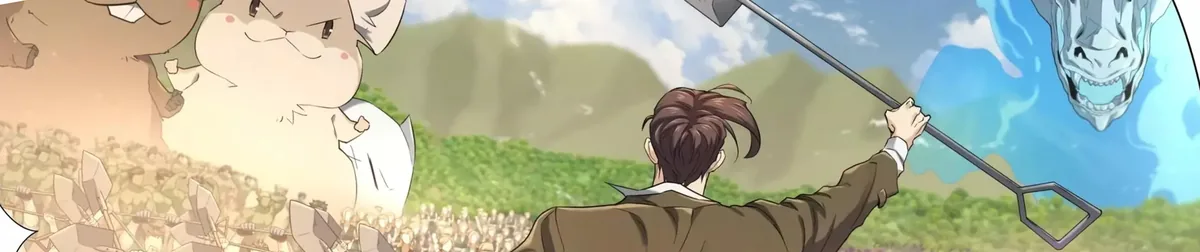 Banner artwork spanning all three phases of the story. The visual shift from the early estate scenes to the later political setting is visible here.


Key characters: who matters across all three phases
Lloyd Frontera (Su-Ho Kim): The protagonist. A civil engineering student who replaces the original Lloyd, a debt-ridden noble heir known for laziness and incompetence. Su-Ho's engineering background is the series' core premise: he approaches every estate problem as a project to spec and budget, not a crisis to survive. His voice stays consistent across all three phases: practical, slightly bemused by his own situation, rarely heroic in the conventional sense.
Ppodong: Lloyd's giant hamster companion, introduced early in Phase 1. Ppodong functions as both comedy relief and a genuine emotional anchor.
Javier Asrahan: The estate knight assigned to Lloyd. A key character for understanding why Phase 1 works. Javier Asrahan represents the world's prior assumptions about Lloyd, and watching him update those assumptions across the early chapters is one of the better character dynamics the series builds. He's not comic relief; he's the audience surrogate for how the world responds to a competent Lloyd.
Diana: Appears in Phase 2 and becomes more significant as the political stakes increase. Her presence in later chapters signals that the series is operating at a different scale than the estate-management premise suggested.
The Count's creditors and the neighboring noble houses: Not characters with names worth memorizing, but the factions they represent (debt-holders, territorial rivals, regional power players) are the actual antagonists of the middle arc. The opposition is institutional rather than personal, which is useful context before entering Phase 2.
When Does It Get Good?
It's functional from chapter 1. The engineering comedy works on its own terms and the character setup is efficient. But "when does it get genuinely compelling rather than just entertaining" is around the Phase 1-to-2 transition, when the series starts asking harder questions about what competence costs in a world structured around inherited power.
If you're 30 chapters in and enjoying it but waiting for the stakes to escalate beyond seasonal harvest problems, keep going. The shift comes.
For more completed manhwa with satisfying endings, see the list.
best completed manhwa →
Step-by-Step
1. Start at Chapter 1 on WEBTOON English (or Naver Webtoon for the Korean original): There's no prologue arc or side story to track down first. The series reads as a single continuous run from chapter 1 through 222.
2. Read through Phase 1 (chapters 1-70) without skimming: These chapters set up the engineering logic, Lloyd's core cast, and the estate's turnaround. Skipping ahead for the political drama leaves you confused later about why the estate matters and why specific parties feel threatened by it.
3. Push into Phase 2 (chapters 70-160) even if the early chapters still feel like harvest-problem stakes: The shift toward genuine political consequence lands at the Phase 1-to-2 transition, when other noble houses start reacting to how productive Lloyd's territory has become.
4. Finish with Phase 3 (chapters 160-222) for the resolution: Because the manhwa adapts a completed web novel, the ending was planned from the start. The engineering and political threads from the first two phases converge here rather than trailing off.
5. After finishing chapter 222, check for news on a possible continuation: The manhwa itself has no announced sequel, but the source web novel launched a Season 2 in May 2026 with a ten-year time skip, and artist Hyeon-Su Kim has teased a possible manhwa follow-up. Nothing was confirmed as of August 2026, so treat chapter 222 as the definitive stopping point until an official announcement changes that.
The Greatest Estate Developer reading guide: tips
Don't skip the engineering sections. Readers who skim Phase 1 for the political drama arrive in Phase 2 confused about why the estate matters and why specific parties feel threatened by it. The engineering context is the foundation. A drainage explanation takes maybe 15 minutes to read. It pays back significantly when the consequences arrive.
The art quality improves noticeably. The first 20-30 chapters are technically competent but not exceptional. By chapter 50, the architectural design and panel composition have stepped up. If the early art feels rough relative to other modern manhwa, give it time.
Read in natural arc chunks, not per chapter. Single chapters end on mild cliffhangers. The satisfaction comes from arc resolution, not chapter completion. 15-20 chapter blocks work well as natural stopping points.
The engineering is written for readers, not engineers. Su-Ho explains his logic through character dialogue. You'll follow what he's doing even with zero engineering background. The series isn't a textbook that happens to have a plot.
For readers interested in the broader genre, the best system fantasy manhwa guide covers other series in the competence-and-systems space.
Related Reading
- Best Isekai Manhwa -- other completed and ongoing isekai with similar setups
- Best Completed Manhwa -- for readers who want more series with definitive endings
- Best System Fantasy Manhwa -- for readers who came to Greatest Estate Developer for the competence and systems framing
- Manhwa Like The Greatest Estate Developer: 7 Picks
- The Greatest Estate Developer Character Guide: AniList-verified names for Lloyd Frontera, Javier Asrahan, Queen Alicia, and the full estate cast.
Frequently Asked Questions
How many chapters is The Greatest Estate Developer?
The series ran for 222 chapters. The Korean run on Naver Webtoon concluded in January 2026 (Korean and English releases finished together). The WEBTOON English translation may reflect a slightly different episode count based on how chapters are split for the vertical scroll format, but the complete story is available.
Is The Greatest Estate Developer finished?
Yes, the manhwa is finished. The Korean run wrapped in January 2026, with English WEBTOON following the same month, closing out a nearly five-year run. The adaptation followed the original web novel by Baek-Gyeong Mun through to its conclusion, and no continuation of the manhwa has been announced. The web novel it's based on did launch a Season 2 in May 2026 with a ten-year time skip, and artist Hyeon-Su Kim has teased a possible manhwa follow-up, but nothing is officially confirmed for the manhwa as of August 2026.
Where can I read it for free?
WEBTOON in English, free for a substantial portion of chapters. Some episodes may require coins depending on the current availability rotation. Original Korean version on Naver Webtoon.
Does it have an anime?
No anime has been officially announced as of August 2026. The AniList score of 90 and popularity of 66,000+ make it a frequently discussed adaptation candidate, but no studio announcement had been confirmed at the time of writing.
What makes the engineering different from typical isekai?
Su-Ho applies civil engineering logic: drainage systems, structural load calculations, water management. The solutions are grounded in plausible real-world principles rather than magic or cheat skills. The series takes the time to explain what Lloyd is doing and why, which makes the competence feel earned rather than arbitrary.
Is it based on a novel?
Yes, the manhwa adapts a web novel by Baek-Gyeong Mun. Manhwa story by Hyeon-Min Lee; art by Hyeon-Su Kim. The novel basis explains the consistent arc pacing across 222 chapters.
How long does it take to read?
8-11 sessions at 20-30 chapters per sitting. Early chapters move faster; the political arcs in the second half are denser. Full read time at moderate pace is approximately 6-8 hours.
References
- The Greatest Estate Developer on WEBTOON -- official English platform; free to read with some coin-locked episodes
- The Greatest Estate Developer on AniList -- series metadata including staff credits (Baek-Gyeong Mun, Hyeon-Min Lee, Hyeon-Su Kim), chapter count (222), and score data used in this guide