Loading…
ChapterBrief · Reviews
Revenge of the Baskerville Bloodhound Review: 8.0/10
Revenge of the Baskerville Bloodhound review: 8.0/10. Betrayed assassin reborn inside the family that killed him. Gothic art, dark tone, ongoing on Tapas.

Reviewing
Revenge of the Baskerville Bloodhound
TO WALK (REDICE STUDIO) · TAPAS ENTERTAINMENT
8.0
Score
8.0/ 10
TapasKakao Webtoon
Pros
- Gothic aesthetic is distinct in a genre full of similar visual styles; the Baskerville assassin family setting feels genuinely dark rather than decorative
- Regression premise executes cleanly: Vikir's 40-year advantage manifests as tactical patience rather than immediate overpowering, which sustains tension longer than most
- S.arang's art carries the tone: creature designs and action choreography are well above average for the regression subgenre
- Political layer inside the Baskerville family adds friction beyond simple protagonist-gets-stronger plotting
Cons
- The regression formula is not reinvented; readers who have exhausted similar series will recognize every beat
- Series direction changes significantly after Season 1: academy arc and a tower-climbing system arrive mid-run, with divided community reception
- Ongoing status means the full arc resolution is still years away from the manhwa's current position
Verdict
The best execution of the gothic-regression formula available right now. Not a reinvention of the genre, but a very good version of it.
Revenge of the Baskerville Bloodhound review: 40,000+ AniList users, trending score of 26 in mid-2026, and it's still in the early part of what the web novel covers. That's an unusually strong signal for a series that doesn't have an anime yet.
TL;DR: Revenge of the Baskerville Bloodhound review: 8.0/10. Gothic regression manhwa with strong art, consistent pacing, and a protagonist whose advantage is patience rather than raw power. The formula isn't reinvented, but it's executed at a high level. Ongoing on Tapas; no anime announced. Best for readers who've finished Legend of the Northern Blade or Damn Reincarnation and want more in the same territory.
The series earns the attention. Vikir Von Baskerville spent 40 years as the Baskerville family's finest killer: loyal, efficient, and ultimately disposable. His own father executed him. He woke up in his 8-year-old body with complete memories of everything that followed, including who ordered the betrayal and how it was done. The revenge premise is familiar. What the series does with it is better than average.
Rating: 8.0/10
Revenge of the Baskerville Bloodhound review: key takeaways
- Rating: 8.0/10; highest-trending manhwa in our mid-2026 dataset (AniList score 26)
- Gothic regression: Vikir reborn 40 years back inside the family that killed him, with full assassin's tactical knowledge
- Art by S.arang; manhwa adaptation by TO WALK/REDICE STUDIO; original novel by Step on a LEGO
- Available on Tapas (English digital) and Kakao Webtoon (Korean); Ize Press print volumes
- No anime announced, ongoing manhwa status
What Revenge of the Baskerville Bloodhound actually is
The Baskerville family is not a typical fantasy noble house. They train assassins, not knights. The internal hierarchy is brutal, with advancement through bloodline and demonstrated kill capacity, and Vikir's illegitimate status means he spent his first life climbing from the lowest rung to the top through sheer competence, only to be eliminated once he was no longer useful.
The regression sets him back to age 8. But 40 years of assassin training doesn't disappear because the body is young. The series is deliberate about this: Vikir can't fight at his adult peak immediately, but he reads situations with an adult killer's precision. He knows where the traps are. He knows who will betray him 30 years from now. The question is how to dismantle the systems that produced his death before they get the chance to repeat it.
This is regression done correctly. The protagonist's advantage is information and patience, not a magic system upgrade that obsoletes every obstacle. It sustains tension in a way that immediate-overpowering regression series don't.
For how Baskerville compares to the darkest completed regression manhwa in the genre:
Legend of the Northern Blade Review →
The Baskerville family as a setting
Advertisement
Most regression manhwa set their protagonist against an external enemy: a demon king, a corrupt empire, a betraying friend. Baskerville's choice to make the protagonist's own family the target is more interesting and more complicated.
Vikir can't simply declare war on the Baskervillesand start winning. He's 8 years old and illegitimate. His father isn't just powerful. He's the patriarch of one of the most dangerous assassination clans in the world. The power gap is total.
What Vikir can do is manipulate the information environment. Position himself. Cultivate allies who don't know they're being positioned. The series uses his insider knowledge of Baskerville family dynamics to generate political tension that most regression manhwa skip entirely. Other members of the family aren't simple antagonists. They have their own agendas, their own read on what Vikir represents. That web of interests is the series' most effective structural element.
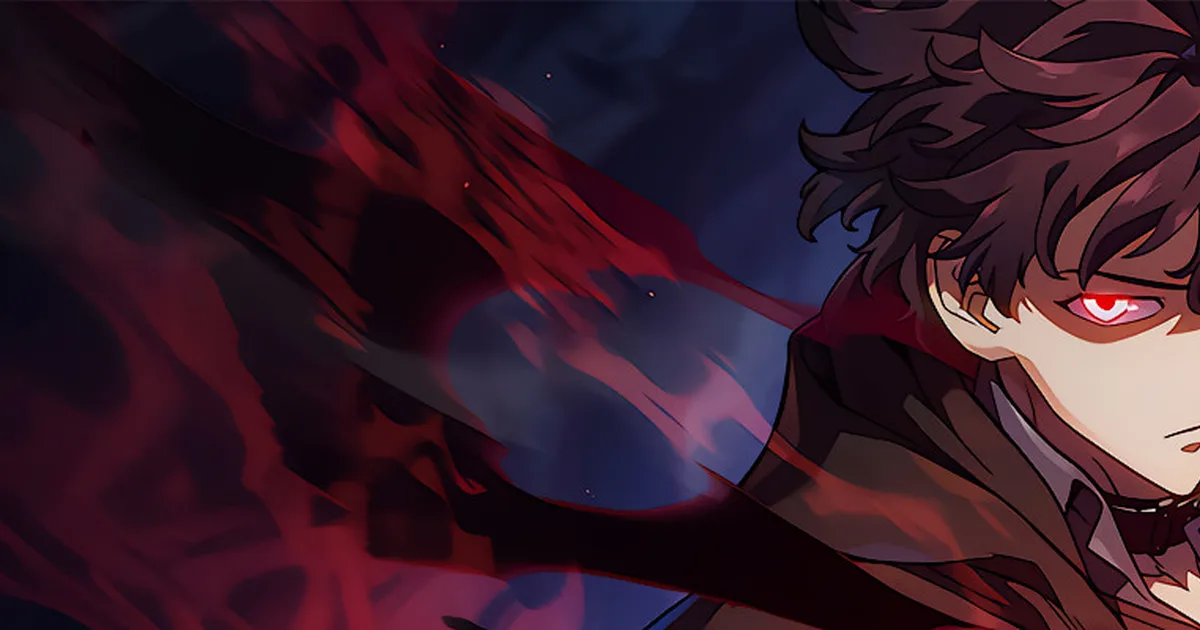
The gothic aesthetic reinforces all of this. S.arang's creature designs and architectural backdrops give the Baskerville setting a visual identity that matches the tone. The family's power is dark in a way that looks dark, not just feels dark. That's harder to achieve than it sounds. A lot of dark fantasy manhwa has the narrative weight without the visual weight to match. Baskerville has both.
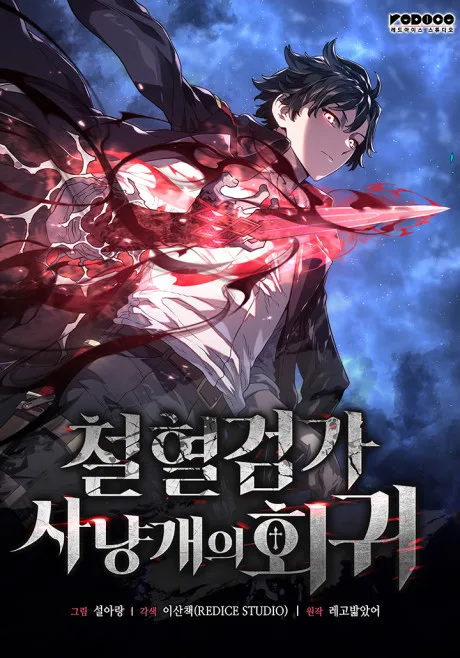 The Baskerville setting's visual identity: gothic architecture and dark tone that matches the assassination-family premise.
Art and story quality
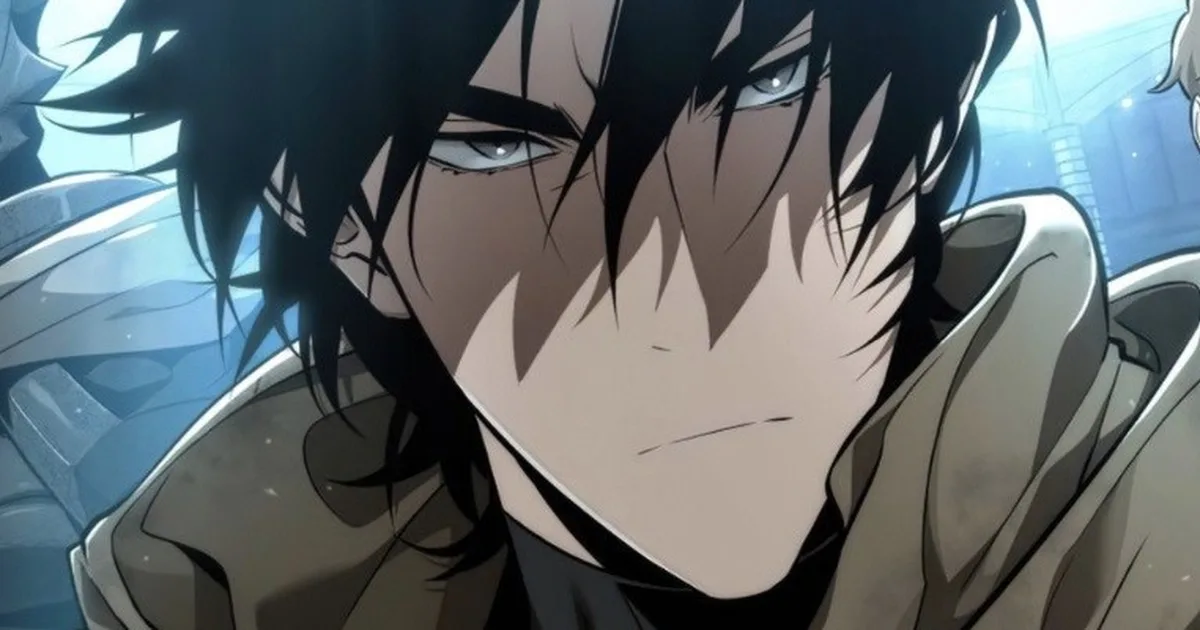
S.arang's art is the series' clearest strength. The color palette skews toward dark blues, blacks, and deep reds in a way that suits both the gothic setting and the action sequences. Combat choreography is readable at speed: you can track what's happening in Vikir's fights, which isn't universal in the genre. The creature and demon designs in particular stand out: they're distinctive rather than generic, which matters in a series where demon-slaying is a recurring mechanic.
Narratively, the series' best asset is pacing discipline. The childhood arc where Vikir is too physically limited to act on his full knowledge is handled with more patience than most regression series allow. He doesn't skip to being competent. He earns each capability increase. The adult tactical mind operating within a child's constraints generates specific dramatic situations the series uses consistently rather than resolving quickly.
The weakness is that the formula is visible throughout. Readers who have read a lot of regression manhwa will recognize the structure of each arc. Baskerville doesn't hide what it is, and it doesn't attempt to subvert expectations. If the appeal of regression manhwa is the satisfaction of watching a protagonist build from a position of knowledge, this series delivers that cleanly. If you're looking for a series that deconstructs or reframes the genre, this isn't it.
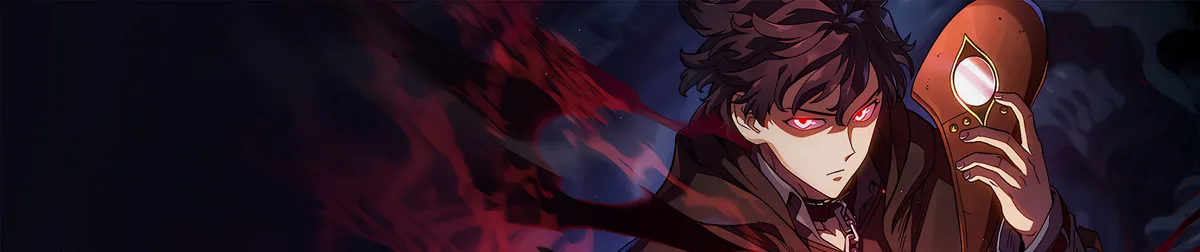 S.arang's cover art is representative of the series' palette: dark blues, blacks, and shadow-heavy framing that earns the "above average for the subgenre" assessment.
For series that do something more unusual with the regression premise, including some that use comedy to subvert the formula:
Return of Mount Hua Sect Review →
How it compares to similar series
The natural comparisons are Damn Reincarnation (regression into a family that needs to be saved from within) and Legend of the Northern Blade (completed dark-tone sect rebuilding with political stakes). Baskerville sits between them.
It's darker in tone than Damn Reincarnation but less isolated than Legend of the Northern Blade's protagonist, who rebuilds from a position of near-total external enmity. Vikir is inside the system he wants to destroy, which creates different dramatic possibilities.
SSS-Class Revival Hunter is the more distant comparison; that series uses its regression mechanic to do something stranger with the time-loop structure. Baskerville is more straightforward: the regression gives Vikir foreknowledge, and he uses that foreknowledge systematically. It doesn't complicate the premise the way SSS-Class does.
For readers coming from the completed manhwa shelf looking for something ongoing in the same space, Baskerville is a reasonable pick through its first season. One honest warning: the series shifts significantly after the childhood and Baskerville family arcs. An academy arc arrives mid-series, and more recently the story introduces a tower-climbing progression system. Community reaction to both transitions has been divided, with a vocal portion of readers feeling these arcs move away from what made the early chapters work. The political gothic regression of Season 1 is the version that earned the series its reputation.
For completed alternatives in the same genre territory, Best Completed Manhwa → lists the options that already have endings.
Revenge of the Baskerville Bloodhound review: verdict
Advertisement
8.0/10. The gothic-regression premise executes cleanly, S.arang's art carries the tone, and the political layer inside the Baskerville family sustains tension past where most similar series flatten into pure power-progression.
The Good
- Gothic aesthetic is distinct in a genre full of similar visual styles; the Baskerville assassin family setting feels genuinely dark rather than decorative
- Regression premise executes cleanly: Vikir's 40-year advantage manifests as tactical patience rather than immediate overpowering, which sustains tension longer than most
- S.arang's art carries the tone: creature designs and action choreography are well above average for the regression subgenre
- Political layer inside the Baskerville family adds friction beyond simple protagonist-gets-stronger plotting
The Cons
- The regression formula is not reinvented; readers who have exhausted similar series will recognize every beat
- Series direction changes significantly after Season 1: academy arc and a tower-climbing system arrive mid-run, with divided community reception
- Ongoing status means the full arc resolution is still years away from the manhwa's current position
The trending signal (AniList score 26, top of the dataset for mid-2026) reflects real audience momentum. That's not usually wrong for a series at this stage. Baskerville is building toward something, the manhwa is mid-way through the full novel's content, and the art quality suggests it will sustain the run.
Start at chapter 1. Don't skip the childhood section. The patience the series requires of its reader in those chapters is the same patience Vikir exercises inside the story.
Rating: 8.0 / 10
Frequently Asked Questions
Is Revenge of the Baskerville Bloodhound worth reading?
Yes, for readers who enjoy regression revenge fantasy with a dark gothic tone. The formula is familiar but well-executed. The art is strong. The political texture inside the Baskerville family gives the series more friction than generic regression plotting.
Where do I read it?
Tapas for English digital. Kakao Webtoon for Korean. Ize Press has print volumes. WebNovel has the original web novel if you want to read ahead of the manhwa.
How many chapters?
The manhwa is ongoing as of mid-2026. The original web novel is complete. Exact manhwa chapter counts change with regular updates; check Tapas for current episode count.
Does it have an anime?
Not announced as of mid-2026. Popularity of 40,000+ on AniList puts it in the range where adaptations become plausible, but nothing is confirmed.
How dark is it?
Consistently dark in both content and aesthetic. Assassination family politics, demon-slaying, betrayal, execution. Not gratuitous but not light. Readers looking for something with a less grim tone should try Eleceed Review → instead.
Is it completed?
The web novel is complete. The manhwa adaptation is ongoing with regular Tapas updates.
How does it compare to Legend of the Northern Blade?
Both are dark-tone martial-arts regression manhwa. Northern Blade is completed (202 chapters), so you get the full arc. Baskerville is ongoing, further from resolution, but has a stronger political internal-conflict structure. Both are worth reading; Northern Blade is the better pick if you want a complete story.
Related Reading
- SSS-Class Revival Hunter Review: A more structurally unusual take on regression and loop mechanics, completed.
- Best Dark Manhwa: Genre list including Baskerville's tonal neighbors.
- Manhwa Like Revenge of the Baskerville Bloodhound: 6 Picks: Top manhwa picks for fans of Revenge Of The Baskerville Bloodhound.
- Revenge of the Baskerville Bloodhound Reading Guide: Chapter breakdown and reading tips for Revenge of the Baskerville Bloodhound.
- Manhwa Like Damn Reincarnation: 3 Picks for the Wait: The reciprocal comparison, naming this series as the darker gothic-toned pick.
References
About the author

Senior Manhwa Critic & Analyst
Manhwa critic and former Korean-to-English webtoon translator with 8 years reading across 40+ genres. London-based. Tracks everything from power-progression to slice-of-life romance.
- 8 years reading manhwa across 40+ genres
- Former Korean-to-English webtoon translator
- 500+ manhwa titles completed
- Specializes in progression systems and power-scaling analysis


Disclaimer
This article is published for informational and entertainment purposes. It does not constitute professional financial, legal, or technical advice. Series availability, platform access, translation status, and chapter counts change. Verify critical details (pricing, regional availability, official translation status) with publishers and platforms. Affiliate links, where present, help support our editorial work and are labelled in our affiliate disclosure.
Comments
Loading comments…