Loading…
ChapterBrief · Guides
I'm the Max-Level Newbie Reading Guide: Where to Start
I'm the Max-Level Newbie reading guide: where to start, manhwa vs novel, how the Tower of Trials floors work, and what to expect across 260+ chapters.
9 min readBy Ethan Mercer

This I'm the Max-Level Newbie reading guide answers the three questions every new reader has before starting: where to begin, whether to read the manhwa or the novel, and how the Tower of Trials structure actually reads. The short version is that it is one of the cleaner tower-climbers to get into, as long as you know what the early floors are doing.
TL;DR: Start at Episode 0 on WEBTOON and read in order. The Tower of Trials is climbed floor by floor, so the structure is linear and binge-friendly. Read the manhwa first for REDICE Studio's art; switch to Maslow's complete web novel only if you run out of episodes. 260+ episodes so far, ongoing, updating Saturdays. The one thing to understand going in: Kang Jinhyeok's game knowledge is a head start that decays, not a cheat code.
I'm the Max-Level Newbie reading guide: where to start
Start at Episode 0, titled The Beginning of Everything, on WEBTOON. Read straight through in episode order. There is no complicated reading sequence here: no side stories you need to track, no seasonal splits that leave the story in an awkward place, no companion series required first.
The premise sets up the whole structure. Kang Jinhyeok is a game streamer, the only person who ever cleared the game Tower of Trials, when that tower suddenly appears in reality. A system announcement gives humanity 90 days to clear each floor or die. Everyone else is a terrified first-timer. Jinhyeok has eleven years of experience with a tower nobody else understands. The series is him climbing it.
Because the tower is climbed floor by floor, the reading order is the climb order. You start at the bottom with Jinhyeok and go up. Simple.
How the Tower of Trials structure reads
The floor-by-floor design is the most important thing to understand about reading this series, because it shapes the pacing. Each floor is a self-contained challenge with its own rules, threats, and objective. The early floors introduce the mechanics: Episode 3, for example, brings the Mangrove, the Tree of Greed floor, an early test that establishes how the tower turns its challenges into traps.
This structure makes the series easy to read in chunks. A floor is a natural stopping point. You can read one floor's worth of episodes, set it down, and pick up at the next floor without losing the thread. For a 260-plus episode series, that matters: it never demands you hold a sprawling cast or a dozen open plot threads in your head at once. The tower gives you one problem at a time.
 The tower is climbed floor by floor, so the reading order is simply the climb order: start at the bottom and go up.
The flip side is that the early floors can feel front-loaded with setup. The first stretch spends time establishing how the tower works, how Jinhyeok's knowledge applies, and what the stakes are. If the opening feels slow, that is the structure laying groundwork, and it pays off once the floors start escalating in mechanical complexity rather than just difficulty.
It is worth knowing what kind of escalation to expect. The floors do not simply throw bigger enemies at Jinhyeok as he climbs. Each one introduces a new rule or a new kind of trap, and the better floors are puzzles as much as fights: the challenge is reading what the floor actually wants before it kills you. The early Mangrove floor sets that tone, a test built around greed that punishes the obvious move. That design is why the series rewards attentive reading over skimming. A floor you rushed through is a floor whose trick you missed, and the trick is usually the point.
For our full assessment of whether the series is worth your time, including the art and where it sits in the genre, see the .
I'm the Max-Level Newbie review
Step-by-Step
Advertisement
1. Open WEBTOON and search "I'm the Max-Level Newbie": It is an Action Webtoon Original. Start at Episode 0.
2. Read the first 10 to 15 episodes for setup: This is where the tower's appearance, Jinhyeok's background, and the 90-day rule get established. Do not skip them; the later floors assume you know the rules.
3. Watch for the divergence: Around the point where Jinhyeok starts hitting floors that do not match his memory of the game, the series shifts from "he knows the answer" to "he has to improvise." That is when it gets good. Read attentively here.
4. Read floor by floor: Use each floor's resolution as a natural break point if you are not binging.
5. When you catch up to the manhwa, switch to the novel if you want more: Maslow's web novel is complete and runs ahead of the webtoon's current position.
Manhwa vs. web novel: which to read
The manhwa is the better entry point. Swing Bat's art, produced by REDICE Studio, keeps the system-interface elements legible during fights, which is exactly where weaker system manhwa fall apart. The visual clarity of the skill windows and the floor challenges is a real part of why the series works, and you lose that in prose.
The web novel by Maslow is the source material and is complete. It covers more of the story than the manhwa has reached, so it is the natural continuation once you finish the available episodes. The prose does not have the art's clarity for the interface-heavy moments, but if the series has hooked you, the novel is where the rest of the story lives.
The recommendation is simple: manhwa first, novel as a follow-up. Do not start with the novel unless you specifically prefer prose, because the manhwa's art is the series at its most accessible.
One practical caution: because Maslow's novel runs well ahead of the webtoon, jumping to it the moment you finish the available episodes means spoiling yourself on floors the manhwa has not adapted. If you care about experiencing the art's version of a big floor first, it is worth checking roughly where the manhwa stands before you leap ahead. Readers who do not mind spoilers can dive straight in; readers who want the visual payoff of the major floors should pace the switch deliberately rather than racing to catch up to the novel's frontier.
If you want more OP-protagonist tower and gate series after this, the list ranks the closest neighbors.
manhwa like Solo Leveling
Reading tips for I'm the Max-Level Newbie
Advertisement
The single most useful thing to know going in: Jinhyeok's game knowledge is a head start, not a cheat code. The real Tower of Trials diverges from the game he memorized, and the series is built on that gap. If you read the early floors expecting a protagonist who simply knows every answer, you will misread the tension. The interesting question is always where his memory stops matching reality.
Read the system-interface details rather than skimming them. When the HUD labels a skill or a stat, that information usually matters for the floor Jinhyeok is on. The series uses its interface as functional information, not decoration, so the numbers and labels are worth your attention.
If you came from Solo Leveling or other dungeon-hunter fantasy, adjust your expectations on pacing. This is a tower-climber, which means escalation by floor rather than by sudden power spikes. The growth is steady and tied to the climb, not to dramatic awakening moments.
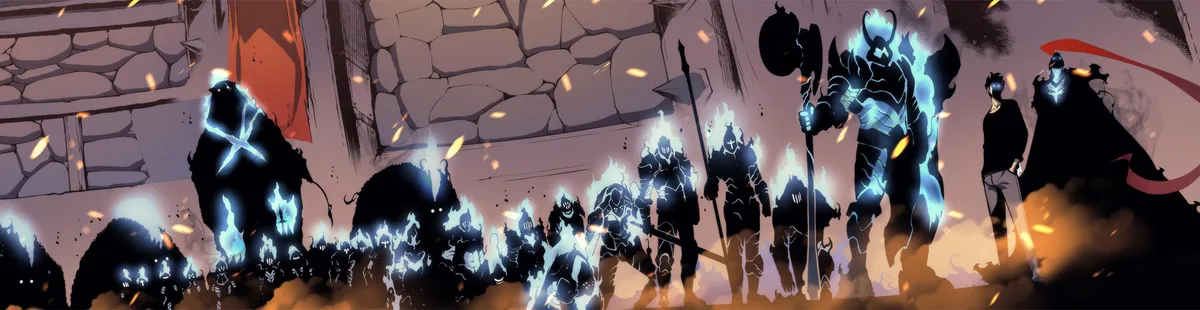 Coming from Solo Leveling sets the wrong pacing expectation: Max-Level Newbie escalates by floor, not by sudden awakening spikes.
For readers who find the opening floors slow: push to the point where the tower stops matching Jinhyeok's memory. That is the structural turn the whole series is built around, and it is the fair test of whether the book is for you.
One last note on reading pace. Because the tower is a clear-or-die structure with a 90-day clock, the series keeps a forward momentum that rewards reading in longer sittings. The stakes do not reset between floors, they compound, and the tension of the countdown carries across the climb. If you read a floor at a time with long gaps, you lose some of that pressure. The series is at its best when you feel the clock the way Jinhyeok does, so once it hooks you, a binge serves it better than a slow drip. Save the slow reading for the setup floors and let the momentum build once the divergence kicks in.
Finished Max-Level Newbie and looking for what's structurally similar? Our manhwa like I'm the Max-Level Newbie guide covers the closest tower-and-gate and OP-floor-clear neighbors.
Related Reading
- I'm the Max-Level Newbie review: Our full rating and verdict, including the art and where it ranks in the genre.
- Manhwa like Solo Leveling: The closest OP-protagonist tower-and-gate neighbors, ranked.
- Best system fantasy manhwa: Where Max-Level Newbie sits in the broader system and tower space.
- Solo Leveling reading guide: The benchmark tower-climber's arc breakdown, if you want the genre's high-water mark next.
Frequently Asked Questions
Where do I start?
Episode 0 on WEBTOON, then read in order. The tower is climbed floor by floor, so the reading order is the climb order.
Manhwa or novel?
Manhwa first for REDICE Studio's art. Switch to Maslow's complete web novel once you finish the available episodes.
How many chapters?
260+ episodes on WEBTOON as of mid-2026, ongoing, updating Saturdays.
Is it finished?
The webtoon is ongoing; the source novel is complete. Long runway of content left to adapt.
How does the tower work?
A multi-floor structure with a 90-day clear-or-die rule per floor. Jinhyeok climbs using game memory, but the real tower diverges from what he remembers.
References
Was this guide helpful?
About the author

Senior Manhwa Critic & Analyst
Manhwa critic and former Korean-to-English webtoon translator with 8 years reading across 40+ genres. London-based. Tracks everything from power-progression to slice-of-life romance.
- 8 years reading manhwa across 40+ genres
- Former Korean-to-English webtoon translator
- 500+ manhwa titles completed
- Specializes in progression systems and power-scaling analysis




Disclaimer
This article is published for informational and entertainment purposes. It does not constitute professional financial, legal, or technical advice. Series availability, platform access, translation status, and chapter counts change. Verify critical details (pricing, regional availability, official translation status) with publishers and platforms. Affiliate links, where present, help support our editorial work and are labelled in our affiliate disclosure.
Comments
Loading comments…