Loading…
ChapterBrief · Guides
The Knight Only Lives Today Reading Guide (112 Episodes)
The Knight Only Lives Today reading guide: arc breakdown, regression mechanic, Esther explained, and how to push through the chapter 60-75 slow patch.
Reviewing
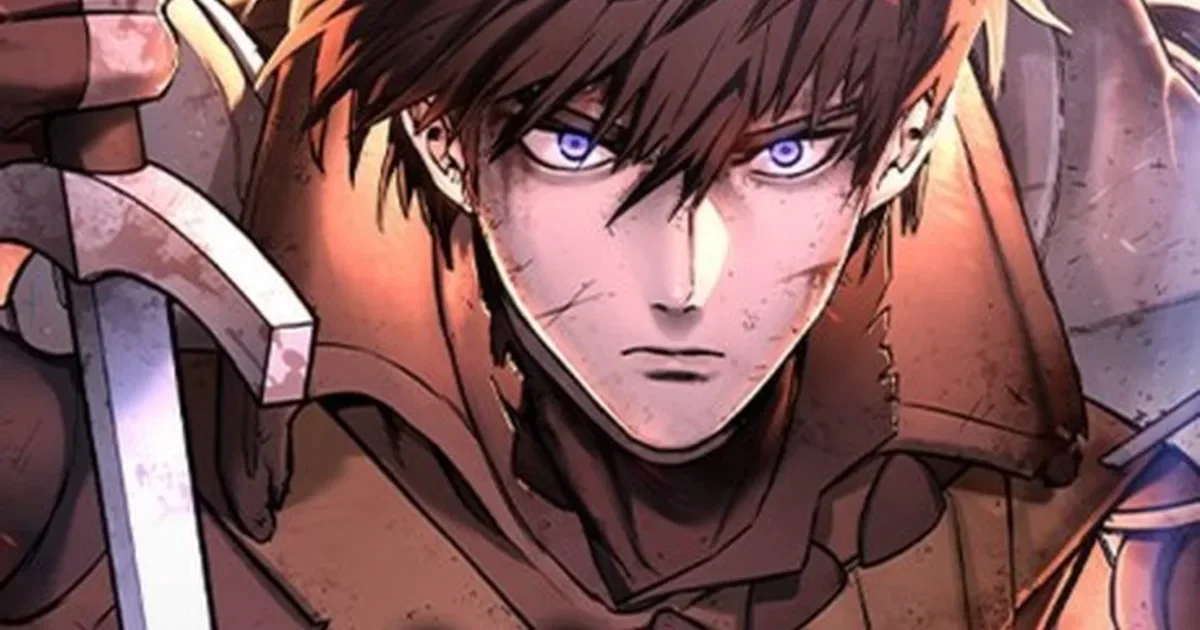
The Knight Only Lives Today
Soul Pung (story), Leean (art)
The Knight Only Lives Today reading guide (the series was formerly published as Eternally Regressing Knight) covers what Encrid loses each loop, whether Esther's arc is worth the slow chapters, and the overall arc structure across 112 numbered episodes.
TL;DR: The Knight Only Lives Today is 112 numbered episodes of military-fantasy regression manhwa where the loop has cost, not just reward. Season 1 ends at Episode 112, followed by three afterwords; WEBTOON says the series will return. The slow Esther stretch is worth reading. Read it on WEBTOON in English or Naver Webtoon in Korean.
The Knight Only Lives Today reading guide: quick answer
Four things new readers need to know before chapter 1: Encrid's regression costs something each loop, not just time; the series has no game-system mechanics (no stat screens, no level-up notifications); Esther is a major character with her own arc that matters structurally; and there's a genuine slow stretch from chapters 60-75 that most readers notice and most push through.
The short version: read it for the psychological weight and the military-fantasy framing. Don't read it if you want fast dopamine from clean power escalation.
Key Takeaways
- 112 numbered episodes through the August 27, 2026 Season 1 finale, plus three afterwords; WEBTOON says the series will return
- Regression mechanic carries psychological cost; each loop accumulates weight, not just power
- No game-system interface; Encrid advances through experience, knowledge, and practical skill
- Esther has an independent arc that runs chapters 55-75 as its most focused period; it's worth reading
- Chapters 60-75 are the series' slowest stretch; momentum returns after chapter 75
- Soul Pung (story), Leean (art); art quality is consistent through the 112 numbered episodes
The Knight Only Lives Today reading guide: overview
Advertisement
This guide covers The Knight Only Lives Today through numbered Episode 112, the Season 1 finale published August 27, 2026, plus the three afterwords listed on WEBTOON. The series is set to return, so later episodes may shift some of what's described in the arc breakdown below.
What this guide covers: the regression mechanic in detail, the four arc phases, Esther's structural role, the platform situation for English readers, and how to navigate the pacing slow patch.
What this guide doesn't cover: specific plot spoilers beyond arc-phase descriptions, exact battle outcomes, or character deaths. The arc breakdowns are structural, not narrative summaries.
Prerequisites: none. This guide is useful whether you're on chapter 1 or chapter 50 and reconsidering whether to continue.
Time investment: 112 numbered episodes at a moderate read pace is roughly 15-20 hours. The reading guide itself takes 10 minutes.
Step-by-Step
1. Start at Chapter 1 on WEBTOON: Begin the English release without skipping the opening ten chapters, which establish the regression mechanic by showing Encrid die and reset rather than explaining the rules upfront.
2. Build context through Chapter 30 before judging the pace: The opening grind sets up the core cast and how regression costs Encrid something each loop. Skimming chapters 1-15 is the most common reason readers later feel lost in the mid-series Esther arc.
3. Read Esther's chapters sequentially once you reach the chapter 60-75 stretch: Don't skim ahead to get back to Encrid's main progression. Her arc is built on small decisions across multiple chapters, and skipping ahead makes the payoffs in chapters 68 and 72 read as arbitrary.
4. If the chapter 60-75 patch stalls you, use the partial skip, not the full skip: Read through chapter 70's Esther beat before continuing, rather than jumping straight to chapter 76 and losing the setup for the second-half acceleration.
5. Confirm you're on the current episode count before marathoning: WEBTOON's series page currently shows numbered Episode 112, three afterwords, and a note that the series will return. Check the listing for the next release rather than relying on a static count.
6. Cross-check WEBTOON against Naver Webtoon if you want to read ahead: WEBTOON's English release sometimes lags a few chapters behind Naver's Korean release. If you read Korean, Naver is always current; if you don't, WEBTOON remains the correct choice.
Arc Phase Breakdown
Phase 1: The Opening Grind (Chapters 1-30)
Start with chapter 1 on WEBTOON and read without skipping anything in this phase. The first 10 chapters establish the regression mechanic through demonstration rather than explanation. You don't get a rules-dump about how the loop works. You watch Encrid die, reset, and carry what he learned into the next attempt.
The specific thing the opening does correctly: it shows Encrid failing at things he can't yet solve. The regression isn't a reset into guaranteed improvement. Some battles go worse after he knows more, because knowing more creates expectations he can't meet with the body and skill he currently has. This frustration is the point. By chapter 15, you understand why the series matters. By chapter 30, the core cast is established.
Don't rush this phase. The opening 30 chapters are where the series earns the investment it asks for in the mid-series sections. Readers who skim chapters 1-15 often bounce off the mid-series Esther arc because they haven't built the context for why her choices matter.
Phase 2: Mid-Game Consolidation (Chapters 31-59)
This phase is where Encrid starts translating accumulated knowledge into changed outcomes. The regression loops begin producing different results. The character relationships that run across multiple loops become the engine: recurring allies who don't know they've fought alongside him before, enemies whose patterns he's memorized, situations he's failed so many times he can navigate them with his eyes closed.
Esther enters as a structural presence here. She's not passive support. Her chapters in this range are building something, though what becomes clear in phase 3.
The Knight Only Lives Today review covers the specific mechanics and art quality in detail. For genre context, manhwa like The Knight Only Lives Today maps the closest comparable series.
For a full breakdown of the series' regression mechanic, art quality, and verdict:
The Knight Only Lives Today Review ->
Chapters 31-59 are the series at its consistent best. The pacing is steady. The power progression feels earned. Each arc outcome lands with accumulated weight rather than feeling like a scheduled event.
 The visual weight of accumulated loops: Leean renders each regression as cost, not just reset.
Phase 3: The Esther Arc and the Slow Patch (Chapters 60-75)
This is the section where readers either disengage or get more invested.
Chapters 60-75 focus heavily on Esther's independent storyline. The main regression progression slows while the series pays out what it set up across phases 1 and 2. Esther's choices in this section are specific to her, not consequences of Encrid's loops. That structural independence is unusual in regression manhwa, which typically subordinates all other characters to the protagonist's regression arc.
The slow patch is real. If you're reading for Encrid's progression specifically, chapters 60-75 will feel like a detour. They're not a detour, but they read like one if you haven't built up investment in Esther's arc across the earlier phases.
What to do here: don't skip. The reader discussion around Esther's chapters in this range is specifically about choices she makes at chapter 68 and 72. Those chapters generated the kind of debate that indicates a supporting character is doing genuine narrative work. Readers who skipped to chapter 76 to get back to the main progression report confusion in the second half of phase 4.
If you hit chapter 65 and you're struggling, skip ahead to chapter 70, read Esther's resolution, then come back. That's a less bad choice than jumping straight to chapter 76.
Phase 4: Second-Half Acceleration (Episodes 76-112+)
After chapter 75, the series' momentum returns and accelerates. The consolidation from phase 3 pays dividends. The Esther-established dynamics add texture to how Encrid's regression plays out in the later arcs. This is where readers who pushed through the slow patch report the series is at its best work.
Art quality from Leean stays consistent. The fight choreography in the 80s-90s chapter range is among the series' best panel work. The power gap between what Encrid can now do and what he started with is visible without being cartoonish: he's a person who has survived this scenario a hundred times, and he moves like it.
The series reaches a Season 1 stopping point at numbered Episode 112, not a full story ending. Commit knowing WEBTOON says it will return.
 Phase 4 fight choreography: the 80s-to-90s chapter range shows the progression gap most clearly.
Tips
Check Which Platform Has the Current Chapter
WEBTOON's English release sometimes lags a few chapters behind Naver Webtoon's Korean release. If you've caught up on WEBTOON and want to read ahead, Naver Webtoon is the source. If you read Korean, Naver is always current. If you don't, WEBTOON is the correct choice for English readers; the fan translation scene for this series is thin compared to more established titles.
Read Esther's Chapters Sequentially, Not Selectively
The temptation when hitting the chapter 60-75 slow patch is to skim Esther's chapters and get back to Encrid. This backfires. Her arc is built on small decisions across multiple chapters. The payoff in chapters 68 and 72 reads as arbitrary if you haven't tracked the buildup. Read it linearly.
Don't Compare Encrid's Progression Speed to Other Regression Protagonists
Most regression manhwa let the protagonist demonstrate mastery by chapter 15-20. Encrid is still working within significant constraints at chapter 50. This isn't a pacing problem: it's the mechanic. The series is interested in the cost of knowledge, not the power ceiling. Readers who come in expecting SSS-Class Revival Hunter's progression speed will be frustrated by design.
Use the Review for Art Reference
The Knight Only Lives Today review describes Leean's approach to rendering physical exhaustion in panel composition. Reading that section before chapter 20 gives you a better eye for what the art is doing in the fight sequences. It's not required context, but it's useful.
For the closest regression manhwa that share The Knight Only Lives Today's cost-based loop structure:
Manhwa Like The Knight Only Lives Today ->
Check for Updated Chapter Counts Before Marathoning
If you're reading this guide after the current Season 1 finale, WEBTOON's series page will give you the next release status. The listing currently shows numbered Episode 112 plus three afterwords and says the series will return.
Common Mistakes
Advertisement
Starting on a Fan Translation Site Instead of WEBTOON
Several aggregator sites host The Knight Only Lives Today with fan translations of varying quality. The official WEBTOON release is consistently better translated and is the version Soul Pung and Leean actually receive credit for. Use the official platform. For English readers, WEBTOON is free with ad-supported access. There's no functional reason to use a third-party aggregator for this title.
Skipping the Esther Chapters and Being Confused in Phase 4
This is the most common reader mistake. Chapter 60-75 slows down Encrid's arc to focus on Esther. Readers who skip ahead to chapter 76 frequently report phase 4 feeling less coherent than it is. The second-half dynamics depend on what Esther establishes in her focused arc. Read it linearly.
Treating the Regression as a Reset Button
New readers sometimes expect each regression to reset Encrid to a clean state where previous failures don't matter. The series works the opposite way. Each loop carries forward the psychological weight of what was lost. By chapter 50, Encrid is a person marked by accumulated grief, not a character running a clean power-accumulation loop. Readers who expect the clean reset structure bounce off the mid-series content because the series isn't delivering what they're looking for.
Giving Up at Chapter 60
The series' slow patch starts at the exact point where momentum feels highest from phase 2. Chapter 60 arrives on the heels of several strong chapters, which makes the pacing shift feel more abrupt than it is. If you hit chapter 62 and the energy feels different: it is. That's intentional and temporary. The series recovers at chapter 76. The question is whether Esther's arc has built enough investment to carry you through 15 chapters. For most readers who got to chapter 60, it has.
Missing the Platform Difference Between WEBTOON and Naver
English readers on WEBTOON are reading the official localized version, which may be a few chapters behind the Korean Naver Webtoon release. If you finish the available WEBTOON episodes and want more immediately, the gap between the two platforms will tell you whether there's anything to read ahead on Naver. If you're caught up on both, there's nothing to do but wait for new chapters.
Frequently Asked Questions
How many chapters does The Knight Only Lives Today have?
112 numbered episodes as of the August 27, 2026 Season 1 finale, plus three afterwords. WEBTOON says the series will return; the Korean original is on Naver Webtoon and English is on WEBTOON.
What does Encrid lose each loop?
The series tracks psychological weight rather than listing specific losses. Each regression carries forward the memory of everything that happened, including everyone who died and every relationship that was built and then reset. The body resets; the grief doesn't. By chapter 50, Encrid is operating under accumulated weight that shapes how he interacts with every recurring character.
Is The Knight Only Lives Today completed?
No. Season 1 ends at numbered Episode 112, followed by three afterwords, and WEBTOON says the series will return. It is not a completed story.
Who is Esther and why does she matter?
Esther is a major character with an independent arc. Her chapters in the 55-75 range are the structural center of the mid-series section. Her significance is that she makes choices based on her own priorities, not as a function of Encrid's regression goals. That structural independence is unusual for a supporting character in this genre. It makes chapters 60-75 feel slower if you're reading for Encrid's progression, but it makes the second half of the series richer.
How does it compare to other regression manhwa?
Most regression manhwa use the loop as a power-accumulation system with clean forward momentum. The Knight Only Lives Today tracks cost alongside gain. There's no game interface. Encrid progresses through practical skill and accumulated knowledge, not stat upgrades. SSS-Class Revival Hunter is more inventive with its death-copy system. Doom Breaker uses regression with heavier grief framing. The Knight Only Lives Today sits between them: grimmer than most progression manhwa, more grounded than SSS-Class's inventive mechanics.
Does the pacing get better after chapter 75?
Yes. The slow stretch is roughly chapters 60-75. After chapter 75 the momentum returns and the second-half arcs are among the series' best work.
Where can I read it in English?
WEBTOON. Free with ad-supported access. The Korean original is on Naver Webtoon. No print edition as of mid-2026.
Related Reading
- The Knight Only Lives Today Review: The 8.5/10 series verdict with specific analysis of the art, regression mechanic, and Esther's arc.
- Manhwa Like The Knight Only Lives Today: Six picks organized by what draws readers to this series: cost-based regression, military framing, psychological weight.
- Best Manhwa Ongoing 2026: Full ongoing recommendations list; The Knight Only Lives Today sits near the top of the regression category.
- SSS-Class Revival Hunter Reading Guide: Arc structure guide for the closest tonal comparison in the regression genre.
- Doom Breaker Reading Guide: Arc guide for the grief-heavier regression series that shares thematic territory with The Knight Only Lives Today.
References
Was this guide helpful?
About the author

Senior Manhwa Critic & Analyst
Manhwa critic and former Korean-to-English webtoon translator with 8 years reading across 40+ genres. London-based. Tracks everything from power-progression to slice-of-life romance.
- 8 years reading manhwa across 40+ genres
- Former Korean-to-English webtoon translator
- 500+ manhwa titles completed
- Specializes in progression systems and power-scaling analysis


Disclaimer
This article is published for informational and entertainment purposes. It does not constitute professional financial, legal, or technical advice. Series availability, platform access, translation status, and chapter counts change. Verify critical details (pricing, regional availability, official translation status) with publishers and platforms. Affiliate links, where present, help support our editorial work and are labelled in our affiliate disclosure.
Comments
Loading comments…