The Blue Road manhwa behind Netflix's new series is Blue Road (푸른길, Pureun-gil), a five-volume crime comic from 2002, written by the Japanese writer Keishi Edogawa and drawn by the Korean artist Kwon Kaya. It is a print manhwa that ran in a Korean and a Japanese magazine at the same time, not a webtoon, and on November 19, 2026 we could not find an official English edition of it anywhere.
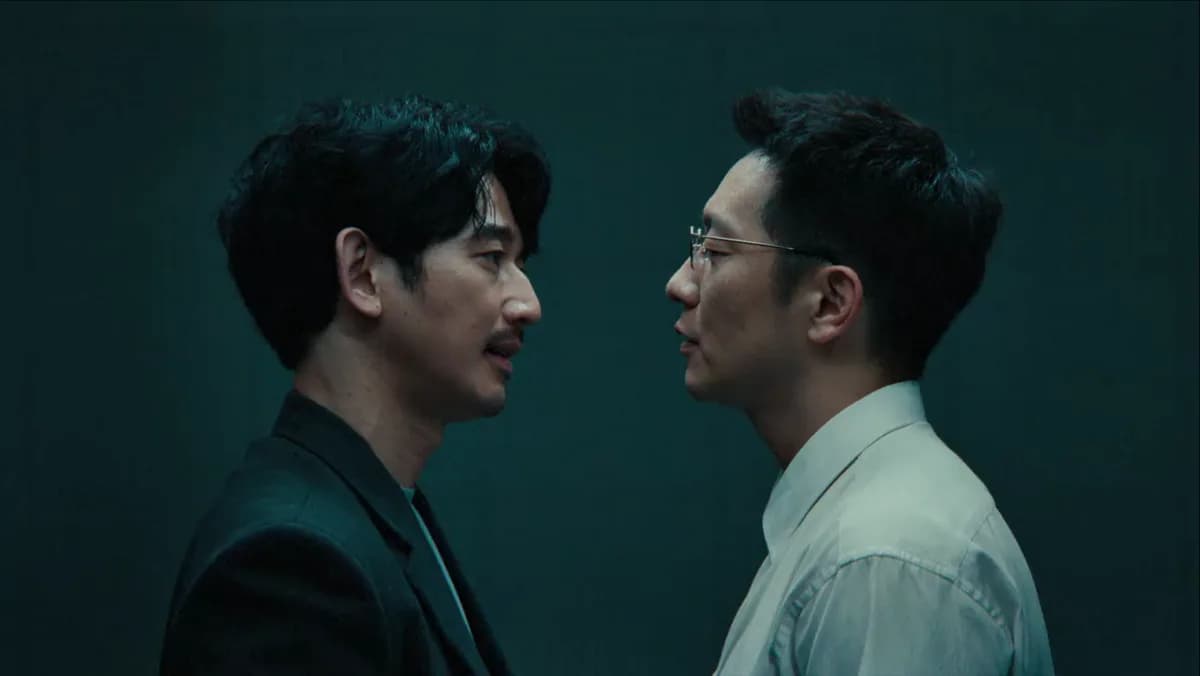
That last part is the catch. All eight episodes are out today, The Korea Times called the source a "webtoon" this week, and English readers who search the webtoon apps come up empty. The table below is what exists, read from the stores themselves.
| Edition | Publisher | Format and length | Status when we checked (Nov 19, 2026) |
|---|---|---|---|
| Korean print, 2002 to 2004 | Haksan Culture | 5 volumes, Nov 30, 2002 to May 15, 2004 | Yes24 lists the 1 to 5 set as out of print (절판) |
| Korean e-book, 2016 | Haksan Culture, sold on Ridibooks | Same story split into 10 e-volumes | On sale: ₩2,500 per volume, ₩25,000 for all 10, or ₩1,000 to rent one for 3 days |
| Japanese print, 2002 to 2003 | Shinchosha (Bunch Comics) | 5 volumes, serialized in Weekly Comic Bunch | Tower Records shows new copies unavailable; complete sets turn up at secondhand dealers |
| English | None found | None found | No official English listing on any store or publisher page we searched |
Who made the original Blue Road comic
The writer credit, Keishi Edogawa, is a pen name. Ridibooks' own listing names him as the story writer of Master Keaton, Billy Bat and Pluto, "another pen name being Takashi Nagasaki". The artist, Kwon Kaya, is the Korean cartoonist behind The Sun and the Moon (해와 달) and Namhansanseong; Ridibooks and Yes24 both credit Kwon with a 1999 Ministry of Culture "Today's Our Manhwa" prize.
Advertisement
What made the book unusual in 2002 was the plan, not the names. Yes24's author note says it ran at the same time in Haksan's biweekly Booking in Korea and Shinchosha's weekly Comic Bunch in Japan. Watcha Pedia's entry adds the contrast: Korean artists' work had usually run in Japan first and come home later, and this one was written for both countries' readers from the first chapter. Japanese Wikipedia dates the Comic Bunch run from issue 25 of 2002 to issue 34 of 2003.
What the comic is about
Japanese Wikipedia and Watcha Pedia give the same opening. Killings in Japan and Korea leave bodies with every joint twisted. Next to each body is a message written in the victim's blood: in Korean at the Japanese scenes, in Japanese at the Korean ones. The two police forces set up a joint team, with Inose on the Japanese side and a Korean inspector named Kang (강청도, Kang Cheong-do) on the other. Inose does not think much of Kang at first; they end up working as partners.
The detail that sets the comic apart is where the messages come from. Japanese Wikipedia and Watcha Pedia both identify them as lines from a military text by Emiri (哀美里), a Japanese soldier who defected to Joseon during Toyotomi Hideyoshi's invasions of Korea. Japanese Wikipedia also says the comic takes on Japan's colonial rule of Korea and the two countries' different views of that history, and Yes24's author note makes the same point: this one dealt head-on with historically sensitive questions between the two countries.
What the Netflix series keeps and what it changes
Here is what we can say from Netflix's own material and the November 17 press coverage, without having watched the series.
| Comic (2002) | Netflix series (2026) | |
|---|---|---|
| Korean detective | Kang Cheong-do, an inspector | Kim Seok (Son Suk-ku), Seoul Metropolitan Police Agency |
| Japanese detective | Inose | Inose (Eita Nagayama), Tokyo Metropolitan Police Department |
| The murders | Twisted joints, blood messages in the other country's language | "Contorted bodies and cryptic messages", Korean message at the Tokyo scene |
| Where it goes | Japan and Korea, in the synopses we read | Japan and Korea, plus Hong Kong's Kowloon Walled City and Central Asia |
| Length | 5 volumes | 8 episodes, all on November 20 |
About Netflix and TopStarNews both list three names we did not find in the comic's synopses: Lee Yun-ok (Kim Shin-rock), a Zainichi Korean businesswoman in Japan's pachinko trade; Yoon Soo-kyung (Choi Sung-eun), a government agent; and Seo Hyun-tae (Jung Jae-young), a figure in Japan's underworld. The Hong Kong and Central Asia locations also come from Netflix's trailer notes, not from any comic summary we read.
The year may be the most deliberate change. About Netflix says the key art's red-shirted Korean fans "suggest that the story unfolds in 2002, when the Korea-Japan World Cup was sweeping the nation", and Beautipin spotted a Seoul police form dated May 26, 2002 in the preview. So the show is set in the year the comic started running, during the World Cup the two countries hosted together.
What we cannot tell you yet is whether the Hideyoshi-era defector, the root of the comic's mystery, is still behind the messages. Netflix's synopsis stops at "the deadly truth lurks dangerously close".
What the official trailer shows
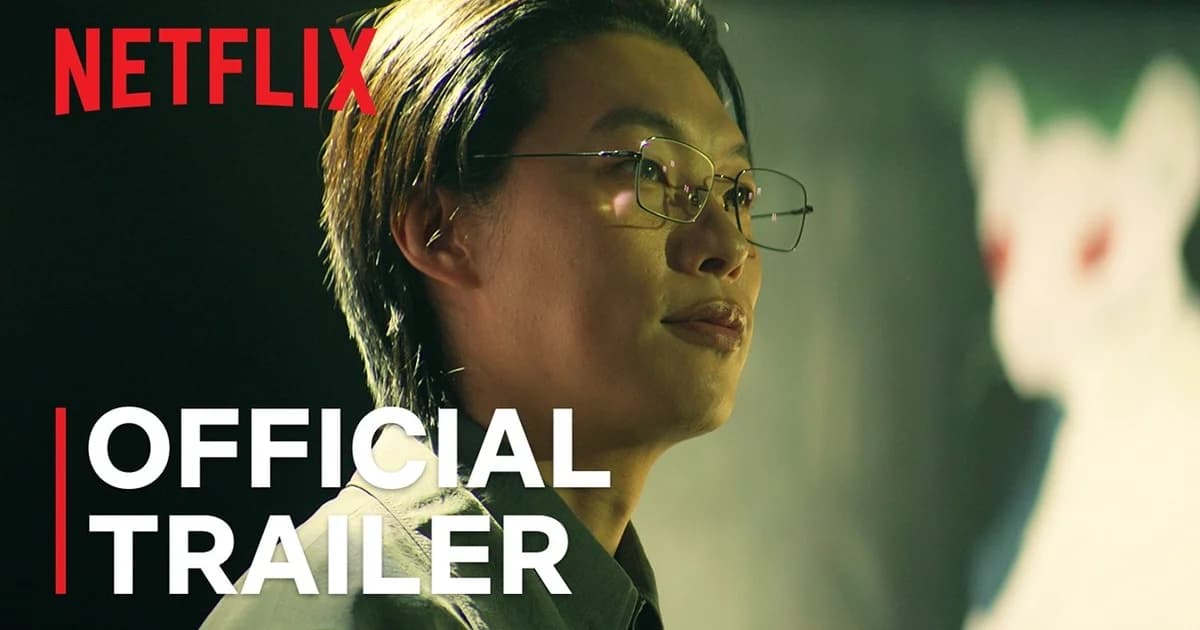
We went through the 1:42 trailer on Netflix's title page in two-second steps on November 19. Four moments line up with the comic:
- 0:08: an aerial shot of Tokyo's Shibuya crossing. Ridibooks' synopsis of the comic also opens on a Tokyo case, a murder in Shinjuku.
- 0:14: a title card, "사지가 꺾인 시체", a body with its limbs broken. The comic's victims have every joint twisted.
- 0:18: a message projected in front of Inose in a briefing room, the same sentence in Korean above Japanese: roughly "one fear breeds endless fear, and every method stays hidden". We could not confirm whether this is a line from the comic's Emiri text.
- 0:50 to 0:56: a hand paints red characters on a wall, then the Japanese line appears in red above a square the trailer blurs out. That is the comic's blood message, with the scene itself kept off-screen.
The trailer closes at 1:38 on a card calling the show a "hard-boiled crime investigation drama" and at 1:40 on the 푸른길 title in brush script.
Why the director picked a 20-year-old comic
Han Jun-hee, who made Coin Locker Girl, Hit-and-Run Squad and both seasons of Netflix's D.P., told the Seoul press conference on November 17 that he first read the original about two decades ago, according to The Korea Times. He co-wrote the scripts with Cho Yu-jin, Wikipedia and TopStarNews both note. Han's pitch for the two leads, as Korea Times reports it, was to put two characters "strong enough to anchor their own story" in one case, rather than a lead and a helper.
That pairing, a Korean and a Japanese cop who start out hostile, is the comic's spine too, and it is why the 2002 setting matters more than it would for most remakes.
Should you read it before watching?
If you read Korean, yes, and it is easy: Ridibooks sells all ten e-volumes, and a single one rents for ₩1,000. The trailer's 0:18 on-screen text and the red characters at 0:50 to 0:56 already give away the message device described above, so if you want that mystery fresh, read first. If you read Japanese, the five Shinchosha volumes turn up secondhand. If you only read English, watch first. There is no official translation we could find, and the sites that show up for "the blue road manhwa" are either unrelated WEBTOON Canvas series or unlicensed scan pages. If you want a legal webtoon to fill the gap, our guide to reading manhwa legally lists the apps that pay creators.
The series is rated for adults: T18 on Netflix's page as we loaded it, and adults-only in Korea, according to TopStarNews. TopStarNews and Beautipin both give 5 p.m. Korea time on November 20 for the release; Netflix's title page, as we loaded it, gave neither a date nor a clock time.
What we did not check
Advertisement
We have not watched any episode, so nothing here says how the series handles the history in the comic's mystery. We did not read the comic itself; the plot above comes from Japanese Wikipedia and Watcha Pedia, plus Ridibooks' synopsis. We watched the main trailer only, not the two teasers on Netflix's page.
If you read Korean, rent the first volume on Ridibooks for ₩1,000 before the 5 p.m. Korea time release on November 20; if you only read English, watch the series and skip the scan pages.
Checked: Netflix title page, About Netflix, Ridibooks, Yes24 and the Netflix trailer on November 19, 2026.
Related Reading
- Manhwa K-drama adaptations in 2026: the year's other comic-to-screen shows, with what to read first.
- Mousetrap: Netflix's webtoon thriller: another dark Korean crime adaptation from this year.
- Teach You a Lesson: how the Get Schooled webtoon fared as a Netflix drama.
- Manga vs manhwa vs manhua: why a print Korean comic and a webtoon are both called manhwa.
- Manhwa news, week of October 26: where The Blue Road's release date first showed up on our calendar.
Frequently Asked Questions
Is The Blue Road based on a webtoon?
No. It is based on Blue Road (푸른길, Pureun-gil), a print comic written by Keishi Edogawa and drawn by Kwon Kaya. It ran in Haksan's Booking magazine in Korea and Shinchosha's Comic Bunch in Japan from 2002, and was collected in 5 volumes.
Can I read The Blue Road manhwa in English?
Not officially, as far as we could find on November 19, 2026. The legal editions we found are Korean (Haksan, now an e-book on Ridibooks in 10 parts) and Japanese (Shinchosha, 5 volumes, no longer sold new at Tower Records).
How many episodes does The Blue Road have on Netflix?
Eight, all released on Friday, November 20, 2026. Three of them were screened early at the Busan International Film Festival in October.
References
- Netflix: The Blue Road
- About Netflix: Main trailer of The Blue Road (Nov 5, 2026)
- The Korea Times: Korean, Japanese stars team up in The Blue Road (Nov 17, 2026)
- TopStarNews: Blue Road release time and original work (Nov 19, 2026)
- Wikipedia: The Blue Road (TV series)
- Japanese Wikipedia: プルンギル -青の道-
- Ridibooks: 푸른길 e-book
- Yes24: 푸른길 1 to 5 set
- Watcha Pedia: 푸른길 (2002)
- MANGAL: プルンギル volume list
- Tower Records: プルンギル-青の道 4
- Beautipin: The Blue Road's original comic (Nov 3, 2026)
- Mr.Blue: 푸른길