Loading…


ChapterBrief · Guides
The Player Who Can't Level Up Reading Guide: Ego Explained
The Player Who Can't Level Up reading guide: ongoing on Tapas since 2021. The Ego-linking mechanic and five-year guide backstory explained before you start.

Reviewing
The Player Who Can't Level Up
The Player Who Can't Level Up reading guide: the system manhwa where Kim Kigyu's Level 1 cap isn't a bug the series immediately fixes -- it's five years of practical dungeon knowledge that makes the Ego mechanic pay off when it finally unlocks.
TL;DR: The Player Who Can't Level Up reading guide -- ongoing on Tapas since February 2021, KakaoPage in Korean. Kigyu's five-year guide backstory is load-bearing for how the Ego system works. The early arcs are tight. The mechanic softens mid-series. Give it through chapter 30 before deciding.
Key Takeaways
- Platform: Tapas (English), KakaoPage (Korean); NOT on WEBTOON
- Status: Tapas lists 220 episodes; Season 4 is complete and the series is on hiatus before Season 5
- Authors: Written by Bin-Ji Ga and Aengmusae; art by Jeong-Jae Park
- Core mechanic: Ego-linking -- bonding with sentient dungeon entities instead of conventional leveling
- Best section: Early arcs where the Level 1 tension is genuine and Ego negotiations have character
- Watch for: Mid-series momentum softens as Ego count grows and power escalation normalizes
The Player Who Can't Level Up reading guide: the level 1 cap premise
In most system manhwa, the weak-start protagonist either gets a power-up quickly or is immediately revealed to be OP through a hidden ability. The Player Who Can't Level Up takes a different route.
Kim Kigyu's activation assigns him a "unique ability" that turns out to be a Level 1 cap. Five years later, he's still Level 1. No amount of gates cleared, monsters killed, or experience accumulated changes that number. Rather than quit the system, he works as a dungeon guide -- the support layer of gate operations. Guides carry no combat stats, but they know the floors from the inside: monster behavior patterns, floor-specific trap placements, which corridors are worth clearing and which to route around.
By the time Kigyu discovers his actual ability -- the Ego-linking mechanic -- he knows the system from the inside in a way that ranked Players rarely do. That knowledge is the foundation every Ego negotiation is built on.
For a full series rating and critical breakdown, the Player Who Can't Level Up review covers the complete arc at 7.0/10. This guide focuses on the mechanic and how to read the series without missing what makes the early chapters work.
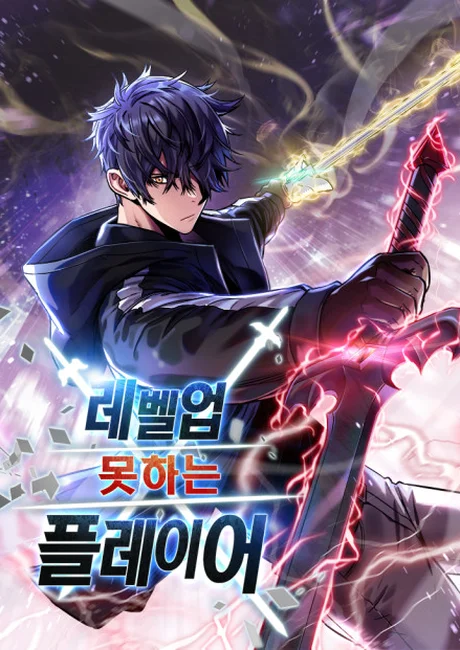 The Player Who Can't Level Up by Bin-Ji Ga, Aengmusae, and Jeong-Jae Park -- 220 Tapas episodes, on hiatus before Season 5
The Ego Mechanic: What It Is and Why It Matters
Advertisement
Egos are sentient entities bound to dungeon items, locations, or objects that most Players walk past without registering. Kigyu can perceive them, communicate with them, and form bonds. Bonding gives him stat increases, skill access, and in some cases direct combat support from the Ego itself.
What separates Egos from standard power-up systems is that they're not passive. Each one has a personality, a history, and sometimes conditions that have to be met before it cooperates. An Ego bonded to a low-floor gate might carry the memories of a Player who died there decades ago. Another might know the exact weakness of a floor boss from watching failed raids across multiple years. Kigyu has to negotiate these partnerships -- and his five years of guide work is what makes him capable of doing that.
The negotiation scenes in the early arcs are the series' best material. They operate on dungeon knowledge Kigyu spent five years building. Each new Ego adds a different kind of insight or capability rather than just a larger number.
This is why the Level 1 cap matters beyond the setup hook. It's not just that Kigyu was disadvantaged for five years. It's that the disadvantage forced him to learn the system in a way that ranked Players never had to. The Ego mechanic is the payoff for that learning curve, not a random alternative power.
For the broader system fantasy genre where progression mechanics actually matter:
Best System Fantasy Manhwa →
Reading Guide: Early Arcs vs. Mid-Series
The strong section (early arcs)
The first third of the series is tight. There's no extended training sequence, no mentor-and-student prologue. The Level 1 cap is established, the constraint matters immediately, and Ego discovery follows naturally from the five-year setup. Kigyu's early Ego negotiations have genuine character -- the entities he bonds with feel like individuals, not stat upgrades.
The action sequences in this section carry tension because the power gap between Kigyu and ranked Players is concrete and established before he starts accumulating Egos. When he survives something he shouldn't, the reader understands exactly how close that was. That kind of stakes maintenance is harder to execute than it looks.
Chapter 30 is a reasonable commit checkpoint. By then you'll have seen two to three Ego negotiations, the combat logic, and enough of Kigyu's dungeon-knowledge advantage in practice to judge whether the series' approach appeals.
Where the series softens
Mid-series, as Kigyu bonds with multiple Egos and the Level 1 tension loses its novelty, the series shifts toward more conventional power escalation. New Ego bonds are established faster and with less characterization. Individual Egos become less distinct as the roster grows. The negotiation scenes that defined the early arcs shorten.
The supporting cast also thins. Characters Kigyu meets during his guide years have texture that later companions lack. Once he can carry fights without needing to survive through information advantages, the people around him become background.
This isn't a catastrophic drop -- the 72/100 AniList score and 34,000+ readers reflect a series that holds up. But readers who want the early-arc energy to sustain across the full run should know that the mechanic evolves from character-driven negotiation to power-layer management. It's still system manhwa, just less unusual system manhwa than the opening promises.
For another system manhwa that commits to strategic depth over pure power fantasy:
The Tutorial Is Too Hard Reading Guide →
Step-by-Step
1. Start on Tapas, not WEBTOON. The Player Who Can't Level Up publishes in English on Tapas; the original Korean run is on KakaoPage. The series is not available on WEBTOON, so search Tapas directly.
2. Read the five-year guide backstory as mechanic setup, not flavor. The flashbacks to Kigyu's years working as a dungeon guide explain why his later Ego negotiations work. Treat that material as load-bearing rather than skippable prologue.
3. Commit through chapter 30 before judging the series. The first third is where the Level 1 tension is sharpest and the Ego negotiations have the most character. By chapter 30 you'll have seen two to three Ego bonds and enough combat logic to know if the approach appeals.
4. Track individual Egos instead of treating them as stat bonuses. Each Ego has its own personality and history. Following who they are, not just what they grant, makes the mid-series roster growth easier to read once bonding accelerates.
5. Adjust your expectations if you want Solo Leveling-style pacing. Kigyu's power accumulation is deliberately slower and knowledge-driven rather than grind-driven. For the opposite pace, see the Solo Leveling reading guide.
The Player Who Can't Level Up reading guide: how to read
The flashbacks and references to Kigyu's five years as a guide aren't backstory flavor -- they're the mechanic explanation for why his Ego negotiations work. Readers who treat those years as setup to skip through will miss why the early Ego scenes land. Read that material like it's load-bearing, because it is.
Early Egos in particular have distinct personalities and histories that pay off across multiple chapters. Treat them as interchangeable bonuses and the mid-series will feel hollow before it actually becomes hollow. The negotiation scenes are more engaging if you're tracking who each Ego is rather than just what it provides.
Don't go in expecting Solo Leveling pacing. Sung Jin-Woo gets overwhelming power fast and the series leans into that. Kigyu's accumulation is deliberately slower, tied to knowledge rather than grinding. Both are system manhwa but they're doing fundamentally different things. Setting up the comparison before you start will work against you if it creates wrong expectations for how quickly the power curve moves.
One side note: community posts have claimed a roguelite action game and playable demo based on the series. I couldn't verify an official announcement on the current Tapas listing or AniList, so don't treat that claim as confirmed while waiting for new chapters.
Where to Read
Advertisement
English: Tapas at The Player Who Can't Level Up on Tapas. The English title on Tapas may appear as "The Player That Can't Level Up" -- same series. Tapas coin system applies to newer chapters.
Korean original: KakaoPage. The original Korean run is the source for the Tapas translation.
Not on WEBTOON: The series is not available on LINE Webtoon. Tapas is the official English platform.
Related Reading
- Player Who Can't Level Up Review: full rating (7.0/10), what works in the early arcs and where the series softens
- Best System Fantasy Manhwa: 12 system fantasy picks including completed and ongoing series for readers who want what this series does in a tighter or longer package
- Solo Leveling Reading Guide: the genre contrast point -- Solo Leveling gives overwhelming power fast; this series withholds it and earns it
- The Tutorial Is Too Hard Reading Guide: another system manhwa where the protagonist's constraint is the entire point, not just the opening hook
- Manhwa Like Player Who Can't Level Up: 7 Similar Picks: where to go next for the same knowledge-over-stats engine
Frequently Asked Questions
Is The Player Who Can't Level Up completed? No. Tapas lists 220 episodes, with Season 4 complete and a hiatus before Season 5.
Where can I read it in English? Tapas. Not on WEBTOON. The English title may appear as "The Player That Can't Level Up" -- same series.
How many chapters does it have? Tapas currently lists 220 episodes. KakaoPage may use different edition numbering.
What is an Ego? A sentient entity bound to a dungeon item or location that Kigyu can bond with through negotiation. Each has a personality and history. Bonding gives stats and abilities -- but Kigyu has to earn the partnership, not grind it.
When does it get good? The early arcs are the strongest material. If you're not engaged by chapter 30, the series probably isn't for you -- that's the mechanics at their most interesting.
How does it compare to Solo Leveling? Opposite execution. Solo Leveling gives overwhelming power fast and celebrates it. This series withholds power for much longer and uses the constraint to build strategic depth.
Is there a game adaptation? No official game adaptation is confirmed by the current Tapas listing or AniList. Community posts have claimed a roguelite demo, but that claim remains unverified.
References
- The Player Who Can't Level Up on AniList: score 72/100, 34,296 readers, series metadata and staff credits
- The Player Who Can't Level Up on Tapas: official English platform, 220 episodes, hiatus before Season 5
Was this guide helpful?
About the author

Senior Manhwa Critic & Analyst
Manhwa critic and former Korean-to-English webtoon translator with 8 years reading across 40+ genres. London-based. Tracks everything from power-progression to slice-of-life romance.
- 8 years reading manhwa across 40+ genres
- Former Korean-to-English webtoon translator
- 500+ manhwa titles completed
- Specializes in progression systems and power-scaling analysis




Disclaimer
This article is published for informational and entertainment purposes. It does not constitute professional financial, legal, or technical advice. Series availability, platform access, translation status, and chapter counts change. Verify critical details (pricing, regional availability, official translation status) with publishers and platforms. Affiliate links, where present, help support our editorial work and are labelled in our affiliate disclosure.
Comments
Loading comments…