
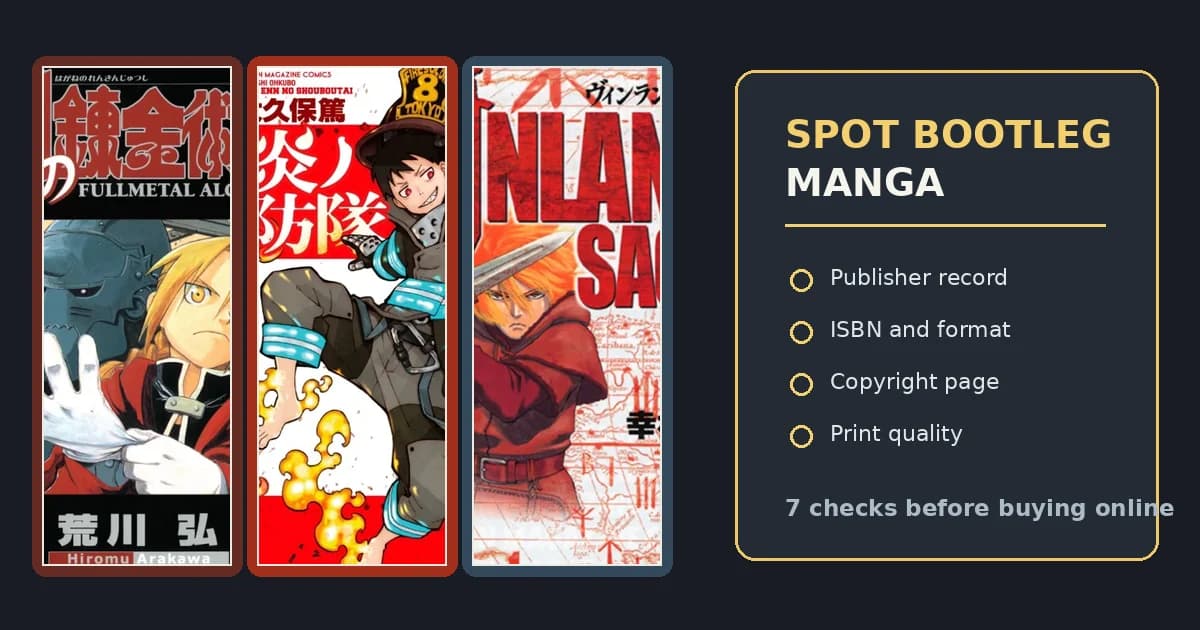
TL;DR: To spot bootleg manga, compare the exact copy with the publisher's edition page. Match the title, imprint, format, ISBN when supplied, volume details, spine, copyright page, and print quality. If several details fail together, stop the purchase, document the listing, and contact the seller and publisher through official channels.
The first question is not “Does this cover look strange?” It is “Can I identify the official edition this copy claims to be?” That change in order matters. A real reprint can look different from an old collector photo, while a convincing fake can copy the front cover. Start with the publisher's record, then inspect the physical book.
This guide covers Japanese manga and English print editions. For Korean comics, use Where to Buy Manhwa Physical Volumes in the US and Yen Press Manhwa Physical Releases 2026. The verification habit is similar, but the publishers and edition records are different. The broader shelf framework lives in Manga Collecting Tips: Formats, Storage, and Smart Buying.
Overview: how to spot bootleg manga
To spot bootleg manga, identify the exact publisher edition first, then compare its metadata and physical features with the copy in front of you. Check the publisher, imprint, format, volume or box-set contents, ISBN when supplied, copyright page, spine, and print quality. Treat a mismatch as a reason to pause, not as instant proof.
Many authenticity mistakes begin with a single photograph. A listing shows a recognizable character, a familiar logo, or a stack of volumes, and the buyer fills in the missing details. A source-of-truth check reverses that habit. You find the official product page, write down what it says, and compare the book against that record.
Readers also search for fake manga or counterfeit manga when the real question is whether a physical copy matches an official edition. The labels overlap in everyday collecting talk, but the check stays the same: identify the product, then test the evidence.
The method also protects legitimate editions. A publisher can refresh a logo, change an imprint, issue a reprint, or sell the same story in a tankobon, omnibus, box set, or deluxe format. A different spine is not automatically a fake. The question is whether the difference belongs to a documented edition.
Key Takeaways
- Start with the publisher's own product page, not a marketplace photograph or an old collector post.
- Identify the language, territory, publisher, imprint, format, volume number, and edition before judging the copy.
- Match the ISBN or UPC when the official record supplies one, but never treat one number as complete authentication.
- Inspect the spine, back cover, copyright page, credits, binding, paper, trim, and print clarity together.
- A logo difference can come from a genuine reprint or imprint change. Find the matching publisher record before rejecting it.
- Several small mismatches are more useful than one vague feeling. Pause when the listing and the book disagree in multiple places.
- Do not link, buy, resell, or recommend unauthorized copies. Use official reporting and return channels when a copy looks wrong.
- This guide is for Japanese manga and English editions. Manhwa print research belongs in the site's separate Korean-comics guides.
How to spot bootleg manga: start with the publisher record
Advertisement
The publisher record is your strongest first check because it defines what the official edition is supposed to contain. Before inspecting a suspect copy, record its language, territory, publisher, imprint, format, volume number, and any ISBN, page, or contents information shown on the product page. That gives every later comparison a fixed target.
Find the publisher and imprint
Look at the spine, back cover, title page, and copyright page. Search the publisher's catalog for the same title and format. Do not search only for a character name or a cover image. A series can have different publishers in different territories, and a Japanese tankobon is not the same product as an English paperback even when the story and volume number match.
The publisher's catalog is also the safest place to confirm whether the edition exists at all. VIZ's catalog and FAQ identify its print routes and authorized retailers. Kodansha's product pages identify its English editions and list format-specific information. If a seller's copy claims an imprint that has no matching publisher record, stop before treating it as a bargain.
Match the edition, not just the series
Write down the exact claim made by the listing: series, volume, language, publisher, format, and territory. Then compare each field with the publisher page. A box set, omnibus, and standard volume can share a story title while containing different source volumes and using different packaging.
AniList is useful as an identity check, not as an authenticity certificate. Its record can confirm that the series title and Japanese origin are being described correctly, and its literal status field can help separate a finished source work from a seller's vague “complete” wording. The publisher page still decides whether the physical edition exists and what it contains.
Read for the format-first system behind tankobon, omnibus, box-set, and deluxe comparisons.
Manga Collecting Tips: Formats, Storage, and Smart Buying
How to spot bootleg manga: compare the physical copy
After identifying the official edition, compare the book in several places. A clear cover does not rescue a wrong imprint, and a familiar logo does not rescue a missing copyright page. Check the spine, back cover, interior credits, identifiers, paper, binding, and print quality as one evidence set.
1. Cover and spine
Compare the title placement, publisher mark, imprint, volume number, barcode area, rating label when present, and spine design with the publisher's product images. Look for misspellings, awkward spacing, muddy logos, stretched art, and a title that belongs to a different format.
Do not use one small logo difference as a verdict. Publisher marks can change between reprints and imprints. A mismatch becomes meaningful when the cover, spine, language, and edition record disagree at the same time.
2. Copyright page and credits
Open the book. Look for the publisher, copyright holder, creator credits, translation or lettering credits when the edition normally provides them, publication information, and any identifier printed inside. Compare the names and wording with the publisher record or a known official copy from the same edition.
A blank, poorly typeset, or internally inconsistent copyright page deserves caution. So does a translation credit that cannot be connected to the publisher's edition. Do not “fix” the copy or remove pages while you are checking it. Photograph the evidence first.
3. ISBN, UPC, and metadata
When the publisher page supplies an ISBN or UPC, compare the complete identifier and what it describes. The number should point to the same series, volume, format, language, and territory. A paperback identifier cannot authenticate a deluxe hardcover, and an omnibus identifier cannot validate a loose standard volume.
An identifier is evidence, not a magic seal. A copied number can appear on a bad listing, and a genuine imported edition may have a different regional record. If the number and the physical format disagree, pause and find the publisher page for that exact edition.
4. Paper, binding, trim, and print
Look for blurry text, broken screentones, uneven trimming, weak glue, pages that do not sit squarely, or a cover finish that differs sharply from the official product images. These clues matter most when several appear together. A single scuff, bent corner, or faded used copy is ordinary wear, not proof of a counterfeit.
Compare like with like. A used paperback should be compared with the same paperback edition, not a newer hardcover or a Japanese original. Print quality can vary across legitimate reprints, so physical inspection should confirm the metadata check rather than replace it.
Step-by-Step
Use this sequence whenever a listing is secondhand, imported, unusually unclear, or missing normal edition details. It takes the uncertainty in the right order: establish the official record, compare the item, preserve evidence, and stop before a questionable purchase becomes a resale problem.
- Name the exact edition: Write down the series, volume, language, territory, publisher, imprint, and format shown by the listing.
- Open the publisher page: Find the matching product page and record the cover, spine or format information, contents, identifiers, and stated release details.
- Check the series identity: Use AniList to confirm the Japanese-origin title and read its literal status field. Keep this identity check separate from physical-edition authentication.
- Compare every visible side: Match the cover, spine, back cover, barcode area, title placement, logos, volume number, and packaging with the official record.
- Request interior evidence: For a used copy, ask for clear photographs of the copyright page, title page, and any ISBN or publication information. Do not rely only on stock photos.
- Compare the physical object: Check print clarity, trim, binding, paper, and page order against a matching official edition. Separate normal wear from repeated production mismatches.
- Apply the stop rule: If the seller cannot explain several mismatches or the edition cannot be found in an official catalog, do not buy. Save the evidence and report the listing through official channels.
Tips: tell a regional edition or reprint from a counterfeit
A legitimate regional edition or reprint can differ from the copy you expected. Check language, territory, publisher, imprint, format, release period, and identifier before calling it fake. The safest conclusion is often “different official edition” or “not enough evidence,” followed by a request for the matching publisher record.

Differences that can be legitimate
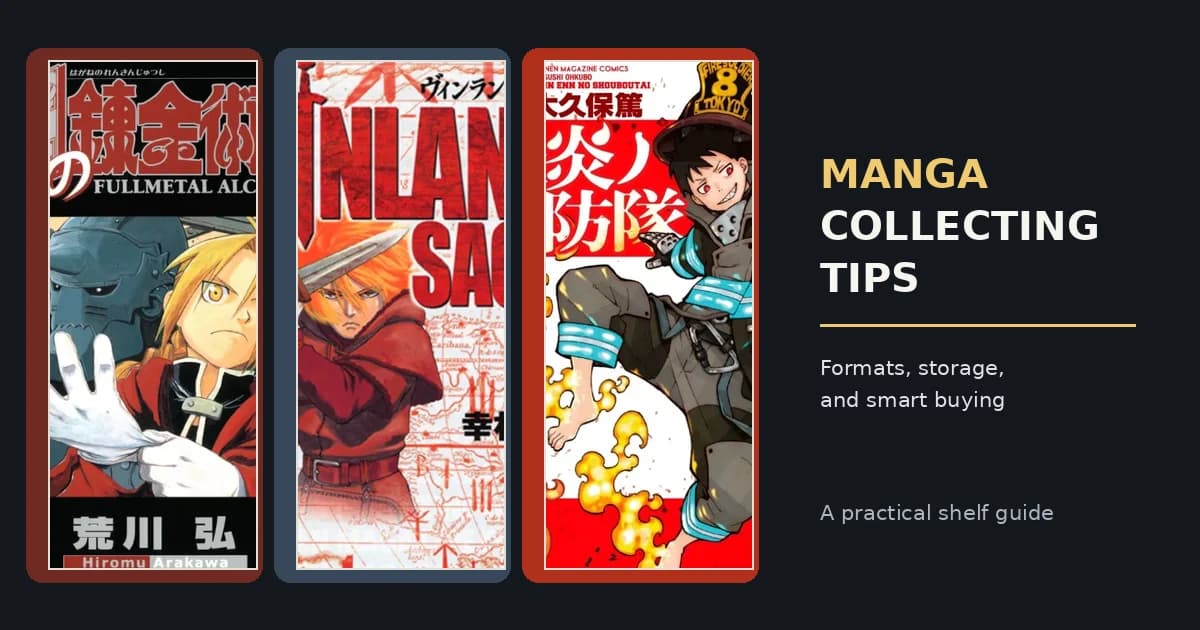
The same manga may appear as a Japanese tankobon, an English paperback, a 2-in-1 or 3-in-1 omnibus, a box set, or a deluxe hardcover. Covers, logos, trim sizes, paper, back-cover text, and identifiers can change with that format. A reprint can also refresh design elements without changing the story.
That is why the exact edition matters. Compare an English Fire Force omnibus with the Kodansha omnibus page, not with a Japanese volume one. Compare a Vinland Saga Deluxe hardcover with Kodansha's Deluxe record, not with a standard paperback photograph. The format mismatch is not evidence of a fake.
Differences that deserve a pause
Pause when a copy combines details from different releases: a Japanese title page with an English publisher logo, an omnibus claim with a single-volume identifier, a volume number that does not match its contents, or a copyright page whose credits do not describe the edition.
None of these clues should lead you to accuse a seller without checking the source record. They tell you to stop treating the listing as verified. Ask for interior photos, compare the complete metadata, and use the return or reporting route before the book changes hands again.
Verified examples: three official edition records
These examples show why authenticity checks must follow the edition rather than the series name. AniList confirms each Japanese-origin series and its literal status, while the publisher page identifies a separate English physical product. The numbers below are source chapters or publisher contents, not interchangeable volume counts.
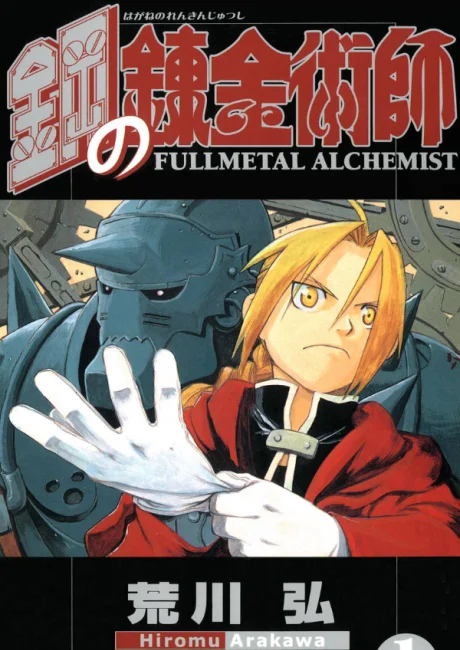
Fullmetal Alchemist: box-set contents
AniList records Fullmetal Alchemist as countryOfOrigin: JP, status: FINISHED, 116 chapters, and isAdult=false. VIZ's Fullmetal Alchemist Complete Box Set describes an English paperback set containing volumes 1 through 27, plus the novel The Ties That Bind and a full-color poster. A suspect set should be compared with that complete contents record.
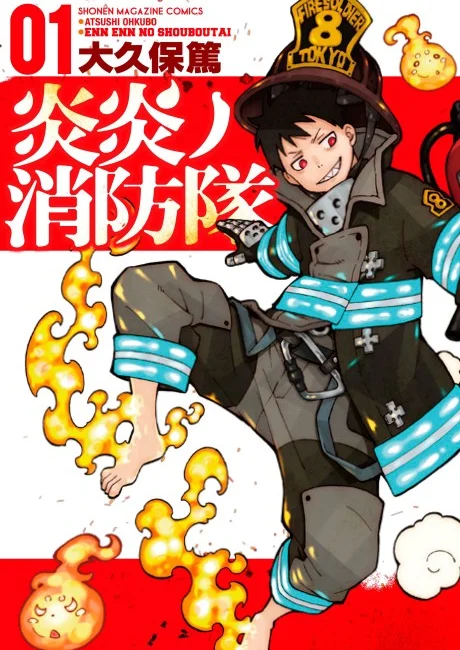
Fire Force: omnibus contents
AniList records Fire Force as countryOfOrigin: JP, status: FINISHED, 305 chapters, and isAdult=false. Kodansha's Fire Force Omnibus identifies the format as a 3-in-1 edition containing source volumes 1 through 3. A listing that calls a single standard volume an omnibus is making a metadata claim you can check.
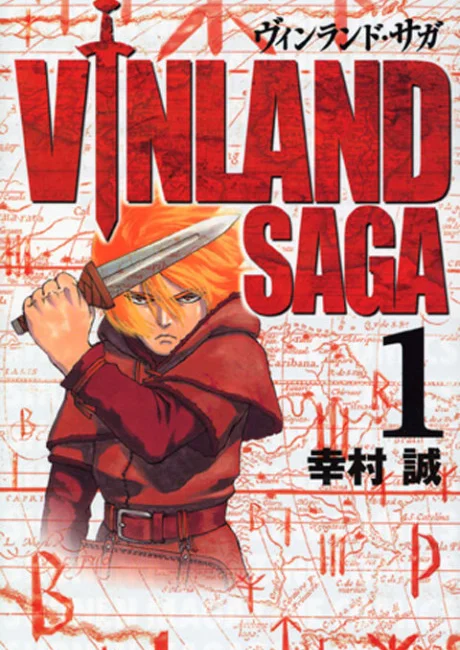
Vinland Saga: deluxe contents
AniList records Vinland Saga as countryOfOrigin: JP, status: FINISHED, 224 chapters, and isAdult=false. Kodansha's Vinland Saga Deluxe page describes deluxe hardcovers that collect volumes 1 through 3 of the Japanese edition and add bonus content. Compare a suspect hardcover with that product record, not with a standard-volume image.
If you are unsure whether a listing is for manga or Korean manhwa, read before comparing publisher records.
Manga vs Manhwa vs Manhua explained
Analysis: what a publisher page can and cannot prove
A publisher page can establish that a particular edition exists and describe its contents. It cannot inspect the copy in your hands, confirm a marketplace seller's stock, or guarantee that a used listing photograph is current. Treat it as the reference record in a comparison, not as an automatic certificate for every copy using the same title.
VIZ provides a Legal Tips and Suspected Infringement form, and its brand-management page says its team leads anti-counterfeit partnerships and online takedowns. Kodansha's Terms of Use reserve copyright and trademark rights for its site materials and marks. Those routes show where to report suspected infringement; they do not turn a visual guess into a legal finding.
Keep the language precise. Say “the copy does not match the publisher's record” when that is what you can demonstrate. Say “suspected counterfeit” when several independent details disagree. Avoid reselling a questionable book or presenting an unverified conclusion as fact.
What to do if you already bought a suspect copy
Advertisement
If a copy looks wrong, stop the transaction chain. Save the listing URL, seller name, receipt, order number, messages, and every photograph. Photograph the front, back, spine, title page, copyright page, ISBN or UPC, and a representative interior spread. Keep the book unchanged while you document it.
Contact the seller and marketplace through their official support or return process. Contact the publisher through its official legal or consumer channel when the copy appears to use its name, imprint, or licensed material. Explain the mismatches as a list of observable facts. Do not send accusations to unrelated creators or link other readers to the suspect listing.
If a return is accepted, keep the documentation until the refund or resolution is complete. If the platform asks you to ship the item back, follow its official instructions and retain proof of shipment. Do not pass the copy to another collector just because the listing is difficult to resolve.
Frequently Asked Questions
Does bootleg mean fake? In manga collecting, bootleg usually means an unauthorized copy made to look like an official edition. Compare the copy with the publisher's own product record, because a regional release, reprint, or different format can look unusual without being counterfeit.
How can I tell if manga is bootleg? Check the exact publisher, imprint, title, format, ISBN when supplied, volume details, copyright page, and print quality against an official product page. One odd detail is a reason to investigate, not proof by itself.
Is an ISBN enough to prove a manga is real? No. An ISBN is useful when it matches the publisher's title, format, territory, and edition details, but a copied or mismatched number cannot authenticate a book alone. Use the full record and the physical copy together.
Are different publisher logos proof of a bootleg? No. Publishers change logos, imprints, and packaging across years and territories. Treat a logo difference as a prompt to find the matching publisher record, then compare the exact release rather than judging one mark in isolation.
What should I do if I bought a suspect manga copy? Stop reselling it, save the listing and receipt, photograph the cover, spine, copyright page, and ISBN, then contact the seller and the relevant publisher or platform. Do not alter the book while you are documenting the issue.
Can an official reprint look different from an older manga volume? Yes. Reprints can have different logos, covers, paper, or production details while remaining official. Match the copy to the publisher's record for its language, territory, format, and release rather than comparing it only with an older fan photo.
Is bootleg manga illegal? Copyright, trademark, consumer, and resale rules vary by country. This guide is a collecting and verification checklist, not legal advice. If a copy appears unauthorized, document it and use the publisher's or platform's official reporting route.
Does buying from a marketplace guarantee an official manga? No. A marketplace can host listings from different sellers, so check the seller, product record, and physical copy together. When the edition cannot be tied to an official publisher or authorized route, pause instead of assuming the listing is genuine.
Related Reading
- Manga Collecting Tips: Formats, Storage, and Smart Buying: the hub's format-first guide for Japanese manga shelves.
- Where to Buy Manhwa Physical Volumes in the US: the Korean-comics buying guide, kept separate from this manga checklist.
- Yen Press Manhwa Physical Releases 2026: publisher-specific manhwa print records and edition checks.
- Blue Lock Manga Review: a series review for deciding what you want to own before checking the physical copy.
- Best Manga Box Sets: 8 Complete Runs and Starter Sets: compare official box-set contents with loose-volume listings before buying.
References
Live entity checks
- Fullmetal Alchemist on AniList:
countryOfOrigin: JP,status: FINISHED, 116 chapters,isAdult=false. - Fire Force on AniList:
countryOfOrigin: JP,status: FINISHED, 305 chapters,isAdult=false. - Vinland Saga on AniList:
countryOfOrigin: JP,status: FINISHED, 224 chapters,isAdult=false.
Publisher and reporting checks
- Fullmetal Alchemist Complete Box Set, VIZ: official contents for volumes 1 through 27 and the stated extras.
- Fire Force Omnibus, Kodansha USA: official 3-in-1 contents for source volumes 1 through 3.
- Vinland Saga Deluxe, Kodansha USA: official deluxe contents and format record.
- VIZ Anti-Counterfeit Partnerships: VIZ brand-management statement on anti-counterfeit partnerships and takedowns.
- VIZ Legal Tips and Suspected Infringement: official reporting route for suspected piracy and copyright infringement.
- VIZ FAQ: official print-purchase routes and edition context.
- Kodansha USA Terms of Use: official copyright and trademark terms.