
TL;DR: Where to buy manga in the US is easiest to answer in two steps: identify the exact edition on the publisher's site, then choose an authorized bookstore, specialty shop, or local comic shop. Match language, format, volume, shipping, and returns before you order, because a search result can combine print, digital, English, and Japanese products.
If you want a complete shelf, start with the publisher record before you open a retailer tab. If you need a Japanese-language copy, start with a specialist such as Kinokuniya. If you need a normal English paperback, compare an authorized bookstore with a local shop. The right route depends on the object you want, not just the series name.
This is the Japanese manga buying guide in the ChapterBrief collecting cluster. It is separate from Where to Buy Manhwa Physical Volumes in the US, which covers Korean webtoon and manhwa print routes. For the wider shelf plan, use Manga Collecting Tips: Formats, Storage, and Smart Buying, then follow the format and care guides linked below.
Overview: where to buy manga in the US
To find where to buy manga in the US, check the publisher's edition record first, then order through an authorized bookstore, specialty shop, or local comic shop. Use a Japanese-focused store when you want an imported-language edition. Confirm format, language, volume, stock, shipping, and returns on the current listing.
The simplest route is publisher to retailer. A publisher page tells you that the product exists, which language and format it represents, and which stores the publisher recognizes. A retailer page tells you whether that specific copy is currently orderable, how it will ship, and what happens if it arrives damaged or you change your mind.
VIZ's FAQ names Amazon, Barnes & Noble, Books-A-Million, Bookshop.org, Crunchyroll, Walmart, Kinokuniya, and its own VIZ Shop and Shonen Jump Store for print manga. The same FAQ separates digital purchasing from physical products, and its own description of the VIZ Shop is mostly about merchandise. That distinction matters when a brand search shows books, figures, shirts, and digital results together.
Kodansha uses a similar structure. Its volume pages show digital and print retailers in an “Also available on” section, while the Kodansha Reader Portal handles the publisher's digital library. You can use the publisher page as the identity anchor, then choose the retailer whose pickup, shipping, and return terms suit you.
Key Takeaways: choose the route before the retailer
Where to buy manga in the US depends on the edition you want. Verify the product through the publisher, then pick a retailer based on language, format, delivery, pickup, and returns. Specialist stores help with Japanese editions, while ordinary bookstores and comic shops are convenient for authorized English releases.
- Start with a publisher catalog or series page.
- Match English, Japanese, digital, print, standard, omnibus, and deluxe labels.
- Use the publisher's retailer list when a product page offers one.
- Check current stock and shipping with the retailer, because those details move.
- Ask a local comic shop about special orders instead of assuming shelf stock.
- Keep the receipt and inspect a physical copy before removing its packaging or stickers.
- Use a publisher record to identify a used copy before judging its condition.
- Treat price, availability, and release dates as current-listing details, not permanent facts.
Where to buy manga in the US: verify the edition first
Before choosing where to buy manga in the US, write down the language, territory, publisher, imprint, format, volume number, and any combined-volume label. Then compare those details with an official product page. This short identity check prevents buying a digital file, Japanese edition, or omnibus when you meant an English paperback.
The series title by itself is too broad. A search for one title can return the original Japanese tankobon, an English translation, an ebook, an omnibus, an art book, and merchandise. All can use similar cover art. Start by deciding which of these is allowed into your collection.
For an English print copy, look for the publisher or imprint on the product page, the stated language, the volume or combined-volume number, the format, and any page or contents information. For an imported Japanese copy, confirm that the listing actually says Japanese and that the product is a book rather than a digital or accessory listing.
AniList is useful for confirming the underlying series identity, origin, completion status, and chapter or volume metadata. It is not a substitute for a publisher's product page. The publisher verifies the specific English or Japanese edition you are about to buy, while AniList helps you avoid mixing a series record with an unrelated product.
If the publisher page is unavailable, incomplete, or inconsistent with the retailer, pause. Search the publisher's own catalog again, ask a local bookstore to confirm the ISBN or product record, or choose a listing that exposes enough edition details to check. A missing detail is a reason to verify, not a reason to invent one.
If you are trying to tell a genuine edition from a suspicious copy, use the physical checks in before you add it to the shelf.
How to Spot Bootleg Manga
Where to buy manga online: publisher catalogs and authorized stores
For where to buy manga online, use the publisher's catalog to identify the edition, then select an authorized retailer named by that publisher. VIZ publishes a retailer list for print products. Kodansha places retailer information on volume pages, and its Print Club explains how digital-only titles can enter print through print on demand.
VIZ is a good example of why publisher pages should come first. Its manga catalog separates series and products, and its FAQ names physical retail channels. Read the product type carefully. VIZ's FAQ describes the VIZ Shop through "plushies and posters to figures and t-shirts," so do not assume every VIZ-branded storefront is a general bookstore.
Kodansha's Support Center explains that its volume pages show print and digital retailers in the “Also available on” area. It also lists major retailers for Kodansha Print Club books and says readers can ask a local bookstore to special-order them. That is useful when a title appears in the publisher catalog but is not sitting on a nearby shelf.
Yen Press provides a different but equally useful reference point. Its North American retailer page identifies Hachette Book Group for direct distribution and lists Ingram, Baker & Taylor, and Bookazine as other purchase sources. The page is written for retailers, but it tells a reader why a local store may be able to order a book even when its public shelf is small.
When a retailer page offers several formats, open the detail view instead of relying on the search card. Confirm the title, volume, language, binding, and whether the item is physical. Then check the store's current shipping and return terms. Prices move, and a promotional price or temporary stock message should not become a permanent claim in a guide.
Where to buy manga near me: bookstores and comic shops
For where to buy manga near me, start with the store's live search or call the shop with the publisher, series, and volume in hand. Kinokuniya is useful for English and Japanese manga. A local comic shop can check its distributor or place a special order, but shelf stock varies by location.
Kinokuniya USA's online catalog has an English "comics & manga" section and a separate Japanese-language コミック section, and its store locations page lists the physical stores. The FAQ says you can choose a store for pickup at checkout with no shipping fee, and that an item may be transferred from the warehouse if the store lacks it. The same FAQ notes that its online return policy covers online orders only; in-store purchases follow that store's own policy. Use those pages to choose the route, then check the product listing for the language you actually want.
For a neighborhood comic shop, VIZ's FAQ points readers to the Diamond Comic Shop Locator. That address, comicshoplocator.com, now opens ComLoc, a shop locator that also runs comics and anime news. The directory finds shops; it does not promise that every shop has every manga volume. Call with a precise request and ask whether the store can order the volume, how long it will hold a pickup, and what its return rules are.
Large bookstores are convenient for common English releases and online ordering, but convenience does not remove the edition check. A bookstore search can still surface a digital product, a different format, or a third-party listing. One r/MangaCollectors post rounding up US stores warned: "Online....you have to be careful since Walmart does do 3rd party sellers." Match the publisher record before treating the result as the right book.
Thread: r/MangaCollectors, "My suggestions on where to buy manga in the US" (via Reddit embed).
If you want to browse in person, bring a short list of the exact volumes you want and inspect the spine, language, and format. Store inventory changes quickly. A call before a long trip is more reliable than a remembered shelf photo or an old social post.
Manga preorders: check the publisher record before checkout
Manga preorders are safest when the publisher has already identified the edition and the retailer shows the same product. Confirm the release label, language, format, and volume before paying. A preorder page can change its delivery estimate, so record the retailer's current terms and keep the order confirmation.
Kodansha's Print Club is a helpful official example because its support documentation explains the model directly. Kodansha says the program brings some digital-only series to print through print on demand, and that orders can be placed through major book retailers or a local bookstore. The same page explains that each Print Club book contains one manga volume unless an omnibus or recollection is labeled otherwise.
That detail gives collectors a useful question to ask: is this a normal collected volume, or is the publisher describing a combined edition? Do not assume a product's page count or delivery timing from another series. Read the current product record and the retailer's terms for the specific book.
Preorder when you know the edition and the timing works for you. Wait when the product record is vague, the language is unclear, or the retailer cannot explain the return process. The goal is a correct copy that arrives under terms you understand.
Japanese manga in the US: English and imported editions
Japanese manga in the US can mean an English translation sold domestically or a Japanese-language edition imported through a specialist. Decide which one you want before searching. Kinokuniya's US pages explicitly cover both English and Japanese manga, so its catalog is a useful place to compare the language label, format, and pickup route.
The same series name can appear in two languages with different publishers, cover text, trim sizes, release schedules, and volume identifiers. Check the language field and the publisher or imprint. If the listing uses a cover image without a clear language label, open the product details or ask the store before ordering.
Japanese-language collecting also makes condition and packaging questions more important. A removable obi, bonus insert, or store item may be part of a particular release, but it does not turn an English copy into a Japanese one. Match the product record first, then decide whether the physical extras matter to your shelf.
Do not mix AniList chapter counts with English print-volume counts. AniList describes the underlying Japanese-origin work. The publisher page describes the edition sold in the US. Keeping those records separate makes it easier to catalog both an imported tankobon and an English translation without calling one a duplicate of the other.
Used manga: match the copy to an official record
Used manga is safest when you identify the exact product before comparing condition. Use the publisher page to match language, publisher, imprint, volume, and format. Then inspect the actual copy for writing, tears, missing inserts, water damage, odor, and an honest return policy. A low price alone proves nothing about authenticity or condition.
The same r/MangaCollectors post gave the short version for Mercari: "Do your research on the volumes to make sure they're legit." A used listing should answer basic identity questions. Is it the English paperback, the Japanese tankobon, an omnibus, or a digital code? Does the volume number match? Does the publisher or imprint make sense for that territory? Does the cover belong to the edition named in the listing? If the answers are unclear, keep looking.
Condition deserves its own note. Ask whether pages are complete, whether the binding opens safely, and whether the book has been exposed to moisture. A copy can be genuine and still be a poor fit for a collection if it has a warped page block or a return policy that leaves you stuck with a mismatch.
For first-print questions, use Manga First Print Guide: Number Lines, Obi, and Colophons. That guide separates a first printing from a first edition and explains what an ISBN can and cannot prove. For care after the purchase, use Manga Storage and Care: Shelves, Humidity, Light, and Care.
Manga buying examples: three editions to check
These manga buying examples show how to keep series metadata and physical-edition evidence separate. AniList confirms each Japanese-origin series is finished and non-adult in the records checked for this guide. The publisher pages then verify the relevant US print route or series catalog, which is the evidence a retailer search cannot replace.
Fullmetal Alchemist
AniList's record for Fullmetal Alchemist lists countryOfOrigin: JP, status: FINISHED, 116 chapters, 27 volumes, and isAdult: false. VIZ's Fullmetal Alchemist Vol. 1 page verifies an official English paperback product. Record the AniList series data and the VIZ edition as separate catalog fields.
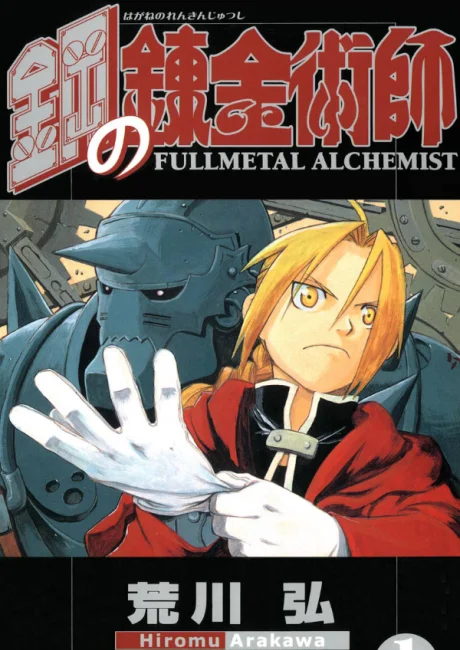 Fullmetal Alchemist is an identity example. Match the language and publisher record before choosing a copy. Cover via AniList.
Fire Force
AniList's record for Fire Force lists countryOfOrigin: JP, status: FINISHED, 305 chapters, 34 volumes, and isAdult: false. Kodansha's Fire Force series page identifies print and digital products and documents a complete 34-volume line. If a retailer shows an omnibus or box format, verify that product on Kodansha's edition page rather than borrowing the standard-volume count.
 Fire Force shows why the publisher's format label matters when standard volumes and combined editions share a search result. Cover via AniList.
Vinland Saga
AniList's record for Vinland Saga lists countryOfOrigin: JP, status: FINISHED, 224 chapters, 29 volumes, and isAdult: false. Kodansha's Vinland Saga series page is the publisher catalog anchor for its print and digital products, and it lists 15 volumes in that line against AniList's 29 source volumes. The chapter and volume fields describe the series; a retailer listing still needs its own edition check.
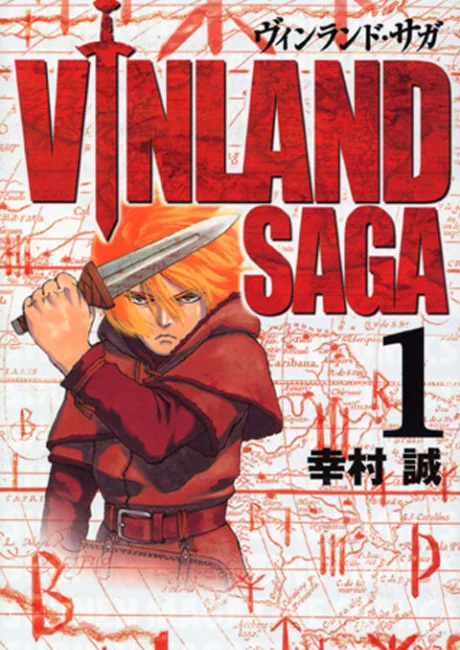 Vinland Saga is a useful check when the series record and the US product catalog use different units. Cover via AniList.
The three records above are examples of a repeatable check, not a claim that these are the only manga worth buying. AniList chapter and volume counts describe the series record. Publisher pages describe the physical product. Keep those labels separate in your collection spreadsheet.
When you are deciding between a standard volume, omnibus, or box set, compare the physical tradeoffs in before ordering a long run.
Manga Omnibus vs Single Volumes
Step-by-Step
To buy manga safely, begin with the edition identity and finish with a record of what you ordered. The sequence below works for a bookstore tab, a specialist shop, a local comic shop, or a used listing. It keeps a retailer's changing stock from becoming your only source of truth.
- Name the language: Decide whether you want an English translation or a Japanese-language edition.
- Find the publisher record: Search the official publisher catalog or series page for the exact title.
- Match the edition: Confirm the volume, binding, format, imprint, and any omnibus or deluxe label.
- Choose an authorized route: Use a retailer named by the publisher, a known bookstore, a specialist, or a local comic shop.
- Check the live listing: Read the current stock, release, shipping, pickup, and return information.
- Compare the physical details: Make sure the listing says print and matches the language and format you chose.
- Save the record: Keep the order confirmation, product link, and volume number in your collection notes.
- Inspect the copy: Check the book for damage, missing contents, or an edition mismatch when it arrives.
Tips: keep a clean manga buying list
The best manga buying system is a small record you will actually maintain. Track the series, language, publisher, format, volume, order date, and whether the copy arrived in good condition. This makes repeat purchases easier and exposes a mismatch before it turns into a shelf-wide catalog problem.
Use one row per physical product, not one row per series. A standard English paperback and a Japanese tankobon may share a title but deserve separate entries. For an omnibus, record the source-volume range from the publisher's page. For a box set, record its named contents only after the publisher verifies them.
Keep the current publisher URL in your notes, but do not assume an old product page will keep the same stock or release status. Retailers change listings. Publishers update catalogs. If the link stops working, search the publisher by series and volume again rather than replacing the missing detail with a remembered one.
Prices move, so avoid building your decision around a number copied from an old guide. Compare the current listing, delivery terms, condition, and return policy when you are ready to buy. A slightly less convenient route can be the better choice if it gives you a clear edition record and an easy return.
Common Manga Buying Mistakes
Most manga buying mistakes happen before checkout, when a broad search result is treated as an exact product record. Slow down long enough to identify language, format, publisher, volume, and return terms. That short pause prevents many duplicate purchases and makes it easier to reject an unclear or unauthorized listing.
Starting with a marketplace search
Marketplace search is useful for finding possibilities, but it should not be your identity source. Start at the publisher, then return to the retailer with the exact product details. This is especially important when a title has English, Japanese, digital, and omnibus results beside one another.
Mixing Japanese and English editions
A familiar cover does not guarantee the language you want. Read the product field, publisher, and format. If you collect both, label them separately so a Japanese tankobon does not appear to fill an English-volume gap in your notes.
Assuming digital means print
Digital availability can be a useful signal that a series is licensed, but it does not prove a US print edition exists. Open the publisher's print record or the retailer information on the volume page. Kodansha's support documentation is explicit about separating print and digital routes.
Using obsolete store links
Store names and domains change. Before following an old recommendation, check whether the retailer still has an official site and whether the publisher still names that route. If a link is dead, use the current publisher catalog or a current store directory.
Ignoring returns and condition
An authorized retailer can still ship a damaged book, and a genuine used copy can still be a bad fit. VIZ's FAQ sends buyers of a defective product back to the store where they bought it, so the store's terms are the ones that count. Kinokuniya's online return form even lists "wrong title/edition" and "wrong language" as reasons. Read the return terms, keep your order confirmation, and inspect the copy before you file it away. Add sleeves or storage only after the book passes that basic check.
Our Take: the publisher page decides, the store just delivers
Start every order at the publisher. VIZ, Kodansha and Yen Press each tell you, in their own words, where their books are sold and how print differs from digital. After that, pick the store by its terms: pickup, shipping and returns. Kinokuniya is the clearest route for Japanese-language copies. For used and marketplace copies, the readers quoted above give the same advice we do: check that the volume is legit before you pay. This take rests only on the publisher, retailer and directory pages and the reader post cited above.
Related Reading
This guide handles the buying route for Japanese manga in the US. The cluster's hub covers collection goals, while the sibling guides cover formats, first-print checks, storage, box sets, and counterfeit warning signs. For Korean manhwa buying, use the separate manhwa page so the publisher and licensing context stays accurate.
- Manga Collecting Tips: Formats, Storage, and Smart Buying: the cluster hub for choosing a collection goal and physical format.
- Manga Storage and Care: Shelves, Humidity, Light, and Care: protect the books after they arrive.
- Manga First Print Guide: Number Lines, Obi, and Colophons: separate edition identity from printing evidence.
- Manga Omnibus vs Single Volumes: compare combined books with standard volumes.
- Best Manga Box Sets: 8 Complete Runs and Starter Sets: check publisher-documented box contents.
- How to Spot Bootleg Manga: inspect a suspicious copy without linking unauthorized sellers.
- Where to Buy Manhwa Physical Volumes in the US: the separate Korean manhwa buying guide.
Frequently Asked Questions
Where to buy manga in the US has a short answer and a necessary second step: use a publisher record to identify the book, then choose a current authorized route. The questions below cover language, retailer choice, local shops, digital listings, and used copies without treating changing stock or prices as permanent facts.
Where should I buy manga in the US?
Start with the publisher's catalog, then choose an authorized bookstore, specialty shop, or local comic shop. VIZ and Kodansha publish retailer routes, while Kinokuniya offers English and Japanese manga. Check the exact format, language, stock, shipping, and returns before ordering.
Is it better to buy manga from a publisher or bookstore?
Use the publisher's page to identify the correct edition and the bookstore or specialty shop to compare current fulfillment. A publisher catalog is the better identity check; a retailer may be the more convenient place to order or pick up the book.
How do I know a manga edition is official?
Match the title, volume, language, publisher or imprint, format, and product details to an official publisher record. If a listing cannot be tied to a publisher catalog or an authorized retailer, do not treat its description as proof of an official edition.
Where can I buy Japanese-language manga in the US?
Kinokuniya USA is a practical starting point because its store pages explicitly describe English and Japanese manga, with store locations and pickup information. Confirm the language and format on the current listing before checkout, since an English release may sit beside the Japanese edition.
Can a local comic shop order manga for me?
Often, yes. Use Comic Shop Locator to find a nearby shop, then ask whether it carries the publisher or can special-order the volume. The shop can tell you about its current distributor, ordering window, pickup process, and return policy.
Is a digital manga listing the same as a print edition?
No. Digital and print can be separate products with different formats, page counts, release schedules, or retailers. Kodansha directs readers to the volume page's retailer information, so check that the listing you want is specifically marked for print.
What should I check before buying used manga?
Identify the exact edition first, then inspect language, publisher, volume number, printing information, condition, and return terms. A low price or a familiar cover does not prove that a used copy matches the official edition you meant to collect.
How We Checked This
Fifteen source pages were checked on October 8, 2026. They are VIZ's FAQ, catalog and Fullmetal Alchemist page, Kodansha's support center and two series pages, and Yen Press's retailer page. Kinokuniya's store, FAQ and return pages, the comic shop locator, three AniList records and one r/MangaCollectors post make up the rest. Two Kinokuniya links from the first draft had gone dead after its site was rebuilt and were replaced. Each fact has a row with a quoted line in our sources table.
Last reviewed: October 8, 2026
References
The buying-route claims below come from official publisher, distributor, retailer, directory, and series-record pages. Publisher FAQs and support pages can change as store relationships change, so open the live page when you are ready to order. The AniList links verify the series records used in the examples; the publisher links verify physical-product context.
- VIZ Media FAQ - print retailers, digital separation, returns, and the VIZ Shop distinction.
- VIZ manga catalog - official VIZ series and product catalog.
- Kodansha USA Support Center - print and digital retailer routes, local special orders, and Print Club details.
- Yen Press North American print sales and distribution - current North American distributor and retailer channels.
- Kinokuniya USA store locations - US store list; the site menu shows English and Japanese manga sections.
- Kinokuniya USA FAQ - store pickup, shipping, and return policy.
- Kinokuniya USA returns, exchanges & cancellations - return request reasons.
- Comic Shop Locator (ComLoc) - directory for nearby comic shops.
- AniList: Fullmetal Alchemist - series metadata checked for origin, status, chapters, volumes, and adult flag.
- VIZ: Fullmetal Alchemist Vol. 1 - official English print product page.
- AniList: Fire Force - series metadata checked for origin, status, chapters, volumes, and adult flag.
- Kodansha: Fire Force - official print and digital series catalog.
- AniList: Vinland Saga - series metadata checked for origin, status, chapters, volumes, and adult flag.
- Kodansha: Vinland Saga - official print and digital series catalog.
- r/MangaCollectors: My suggestions on where to buy manga in the US - reader post quoted above.