
TL;DR: Manga storage works best when books stay cool, stable, relatively dry, upright, clean, and out of direct light. Use flat shelves, gentle bookends, and correctly sized stable enclosures only when they solve a real problem. Check humidity, dust, and water risks before buying bins or sleeves.
This guide is the conservation deep dive for the site's Manga Collecting Tips hub. The hub explains where storage fits into a collection; this article turns that principle into a room, shelf, handling, and inspection routine. It covers Japanese manga and official English print editions, not the separate publisher and buying routes for physical manhwa in Where to Buy Manhwa Physical Volumes in the US.
The recommendations below adapt the Library of Congress guide to storing books and the National Archives' guidance on storing family papers for a home manga shelf. They are preventive care, not restoration instructions. This guide uses no price claims. If you buy supplies, stock and prices move, so check the current product information rather than relying on memory.
If you came here for manga storage ideas, use the order below: stabilize the room, make the shelf safe, handle books gently, and add an enclosure only when it solves a specific problem.
Overview: what manga storage should prevent
Good manga storage prevents four ordinary problems: moisture-related distortion or mold, light-related fading, mechanical stress from leaning or crowding, and grime introduced during handling. A cool, stable room and a properly supported shelf usually matter more than a decorative box. Add an enclosure only when its material, fit, and use improve the book's situation.
Most home collections do not need museum equipment. They need a shelf away from a radiator, vent, window glare, floor leaks, and a damp wall; a way to see humidity changes; enough room to remove a book without scraping its neighbors; and clean, dry hands. Those small choices address the main risks before a cover curls or a page block smells musty.
The Library of Congress says the most effective and economical preservation measures for small book collections are preventive: proper storage, environment, and handling. That is a useful frame for manga: reduce exposure and stress first, then decide whether a sleeve, box, or custom enclosure is justified.
Key Takeaways: the low-risk manga storage checklist
Start with the room and shelf, not the accessory aisle. Keep the environment stable, control direct light, support books vertically, leave the shelf easy to clean, and handle volumes without pulling or forcing them. A sleeve or box is a secondary tool. It cannot compensate for a hot, damp, crowded, or leaky storage location.
- Keep most manga upright on flat, solid shelves with gentle support.
- Group similar sizes so one tall or heavy book does not distort its neighbors.
- Aim for a cool, stable environment and monitor relative humidity rather than guessing.
- Keep books away from direct light, heaters, vents, water sources, and exterior damp spots.
- Dust shelves and book tops with clean, fragrance-free tools; do not wet-clean paper.
- Remove a volume by holding the middle of its spine, not by yanking the top edge.
- Use sleeves or boxes only when the material is stable, the fit is right, and removal is safe.
- Isolate damp, moldy, or visibly infested books before they return to the shelf.
- The best storage plan is one you can inspect and clean without moving the whole collection.
Manga storage: what environment is safest?
Most manga should live in a cool, stable, relatively dry room with limited light and good air circulation. The Library of Congress gives 30 to 55 percent relative humidity, at 70 degrees Fahrenheit or below, as safe for most books and recommends avoiding extended heat, high humidity, and frequent swings. Stability matters because repeated expansion and contraction stresses paper and bindings.
The exact number is a guide, not a reason to chase a perfect reading every minute. A small hygrometer can show whether a room regularly drifts high or low. Check it over time and respond to a pattern. A single reading after a storm tells you less than a week of readings in the same storage area.
Keep the shelf away from radiators, heating and cooling vents, plumbing, windows that receive strong sun, and places where a small leak would reach the bottom row. Avoid basements, attics, and garages for a collection you want to preserve. The Library of Congress calls those spaces unsuitable because of their temperatures, humidity, and higher risk of leaks and floods.
A manga storage shelf should also leave enough room behind and around the row for inspection and cleaning. The goal is not an expensive furniture label. It is a flat, stable surface in a location where you can notice moisture, dust, leaning, or pests early.
Water is the other location risk. The National Archives advises keeping items away from pipes, windows, and known roof leaks, and on a shelf so they don't get wet. Leave a little breathing room behind and around the shelf rather than pressing it into a cold wall. Do not use a sealed plastic container to hide a damp room problem.
Manga storage: shelves and support that reduce damage
Store most manga upright with their covers supported by neighboring books or bookends, without forcing the row tightly together. The Library of Congress says shelves should be completely flat and solid, not latticed or slatted, and deep enough to support the books fully. Oversized or fragile volumes need flat, fully supported storage instead of a lean that transfers weight to the spine or cover.
The Library of Congress recommends grouping books of similar size so the covers support one another. That is practical for manga because a short tankobon beside a much taller hardcover can create an uneven row. Keep the smaller books from slumping into a gap, and use a bookend that supports the row without crushing the outer volume.
Do not overfill a shelf. A row that requires force to remove one volume creates rubbing at the edges and encourages readers to pull from the top of the spine. A row with a little working space is easier to dust, inspect, and rotate. It also makes it easier to notice a warped cover or a book that has started to lean.
Large books should not hang beyond the shelf edge. If a volume cannot stand safely, lay it flat with full support underneath. Avoid stacking so high that the bottom book carries an unstable load. Separate an unusually fragile or damaged volume until you can give it a properly sized box or professional advice.
Manga storage: light, dust, and room placement
Keep manga away from direct and intense light, especially window light. The Library of Congress shows a book whose purple cover faded to yellow under bright light and recommends minimal light for stored books.
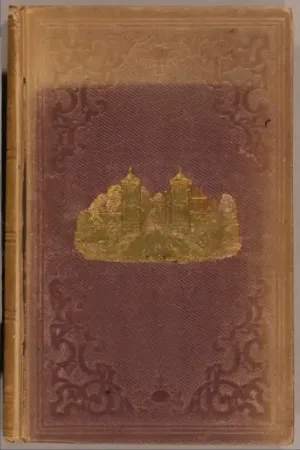
Light damage on a cloth cover: the shaded center kept its purple color. Image: Library of Congress, "Storing Your Books" guide. Curtains, shades, a closed cabinet, or a shelf placed out of the light path can reduce exposure without requiring a special display case.
A bright shelf can look attractive while quietly changing the covers. Collectors post the results. In one r/MangaCollectors thread showing a sun-bleached shelf, a reader wrote: "I had some books under a closed blind before and within a year it was so faded!"
Thread: r/MangaCollectors, "This sun-bleached section of my collection" (via Reddit embed).
That shelf is the reason to treat light as a slow, cumulative risk. Rotate displayed books if display matters, and keep the most sensitive or favorite editions in a darker position. Do not assume indoor light is harmless simply because it is not direct sunlight; the preservation goal is limited exposure over time.
Dust the shelf and the top edges of books with a clean, soft, fragrance-free duster. Dust can carry particles that discolor books, attract pests, and absorb moisture. If you use a vacuum, the Library of Congress recommends a small soft brush attachment with reduced suction. Never drag a hard nozzle across a cover or page edge.
Keep food and drinks out of the storage area. A cup beside a shelf creates a larger risk than a missing accessory, and crumbs invite pests. Clean the floor and shelf around the collection so a small spill or insect problem is visible early. Do not spray household cleaner onto books, shelf edges, or enclosures.
Manga storage: sleeves, boxes, and enclosures
Sleeves and boxes are optional layers, not automatic upgrades. Use them when they protect a fragile cover, loose pieces, a damaged book, or a high-risk shelf location. The enclosure must be chemically stable, correctly sized, and easy to remove. A tight, acidic, rough, or poorly supported enclosure can create new abrasion, distortion, or chemical damage.
The Library of Congress says plastic housing must be made from chemically stable plastics without additives, and names polyester, polyethylene, polypropylene, polycarbonate, and acrylic. For paper-based boxes it says to look for acid-free, lignin-free, and buffered materials. The specific product and its fit still matter.
For an ordinary manga row, a clean shelf may be safer than wrapping every book. The Library of Congress notes that polyester sleeves can add considerable weight and bulk when used on many items, and they can make inspection or removal awkward. If you use one, choose the right size, avoid adhesive touching the book, and do not place a damp volume inside. Leave enough clearance that the cover does not curl or catch during removal.
A manga storage box is useful when it provides support or keeps loose pieces together, not simply because it closes. Check the box material, dimensions, ventilation, and removal path. A box that is too deep, too tight, or chemically unstable can turn a storage aid into another source of damage.
Boxes are more useful for fragile, oversized, oddly shaped, or loose-piece items than for every standard volume. A box should support the book without pressure and should not leave it sliding inside. Do not overfill it. If the material, construction, or fit is unclear, use the shelf and environmental controls first while you find a better enclosure.
For the difference between a storage choice and a format choice, read . Its publisher-verified page and trim comparisons help you plan shelf depth before a thick edition creates a handling problem.
Manga Omnibus vs Single Volumes
Manga storage: handling before and after reading
Clean, dry hands and gentle movement prevent more everyday damage than elaborate display hardware. Remove a manga by creating space and holding the middle of its spine, not by pulling the top edge. Support a large book with both hands, avoid forcing it flat, and return it to a shelf where it stands supported rather than leaning.
Do not eat over the page block, use a sticky note or paper clip as a permanent marker, or force a book to lie open flat, which the Library of Congress warns against. Its repair guidance also says adhesive tape can cause significant damage over time and rules out rubber bands, self-adhesive tape, and glue. Use a clean bookmark that will not press into the gutter, and remove loose inserts before shelving.
The larger aim is to protect manga books through ordinary handling, not to make reading feel ceremonial. A clean table, dry hands, and a supported book are enough for most reading sessions.
Before returning a volume, check for dampness, crumbs, a new tear, or a bent corner. A short inspection catches problems while they are isolated. If the book is wet, do not close it tightly in a sleeve or box. Move it away from the shelf and seek appropriate conservation guidance for the extent of the damage.
When lending or moving books, support the row and do not carry a tall loose stack by its top volume. Use a clean, dry surface and keep books away from rain, drink bottles, and hot car interiors. These habits are simple, but they protect the same paper and binding that a carefully chosen shelf is meant to preserve.
Manga storage: humidity, mold, and water problems
High humidity and rapid changes can warp paper and encourage mold. The National Archives puts the mold line at relative humidity above 65 percent, and warns that air below 15 percent can make paper brittle. If a book smells musty, feels damp, shows spotting, or sits in a room with a sustained high reading, separate it from the collection and investigate the room before returning it. Do not brush active mold across a shelf.
The first response is separation and stabilization, not a household chemical. The National Archives notes that mold can be a health hazard, so limit handling, and remove the source of water or high humidity so the mold stops growing. Place the affected book away from other books in a clean, dry area with air circulation, without sealing it while it is damp. Check the shelf, wall, floor, and nearby books for the source. For visible mold, extensive water damage, or a valuable fragile item, contact a conservator rather than improvising.
For manga humidity and mold problems, the room is part of the evidence. Note the hygrometer reading, recent weather or leaks, and which shelf the book came from. That record helps you correct the environment instead of treating one visible mark while the same moisture keeps reaching the collection.
If water reaches a shelf, move unaffected books first and keep wet books from touching dry ones. The correct response depends on how wet the book is, how long it has been wet, and whether mold is present. Document the condition before trying a treatment.
Not every collector weighs the risks the same way. In an r/MangaCollectors thread about a sunny basement shelf, one reader argued: "Humidity control matters a ton too and I'd say is even more impactful than manga stored on a shelf out of direct light." That matches the order of this guide: fix the room's moisture first, then the light.

Manga storage examples: identify the object before protecting it
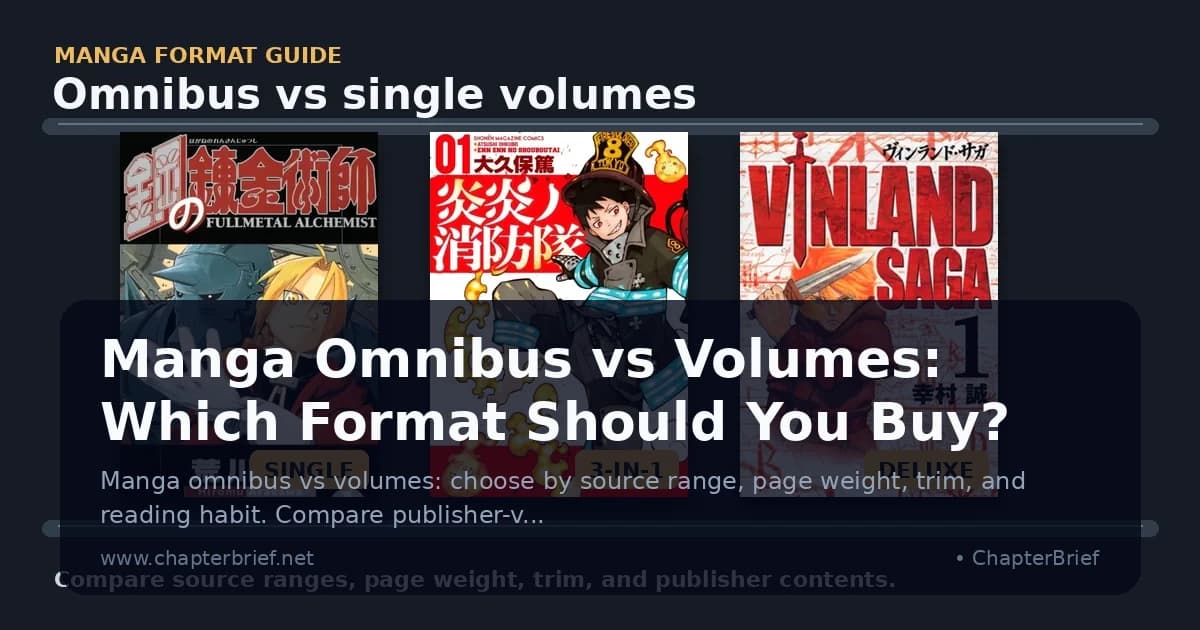
The cover examples below are identity references, not preservation ratings. Each series was checked in AniList for Japanese origin, adult flag, literal status, and live chapter and volume fields. Its publisher page was also opened. Use the same identity-first habit when a shelf contains standard paperbacks, oversized books, or imported editions with different cover designs.
Fullmetal Alchemist
AniList records Fullmetal Alchemist as countryOfOrigin: JP, status: FINISHED, 116 chapters, 27 volumes, and isAdult=false. The VIZ Vol. 1 product page identifies the official English paperback, its format, and physical specifications. The practical storage lesson is to measure the actual book you own, not a generic series label.
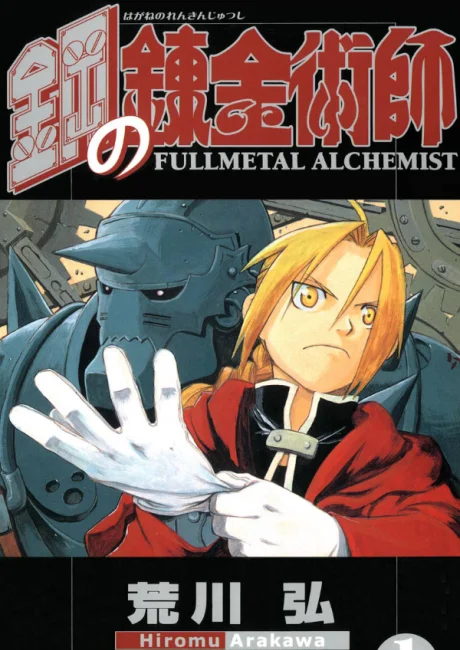
A Fullmetal Alchemist cover used as a visual identity reference, not a claim about a specific print condition. Cover via AniList.
Fire Force
AniList records Fire Force as countryOfOrigin: JP, status: FINISHED, 305 chapters, 34 volumes, and isAdult=false. The official Kodansha Fire Force catalog shows print and digital formats and a 34-volume catalog. Different physical formats can occupy different amounts of shelf depth, so record the format before choosing a box or sleeve.

A Fire Force cover used to identify a series while discussing shelf fit, not to make an edition claim. Cover via AniList.
Vinland Saga
AniList records Vinland Saga as countryOfOrigin: JP, status: FINISHED, 224 chapters, 29 volumes, and isAdult=false. The official Kodansha Vinland Saga catalog identifies the publisher's series record and available formats. A large or premium format deserves full shelf support and enough clearance to remove it without scraping neighboring books.
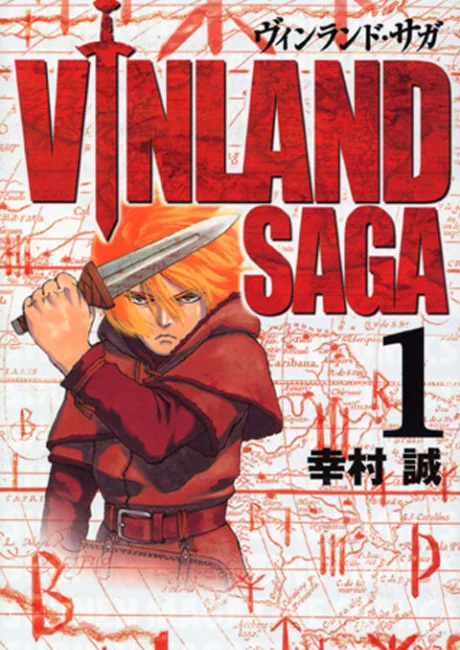
A Vinland Saga cover used as a visual identity reference, not a guarantee about a copy's condition. Cover via AniList.
The point of these examples is not to rank the series or recommend a purchase. It is to separate identity from care. Once you know which physical object is on the shelf, measure its height, depth, and thickness, then choose support that fits that object without pressure.
Step-by-Step
Use this sequence for a new shelf, a moved collection, or a room that has started to feel damp. It turns broad preservation advice into checks you can repeat without buying a large set of supplies. Work from the room to the shelf, then to the books, and isolate anything that needs a different response.
- Measure the room: Place a hygrometer near the collection and record temperature and relative humidity over several days instead of trusting one reading.
- Choose the location: Move the shelf away from direct light, heaters, vents, water sources, exterior damp spots, and floor-level leak risk.
- Prepare the shelf: Use a flat, solid, clean surface that fully supports the books and has enough depth for their actual size.
- Sort by size and condition: Group similar books, separate fragile or damp volumes, and decide which books need flat support.
- Shelve with support: Stand most manga upright with gentle bookends, leave removal space, and keep oversized books flat when they cannot stand safely.
- Clean the area: Dust shelves and book tops with a clean soft tool, keep food and drinks away, and remove debris without wet cleaners.
- Inspect each enclosure: If you add a sleeve or box, confirm its material, fit, support, and easy removal before placing the book inside.
- Schedule a check: Recheck light, humidity, dust, leaning, pests, and water risk monthly, and respond to changes before damage spreads.
Tips: build a manga storage routine you can keep
A sustainable manga storage routine is short enough to repeat. Check the room monthly, dust before buildup becomes visible, straighten leaning rows, and look at the bottom shelf after heavy rain. Record a problem and its date so you can tell whether a fix changed the environment instead of guessing.
Use a small care card or spreadsheet with the shelf location, format, condition, and any loose inserts for books that matter most. This is especially useful when standard and oversized editions share a collection. The note does not need a value estimate. It needs enough information to return the right book to the right support.
Keep a small clear working space near the shelf for inspection. A book placed on the floor while you rearrange can pick up dust or moisture. A clean table lets you look at the spine, cover edges, and page block before the volume goes back.
If your room cannot stay within a stable range, reduce the collection's exposure rather than pretending a sleeve solves the problem. Move books to the safest interior location, improve air circulation without blowing hot or damp air directly at them, and seek conservation help for persistent moisture.
When dust or a suspicious edition is the concern, use for the publisher-record and physical-copy checks that should happen before a book is shelved or passed to another collector.
How to Spot Bootleg Manga
Common Manga Storage Mistakes
The common mistakes are usually environmental or mechanical: a shelf in direct sun, a tightly packed row, a leaning book, a damp book sealed in plastic, or a label trusted without checking the material. Fix the condition first. More accessories do not automatically make a collection safer.
Sealing a damp book
Plastic cannot dry a wet volume. Sealing moisture can keep the conditions that encourage mold in contact with the paper. Separate the book, address the room, and get advice for significant water or mold damage before using any enclosure.
Choosing “archival” by label alone
The Library of Congress says the "archival" description for housing materials "does not have any meaningful definition." Look instead for acid-free, lignin-free, and buffered board, or a named stable plastic. Read the supplier's material information, check the fit, and avoid adhesive, rough edges, tight compression, and enclosures that make removal unsafe.
The phrase archival manga sleeves is a product description, not a preservation guarantee. Ask what the sleeve is made from and whether it fits without pressure. If the seller cannot explain the material, a clean, uncovered shelf in a stable room may be the safer choice.
Pulling books by the top of the spine
Create a little space and grasp the middle of the spine. Pulling a volume by its headband or top edge stresses the binding and can damage neighboring books when the row is tight.
Leaning a short row
An underfilled shelf can be harder on books than a supported row. Use bookends, add a stable spacer, or move the books to a shelf where neighboring volumes keep them upright without pressure.
Treating sunlight as display-only damage
Fading is visible, but light also contributes to material deterioration. If you want a display, limit exposure and rotate books. Keep the collection's everyday storage position out of the strongest light path.
Our Take: fix the room before you buy anything
Most manga damage on a home shelf comes from the room, not the lack of a sleeve. A stable, cool, dry spot out of direct light, a flat solid shelf, and books standing upright with support cover most of the risk. The Library of Congress and the National Archives say the same thing in different words. Sleeves and boxes earn a place for fragile, loose-piece, or oversized books, and only when the material is named and the fit is right. This take rests only on the Library of Congress and National Archives guidance, the publisher and AniList records, and the reader threads cited above.
Related Reading
Use the cluster's other guides for decisions this article deliberately does not repeat. The hub covers the purpose of a collection, the omnibus guide covers physical format choices, the bootleg guide covers edition verification, and the manhwa pages cover Korean-comics buying routes separately.
- Manga Collecting Tips: Formats, Storage, and Smart Buying
- Manga First Print Guide: Number Lines, Obi, and Colophons
- Manga Omnibus vs Single Volumes
- How to Spot Bootleg Manga
- Best Manga Box Sets
- Where to Buy Manhwa Physical Volumes in the US
- Where to Buy Manga in the US: Official Stores Guide
- Out of Print Manga Guide: Status, Reprints, and Safe Buying: preserve and verify older editions before you add them to a shelf.
Frequently Asked Questions
What is the best way to store manga? Keep manga upright on flat, stable shelves in a cool, stable, relatively dry room away from direct light, water, heaters, and vents. Group books of similar size, use bookends without crowding, and handle them with clean, dry hands.
What humidity is safe for manga? The Library of Congress says most books are safest around 30 to 55 percent relative humidity, with stable conditions preferred. Avoid rapid changes and prolonged high humidity because moisture can warp paper and encourage mold.
Should manga be stored in plastic sleeves? Sleeves are optional for ordinary books. If you use one, choose a clean, correctly sized sleeve made from a stable material and leave room for air and easy removal. Do not seal a damp book or let a tight sleeve distort the cover.
Should manga be stored upright or flat? Most manga should stand upright with neighboring books or bookends supporting them without leaning. Oversized, fragile, or unstable books may be stored flat with full support. Never leave a large book hanging beyond a shelf edge.
How do I protect manga from sunlight? Keep books out of direct and intense light, especially near windows. Use curtains, shades, or a closed storage position, and rotate displayed books if you must show them. Light can fade covers and accelerate paper damage over time.
What should I do if manga gets damp or moldy? Separate the affected book from the collection, avoid sealing it while damp, and seek conservation advice for serious mold or water damage. Do not brush active mold over the shelf or return the book until the storage area is dry and checked.
How We Checked This
Fourteen source pages were checked on October 8, 2026. They are four Library of Congress preservation pages, two National Archives pages, and the VIZ and Kodansha pages for the three cover examples. Three AniList records and two r/MangaCollectors threads make up the rest. The first draft also cited two Northeast Document Conservation Center leaflets. Those pages block automated access, so we could not reopen them, and every claim that rested only on them was re-sourced or cut. Each fact has a row with a quoted line in our sources table.
Last reviewed: October 8, 2026
References
These sources provide the preservation facts used in the guide. The Library of Congress covers household book storage, handling, repair, and the limits of labels such as “archival.” The National Archives covers humidity limits, leaks, containers, and mold. AniList and publisher pages are included only for the three visual series examples.
- Library of Congress: Storing Your Books
- Library of Congress: Preserving Your Books
- Library of Congress: Handling Your Books
- Library of Congress: Repairing Your Books
- National Archives: Storing Family Papers and Photographs
- National Archives: What to Do About Mold or Insect Infestation
- AniList: Fullmetal Alchemist
- VIZ: Fullmetal Alchemist, Vol. 1
- AniList: Fire Force
- Kodansha: Fire Force
- AniList: Vinland Saga
- Kodansha: Vinland Saga