Loading…

ChapterBrief · Guides
I Shall Master this Family Reading Guide: Where to Start
I Shall Master this Family reading guide: where to start, why the age-7 reincarnation twist matters, and how the grandfather arc actually plays out.

Reviewing
I Shall Master this Family
An I Shall Master this Family reading guide has to answer one question before anything else: is the slow start worth it. It is, but knowing why changes how you read the first stretch of episodes. This guide covers the reading path, what each phase of the story is actually building toward, and where to start if you've read the review and want the practical version.
TL;DR: I Shall Master this Family reading guide, short version: start at episode 1 on Tapas (not WEBTOON, it's not there), expect a setup-heavy first 10 episodes establishing the Lombardi family hierarchy, and stay for the grandfather-granddaughter arc once Firentia starts actively maneuvering. The series is ongoing, with 231 episodes live on Tapas as of September 16, 2026. Full critical verdict is in our review.
I Shall Master this Family reading guide: Key Takeaways
- Read in order from episode 1. There's no arc you can skip into; the family hierarchy set up early is load-bearing for every political move that follows.
- The first 10-ish episodes are the slowest part. They establish who's who in the Lombardi family before Firentia's actual strategy starts moving.
- The grandfather-granddaughter relationship with Lulac is the structural spine of the series, not a side element.
- English release is Tapas and Tappytoon only. It is not on WEBTOON, and the Korean original is on KakaoPage.
- The series is ongoing; the source novel by Roah Kim is complete, so the story has a known ending even though the manhwa hasn't reached it.
I Shall Master this Family reading guide: Overview
Where do I start? Episode 1, on Tapas or Tappytoon. This isn't a series with a second-cour jump-in point or a "skip the first arc" shortcut. Firentia's standing with each family member is established gradually, and later chapters assume you know who holds what grudge and why.
How far in does it get good? Most readers report the shift happening somewhere in the first 10 to 15 episodes, once Firentia moves from passive observation to active maneuvering. If you're still bored at episode 20, the series' pacing philosophy probably isn't for you, though that's a smaller group than you'd expect given how many readers stick around.
Is it finished? No. The manhwa is ongoing. The source novel is complete, which means the ending already exists even if the adaptation hasn't drawn it yet.
For the I Shall Master this Family arcs, follow the published episode order from the beginning because each political turn depends on the family groundwork established before it.
The child-reincarnation dynamic, and why it structures everything
Advertisement
Most reincarnation manhwa restart their protagonist as an adult or teenager with something to use right away: authority, a title, a skill set nobody else has. Firentia restarts at seven, which sounds like a smaller twist than it plays out to be.
A seven-year-old can't call a family meeting. She can't threaten a cousin twice her age. She can't force her grandfather to listen just because she knows things he doesn't. Every advantage she has from her first life has to be converted into something a child can actually use: patience, timing, small demonstrations of competence that adults will notice without feeling threatened by them.
This is the mechanic to track while reading. When Firentia does something clever in an early episode, ask what a version of this scene would look like if she were an adult with the same knowledge. Usually the answer is that an adult would just act on it directly, and the scene wouldn't need to exist. The child-age restriction is what generates most of the tension in the early run, and once you're reading for that specifically, the slower chapters read less like padding and more like the mechanism doing its job.
It also means the story can't rush. A child aging into real influence over a noble house takes years in-universe, and the manhwa spends real page time on that stretch rather than skipping ahead. If you came in expecting an instant power fantasy, recalibrate before episode 1: this is closer to a long game than a sprint.
For where this sits against the genre's death-flag survival stories and affection-meter plots, the full ranked list breaks down the field:
Best Villainess Manhwa 2026 →
The grandfather relationship: the actual emotional engine
Lulac Lombardi is the reason the political maneuvering has weight instead of just being court intrigue with a child protagonist grafted on. Firentia's entire strategy across the early chapters is built around one goal: earning enough of his trust to be considered for family head instead of her more conventionally favored cousins.
What makes this work as reading material rather than just plot mechanics is that Lulac isn't written as an easy mark. He's not a pushover who dotes on any grandchild who's nice to him. He's read as genuinely formidable, someone who has run a noble house for decades and has good reason to be skeptical of a granddaughter he barely knows showing sudden, precise competence. Firentia has to actually earn what she gets from him, scene by scene, and the series is patient about letting that trust build in visible increments rather than jumping to a resolved relationship once the premise is established.
Track this relationship specifically as you read. The scenes between Firentia and Lulac are where the series does its best character work, and the payoff chapters, when they land, land because the show-don't-tell buildup was real. If you're the kind of reader who wants to know when to expect emotional payoff, it's tied to Lulac's arc more than to any single external conflict.
The political maneuvering: what it's actually about
The court intrigue in I Shall Master this Family isn't about magic duels or hidden power systems. It's about succession: who becomes head of the Lombardi family, and what happens to everyone underneath that person once they take the seat. Firentia's cousins aren't cartoon villains; they're written as people who each think they have a legitimate claim, which means Firentia's maneuvering has to be smarter than simple confrontation.
This is where the "specific competence" the review praises actually shows up on the page. Firentia doesn't win scenes because the plot needs her to. She wins them because she's identified a specific weakness in how a rival is thinking, or because she's spent chapters building a relationship with a servant or minor relative that pays off exactly when she needs it to. Reading for this pattern (what did she set up earlier that's paying off now) is the most rewarding way to follow the political chapters, especially once the cast of family members expands past the first handful of names.
One structural note worth flagging before you start: a romance subplot enters later in the run and doesn't fully match the tone of the family-succession chapters around it. It's not a dealbreaker, but if a scene suddenly feels like it's from a different, softer series, that's the romance thread, not a tonal mistake on the creators' part.
Step-by-Step
1. Start on Tapas, not WEBTOON: This is the single most common wrong turn new readers make. The English release lives on Tapas and Tappytoon; WEBTOON does not carry it. Searching the wrong platform is the most common reason people think the series has no English release.
2. Commit to at least the first 10 to 15 episodes before judging the pacing: The early chapters are doing setup work, establishing who's who in the Lombardi household. Bouncing before episode 10 means bouncing before the strategy actually starts.
3. Track Firentia's age as a mechanic, not a background detail: Every scene where she's limited by being a child is doing narrative work. Reading with that lens turns the slow chapters into tension rather than filler.
4. Read the Lulac scenes as the emotional throughline: If you want to know where the series is building toward emotionally, it's the grandfather relationship. Don't skim these scenes even when the surrounding political material feels denser.
5. Treat the romance arc as a subplot, not the main event: It shows up later and shifts tone. Go in knowing that so it doesn't feel like the series has lost the plot when it appears.
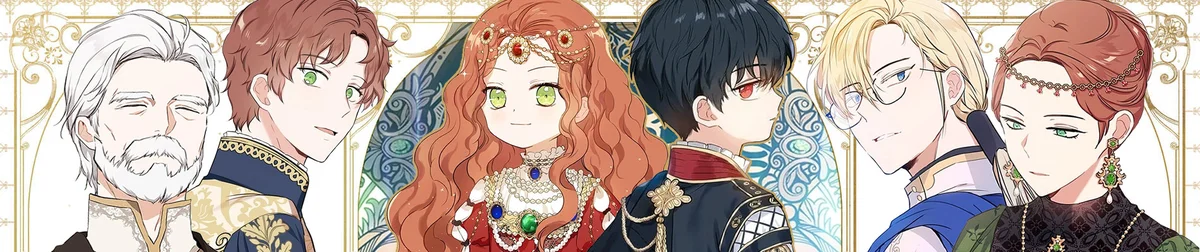 The official character banner for the series, showing Firentia alongside Lulac and the wider Lombardi cast she has to navigate.
If reincarnation-into-childhood premises are what drew you here, the broader genre list rounds up the field beyond this one series:
Best Reincarnation Manhwa →
Who this reading guide is for
This series rewards patient readers more than readers looking for immediate payoff. If you liked how Who Made Me a Princess handled a child protagonist earning a powerful father figure's love, or if you want a female lead whose wins come from planning rather than power-ups, I Shall Master this Family fits. Readers who want fast pacing, a clear power system, or death-flag stakes ticking down in real time will likely find the early chapters too slow to justify the payoff.
It's also a good fit for readers specifically tired of the "adult reincarnation with instant authority" version of this genre. If that trope has started to feel weightless, the age-7 restart here is doing something structurally different, and it's worth the patience it asks for.
Where to read I Shall Master this Family
Advertisement
- Tapas: official English release, free preview chapters with Ink required beyond that
- Tappytoon: official English release, coin and daily-pass system for chapters past the free window
- KakaoPage: Korean original, fastest access to new chapters if you read Korean
It is not available on WEBTOON. That single fact accounts for most of the "I can't find this series" confusion online.
Frequently Asked Questions
Where should I start reading I Shall Master this Family?
Episode 1, on Tapas or Tappytoon. There's no later jump-in point; the family hierarchy set up early is load-bearing for everything that follows.
How many chapters does it have?
231 episodes were live on the official Tapas page as of September 16, 2026. It's ongoing, so check the platform directly for the current number before you commit.
Is it worth reading past the slow start?
Yes. The setup-heavy first stretch pays off once Firentia starts actively maneuvering rather than just observing. Most readers who bounce off do it before episode 10.
Does it have a completed source novel?
Yes, the novel by Roah Kim is finished. The manhwa adaptation by Mon is still ongoing and hasn't caught up to the novel's ending.
Is I Shall Master this Family on WEBTOON?
No. English readers should use Tapas or Tappytoon. The Korean original is on KakaoPage.
What age is Firentia when the story starts?
Seven. She keeps the memories of her first life but restarts in her own childhood body, and the story ages her up gradually across the chapters rather than skipping to adulthood.
Related Reading
- I Shall Master this Family Review: The 8.3/10 critical verdict, with the full case for and against the slow start.
- Best Villainess Manhwa 2026: The ranked genre list, showing where this series fits against death-flag and affection-meter stories.
- Best Reincarnation Manhwa: Broader picks for readers who want more childhood-restart or second-life stories.
- Best Manhwa with Strong Female Lead: For readers drawn specifically to Firentia's planning-over-power approach.
- Manhwa Like I Shall Master this Family: 8 Family Drama Picks
References
- I Shall Master this Family on Tapas: official English platform, episode list and current count
- I Shall Master this Family on Tappytoon: official English platform, coin and daily-pass system
- I Shall Master this Family on AniList: series metadata, staff credits, release status
Was this guide helpful?
About the author

Anime and manhwa writer covering seasonal releases and ongoing webtoons since 2018. Seoul-born, Melbourne-based. Writes the way she reads — fast and direct.
- Covering anime and manhwa since 2018
- 400+ series completed across anime and manhwa
- Seasonal anime tracker for 6 years running
- Romance and fantasy specialist with deep genre knowledge
Keep reading



Disclaimer
This article is published for informational and entertainment purposes. It does not constitute professional financial, legal, or technical advice. Series availability, platform access, translation status, and chapter counts change. Verify critical details (pricing, regional availability, official translation status) with publishers and platforms. Affiliate links, where present, help support our editorial work and are labelled in our affiliate disclosure.
Comments
Loading comments…