

This Death's Game reading guide covers the complete manhwa structure, what the TVING/Netflix drama changed, and how to approach all 66 chapters as either a first-time reader or a drama viewer who wants to go deeper.
TL;DR: Death's Game reading guide -- 66 chapters, completed, free on WEBTOON (title no. 1265). The drama cuts 2 arcs and adds a new antagonist. The manhwa's 13 lives are structurally independent in a way the drama's unified revenge plot isn't.
At 66 chapters, Death's Game is short enough to finish in an afternoon. It's also structured as an anthology -- 13 separate lives, each one ending at death -- which means there's no single momentum building toward a finale in the way most manhwa readers expect. It requires a different approach.
Key Takeaways
- 66 chapters, completed; ran on Naver Webtoon 2019-2020
- Available on WEBTOON (title no. 1265, genre: drama)
- Written by Lee Won-sik; art by Ggulchan
- Protagonist: Choi Yee-jae, who experiences 13 deaths across different lives
- TVING drama adaptation: 8 episodes, cuts streamer arc and magician arc, adds Park Tae-woo as original antagonist
- Episode 1 is free; full series accessible on WEBTOON
Death's Game reading guide: what the series is
Choi Yee-jae is unemployed, broke, and out of reasons to continue. He loses his savings to a cryptocurrency scam and, unable to see forward, attempts to take his life. Death appears and sentences him for this -- not to hell, but to something worse. He must live through the final moments of 13 different lives, each one someone who died exactly as they were supposed to. If he can survive any one of those deaths, he inherits that person's life and gets to live it.
Each arc is structurally self-contained. Choi Yee-jae wakes up in a different body with no memory of how he got there, pieces together who this person is, what threat is closing in, and whether there's a way out. The series is not a power fantasy -- he fails repeatedly before the structure starts to teach him something about why people die the way they do.
The tonal core is character study, not survival thriller. Each life is a short story about a different kind of person under different pressure: a gangster facing a betrayal, a soldier in a combat zone, an athlete whose body gives out at the critical moment. Choi Yee-jae doesn't know anything about these lives at the start. He learns what he needs to as the clock runs out.
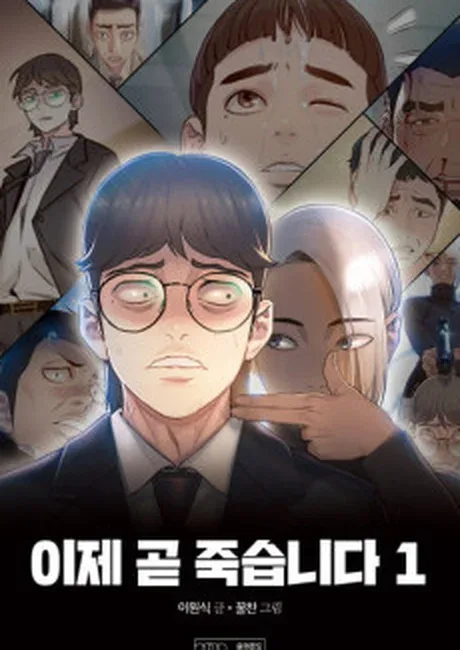 Death's Game by Lee Won-sik and Ggulchan -- the premise is simple enough to land in a single panel and complicated enough to carry 66 chapters.
Our covers the series in full -- 8.0/10 verdict with a breakdown of what the anthology structure does well and where it runs thin.
Death's Game manhwa review
Death's Game reading guide: manhwa vs drama differences
Advertisement
This section is for readers coming from the TVING/Netflix drama. If you haven't seen the adaptation, skip to the arc guide below.
Two arcs were cut from the drama:
The streamer storyline -- one of Choi Yee-jae's 13 lives involves a popular online streamer whose death is tied to parasocial relationships, parasitic audience dynamics, and a specific type of pressure that public-facing creators face. It's one of the more contemporary arcs in the manhwa and one of the more interesting for readers outside South Korea. The drama removed it entirely, likely for runtime.
The magician storyline -- another life involves a stage magician facing a crisis tied to professional rivalry and the cost of ambition in performance art. The arc is relatively brief but contains some of the more quietly devastating moments in the series. It's also cut from the drama.
What the drama adds:
The drama introduces Park Tae-woo as a new antagonist who serves as the connective thread across many of the 13 lives. In the manhwa, the deaths are largely independent -- Choi Yee-jae is there by chance, working out a personal reckoning. In the drama, many of those deaths were caused or accelerated by Park Tae-woo, giving the narrative a unified revenge structure that doesn't exist in the source material.
Neither version is wrong. The drama adaptation needed a through-line that worked in episodic television; the manhwa's more dispersed structure suits the scroll format. But if you watched the drama expecting the antagonist logic to carry over, you'll notice its absence early.
Reading order recommendation for drama viewers:
The removed arcs don't require setup from the surrounding chapters. You can read the full manhwa sequentially, or you can watch for the streamer and magician chapters as you read. Both arcs are distinct enough that you'll recognize them when they appear -- they won't have the drama's main cast dynamic as context.
If drama adaptations of manhwa interest you, our covers 10 series where the adaptation diverges significantly from the source.
K-drama and manhwa adaptations guide
Arc structure: how Death's Game unfolds
The series is organized around 13 lives, but the narrative isn't rigidly one-per-chapter. Some lives span multiple chapters; a few are brief. The structure feels more like a short story collection with a framing device than a conventional manhwa arc breakdown.
Lives 1-4 (early chapters): Introduction to the premise. These lives are shorter, partly because Choi Yee-jae doesn't yet understand the rules and fails quickly. The tonal range is established: these include the first failure, the first near-success, and the arc where Choi Yee-jae begins to understand that what he's being taught isn't random.
Lives 5-9 (mid-chapters): The longer arcs. This is where the series spends most of its word count. The gangster arc, the soldier arc, the athlete arc -- these are extended enough to develop secondary characters who matter. The streamer and magician arcs are also in this section for readers of the original manhwa.
Lives 10-13 (final chapters): The series accelerates. Each life is shorter not because the stakes are lower but because Choi Yee-jae is finally applying what he's learned. The resolution of the framing device -- what Death was actually testing, what Choi Yee-jae was actually supposed to learn from his sentence -- lands in the final chapters.
Step-by-Step
Step 1: Commit to the anthology structure. Death's Game doesn't build the way most manhwa builds. If you read the first 10 chapters looking for the story to escalate into a main plot, you'll misread what it's doing. Each life is self-contained. That's the design, not a pacing problem.
Step 2: Read in sessions that align with arcs, not chapters. Some lives are 2-3 chapters, some are 6-8. The natural stopping points are at arc endings (when Choi Yee-jae dies or moves on), not at chapter breaks. Stopping mid-arc is jarring in this format.
Step 3: Watch the secondary characters. Each life's supporting cast -- the people around whoever Choi Yee-jae is inhabiting -- tells you something about why that person died. The secondary characters aren't just exposition; they're often the actual point of that arc.
Step 4: Notice what each death teaches. The series has a thesis. Not stated explicitly, but each life Choi Yee-jae fails or survives teaches him something about what it means to want to live. If you're reading passively, you'll miss the cumulative argument the series is making.
Step 5: The ending requires the full journey. Don't read ahead or look up the ending. Death's Game's resolution is emotionally earned through the accumulation of 13 lives, and the ending is only satisfying if you've lived through all of them alongside Choi Yee-jae.
Death's Game reading guide: where to read
WEBTOON (official English): The complete series is at WEBTOON, title number 1265, under the "drama" genre category. Episode 1 is free. The series is completed, so all chapters are available -- older episodes in particular tend to be freely accessible over time through WEBTOON's standard unlock schedule.
Naver Webtoon (Korean original): The series originated on Naver Webtoon and ran from 2019 to 2020. Korean readers can access it on the original platform.
For how this fits into the broader format landscape, see our Manga vs Manhwa vs Manhua: What Actually Sets Them Apart.
What to avoid: Unofficial scan sites. Given that this series is fully available through official legal channels and is completed, there's no reason to use unauthorized sources.
Both best completed manhwa and Death's Game share the same profile: short series, clean ending, reads better in one sustained session than spread across weeks.
Tips for an anthology manhwa
Advertisement
Don't compare chapter length to engagement. Some of the longest chapters in Death's Game are setup chapters for arcs that pay off five chapters later. Some of the shortest are the most devastating. Chapter count isn't a proxy for importance here.
The framing device is load-bearing. Death is a character, not a plot device. Choi Yee-jae's relationship with Death -- what he understands about her, what he misunderstands -- changes across the series in ways that retroactively reframe early chapters. Don't treat her early appearances as exposition and move on.
If you find a particular life emotionally difficult to read, that's working correctly. The series deliberately puts Choi Yee-jae in lives that cover different categories of suffering and different kinds of people who've decided their situation is impossible. That discomfort is intentional.
The manhwa reads faster than you expect. At 66 chapters in WEBTOON's scroll format, most readers finish in under five hours. Plan for this before you start -- reading half the series and stopping for a week breaks the anthology's cumulative effect.
Related Reading
- Death's Game manhwa review -- 8.0/10, full breakdown of what the series does well and where it gets thin
- Manhwa Like Death's Game -- the closest picks on tone, efficiency, and K-drama-adaptation path
- K-drama and manhwa adaptations guide -- 10 series where the adaptation changes the source material significantly
- Best completed manhwa -- completed series with clean endings for readers who prefer finished work
- Best short manhwa completed -- series under 100 chapters with satisfying endings
Frequently Asked Questions
How many chapters does Death's Game manhwa have? 66 chapters, completed. Ran on Naver Webtoon 2019-2020, fully available on WEBTOON in English.
Is Death's Game manhwa finished? Yes, completely finished. No pending chapters or additional seasons.
How does Death's Game manhwa differ from the drama? The drama cuts the streamer arc and the magician arc, and adds a new antagonist (Park Tae-woo) not in the manhwa. The manhwa's 13 lives are structurally more independent; the drama uses a unified revenge plot as connective tissue.
Is it free to read? WEBTOON, title no. 1265. Episode 1 free; older episodes typically unlock over time.
Should I read before or after the drama? Either order works. Drama-first is common for international readers (Netflix brought them to WEBTOON). You'll notice the differences immediately, which most find adds rather than detracts.
Who created Death's Game? Lee Won-sik (story) and Ggulchan (art). TVING drama featured Seo In-guk and Park So-dam.
How long does it take to read? Most readers finish in 4-6 hours. The anthology structure makes natural stopping points between arcs.
References
- Death's Game on WEBTOON -- official English platform, title no. 1265, completed series
- Death's Game on Naver Webtoon -- Korean original platform where the series first published