Loading…
ChapterBrief · Guides
Pick Me Up Infinite Gacha Reading Guide: 193 Chapters
Pick Me Up Infinite Gacha reading guide: 193 chapters on Tapas, ongoing. Loki was the top player -- now he's a 1-star hero inside his own game.

Reviewing
Pick Me Up, Infinite Gacha
Hermod (story), Wasakbasak (art), U-Ne Cho (manhwa adaptation)
The Pick Me Up Infinite Gacha reading guide below covers the premise, how it differs from other game-isekai manhwa, and what to expect across the 193 ongoing chapters on Tapas.
TL;DR: Pick Me Up Infinite Gacha reading guide -- 193 chapters on Tapas, ongoing. Loki was a top-ranked game master. Now he's trapped inside the game as a 1-star hero, being picked up and discarded by players who don't know what they're looking at.
Most isekai game-world manhwa follow a player dropped into a game world. They keep their player perspective -- they know the mechanics, the exploits, the optimal routing. The world feels like a game to them because it was one.
Pick Me Up Infinite Gacha doesn't do that. Loki is trapped inside the game as a playable character, a 1-star hero that players summon, use, and dismiss. He's on the other side of the gacha pull now. The people who pick him up are real players from the outside, and whether they bother investing in him is entirely up to them.
Key Takeaways
- 193 chapters as of September 2026, ongoing on Tapas
- Story: Hermod (original novel); Art: Wasakbasak; Adaptation: U-Ne Cho
- Platforms: Tapas (English, primary) and KakaoPage; physical volumes via A.TEMPO MEDIA since Nov 2025
- Protagonist: Loki, formerly a top-5 global game master, now trapped as a 1-star hero named Islat Han
- Premise inverts the standard game-isekai setup: Loki is a hero inside the game, not a player in the world
- The original web novel by Hermod is complete; the manhwa adaptation is ongoing
Pick Me Up Infinite Gacha reading guide: what the series is
The setup is specific. Pick Me Up! is a notoriously difficult gacha RPG known for its extreme dungeon challenges. No master-level player has successfully cleared the highest dungeon on record. Loki, fifth-ranked globally, attempts it anyway and loses consciousness during the attempt. He wakes up as Islat Han, a 1-star hero, inside the very game he was playing.
The 1-star designation matters. In gacha games, 1-star units are the bottom of the pull rarity -- they're picked up constantly because pulls are random, but they're almost never invested in. Players typically discard them or use them as upgrade fodder. Loki is now a character people pull and ignore.
He can't communicate directly with the players who summon him. He can observe, deduce, and attempt to guide outcomes from inside the game, but his influence is limited to what a 1-star character can actually do. His goal -- clearing all 100 dungeon floors to return to the real world -- requires him to work with and through players who have no idea he's a person inside the system.
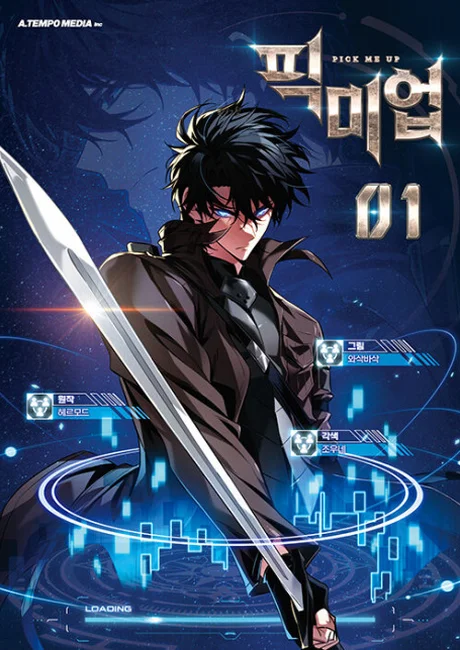 Pick Me Up, Infinite Gacha by Hermod, Wasakbasak, and U-Ne Cho -- the cover establishes Loki's position: he's the character in the window, not the one holding the phone.
Our covers the series' 8.0/10 verdict in full, including what makes the inverted perspective compelling and where the pacing challenges appear.
Pick Me Up Infinite Gacha review
Arc structure: how Pick Me Up Infinite Gacha is organized
Advertisement
The series doesn't announce named arcs. The structure follows the dungeon-floor progression and the revolving cast of players who summon Loki at different stages.
Early chapters (1-40): Loki adapts to his situation. The most immediate problem is that most players who pull a 1-star hero dismiss it immediately. He needs to find ways to demonstrate value within the extreme constraints of a low-rank character. These chapters establish the rules of the world, what Loki can and can't do, and introduce the basic player-hero dynamic. The gacha mechanic is explained through experience rather than exposition.
Mid chapters (40-120): Loki has established himself enough that specific players start treating him differently. The series begins developing longer arcs around specific player-hero relationships. Not all players are operating in good faith; not all heroes Loki encounters are willing to cooperate with him. The floor-clearing progression introduces more complex dungeon mechanics and escalating stakes.
Current arc (120-193): The series has built enough history with its cast that callbacks to earlier players and heroes carry weight. The dungeon difficulty has escalated to floors that require coordinated play across multiple heroes. Loki's meta-knowledge of the game is increasingly valuable -- and increasingly insufficient for the challenges the higher floors present.
For system-fantasy manhwa with comparable depth of world mechanics, covers 10 series built around progression systems that actually do interesting things.
best system fantasy manhwa
Step-by-Step
Step 1: Understand the 1-star context before starting. The power level of Loki's starting character is not a traditional "hiding power" setup. He genuinely starts weak. The early chapters show what that actually means in a gacha game context: pulled constantly, invested in rarely. Some readers come in expecting immediate displays of competence. They don't arrive immediately.
Step 2: Track which players are which. The revolving cast of players who summon Loki is a feature, not a flaw. Different players have different styles, investment levels, and understanding of the game. Some are better than others. Recognizing individual players when they reappear matters more in the later chapters.
Step 3: Note what Loki can and can't influence. His limitations inside the game are structural. He can observe, attempt to communicate in limited ways, and act within the parameters of what Islat Han (his hero character) can do. He can't override player decisions or exit the game frame. Tracking these constraints makes his small victories meaningful.
Step 4: The floor structure is cumulative. Each dungeon floor introduces mechanics that become relevant on later floors. The series doesn't repeat mechanics for effect -- what appears in floor 12 may matter in floor 35. Reading casually through the dungeon explanations will create gaps later.
Step 5: Read in arcs around specific players. The natural break points are when a player finishes their run with Loki -- either completing what they intended, quitting, or failing. These exits are emotional beats. Stopping mid-player-arc loses that rhythm.
What to pay attention to while reading
The other heroes Loki encounters. He isn't the only trapped person. The series introduces other characters inside the game whose situations have their own complications. Their goals don't always align with his. These relationships develop over many chapters.
Player communication styles. The series is partly an observation of how different types of players relate to games and to the characters in them. Some treat heroes as tools; some get invested in them as characters. This isn't commentary from outside the story -- it's content Loki has to navigate.
Loki's gradual recognition by specific players. Part of the series' long-term arc is whether players can recognize that something unusual is happening with this particular 1-star hero. How that recognition develops is a sustained thread.
Tips for reading a gacha-isekai manhwa
Don't come in expecting an OP-MC. Pick Me Up asks you to sit with a protagonist who is objectively limited for a long time. The payoff is real, but it's a different kind of satisfaction than watching someone demolish enemies on screen. If that trade-off doesn't appeal to you, the series will feel slow -- and it won't get faster in the early chapters.
The novel and manhwa tell the same story. Readers who have heard about the novel and are wondering whether to read the manhwa instead: the plot is the same. The manhwa adds Wasakbasak's art, which handles the gacha UI visualization well. Neither format is objectively superior; it depends whether you want prose or images.
The physical volumes are available if you prefer that format. A.TEMPO MEDIA has published physical volumes since November 2025. Check major book retailers if you prefer reading offline, or see our manhwa physical volumes buying guide for how to confirm a print license and compare US retailers.
Pick Me Up Infinite Gacha reading guide: where to read
Advertisement
Tapas (primary English): The Pick Me Up, Infinite Gacha manhwa began English serialization on Tapas in March 2024. This is the primary English language platform. Newer chapters require coins or fast pass; earlier chapters have a standard free window.
KakaoPage: The Korean-language original and some international releases are available on KakaoPage.
Physical volumes: A.TEMPO MEDIA has published print volumes since November 2025. Available through major book retailers.
Both manhwa like Pick Me Up Infinite Gacha and this reading guide address the same reader question from different angles -- whether to start the series, and where it fits in the system-fantasy genre.
Related Reading
- Pick Me Up Infinite Gacha review -- 8.0/10 full breakdown of the inverted perspective premise and pacing
- Best system fantasy manhwa -- 10 series built around progression mechanics and game systems
- Manhwa like Pick Me Up Infinite Gacha -- 7 series for readers who want similar inverted or unconventional game-world premises
- Best manhwa op mc -- for readers coming from standard overpowered MC manhwa who want to explore the genre
Frequently Asked Questions
How many chapters does Pick Me Up Infinite Gacha have? 193 chapters as of September 2026. The manhwa is ongoing on Tapas.
Is Pick Me Up Infinite Gacha completed? The manhwa is ongoing. The original web novel by Hermod is fully complete.
Where can I read Pick Me Up Infinite Gacha? Tapas (English, March 2024+) and KakaoPage. Physical volumes via A.TEMPO MEDIA since November 2025.
What is it about? Loki, a top-5 global game master, wakes up inside his own game as a 1-star hero named Islat Han. He must clear 100 dungeon floors to escape, working through players who summon him.
Do I need to read the novel first? No. The manhwa is a complete adaptation of the same story. Start from Chapter 1 on Tapas.
How is it different from other gacha manhwa? Standard game-isekai has the player inside the world. Pick Me Up flips it: Loki is a character inside the game, operated by outside players. He sees the game from the hero's perspective, not the player's.
Is Pick Me Up Infinite Gacha related to any other series? It's based on the original web novel Pick Me Up! by Hermod. The manhwa is a standalone adaptation. No other series are required.
References
- Pick Me Up on Tapas -- official English platform, serialization began March 2024
- Pick Me Up on MyAnimeList -- series metadata and reader tracking
Was this guide helpful?
About the author

Critical Theorist & Features Writer
Manhwa and webcomic critic with a background in literary analysis. Writing about narrative and genre since 2016. Specialises in genre history and story structure.
- Manhwa and webcomic critic since 2016
- Graduate background in comparative literature
- Published criticism covering Korean and Japanese comics
- Specializes in genre lineage and narrative structure


Disclaimer
This article is published for informational and entertainment purposes. It does not constitute professional financial, legal, or technical advice. Series availability, platform access, translation status, and chapter counts change. Verify critical details (pricing, regional availability, official translation status) with publishers and platforms. Affiliate links, where present, help support our editorial work and are labelled in our affiliate disclosure.
Comments
Loading comments…